
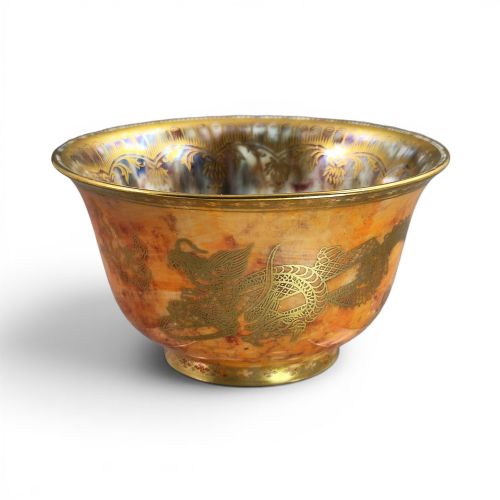


Fairyland Lustre Pottery
Fairyland lustre pottery pieces are imaginative decorative vessels painted in rich enamel and metallic glazes that bring whimsical scenes straight to a mantelpiece.
Fairyland Lustre Pottery
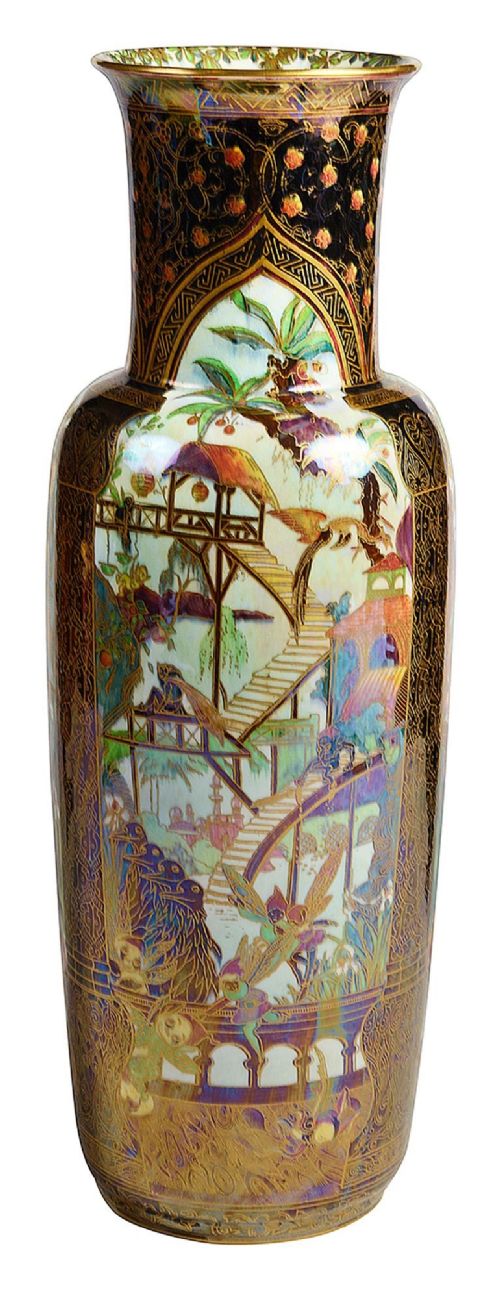
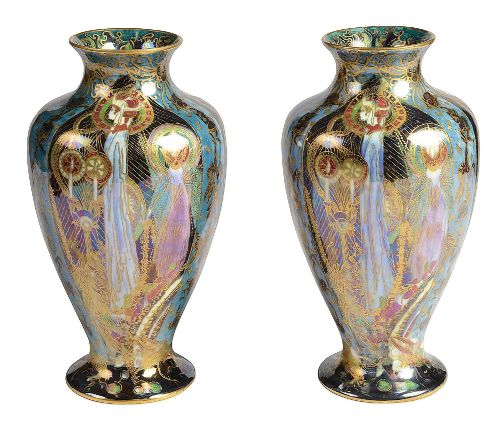
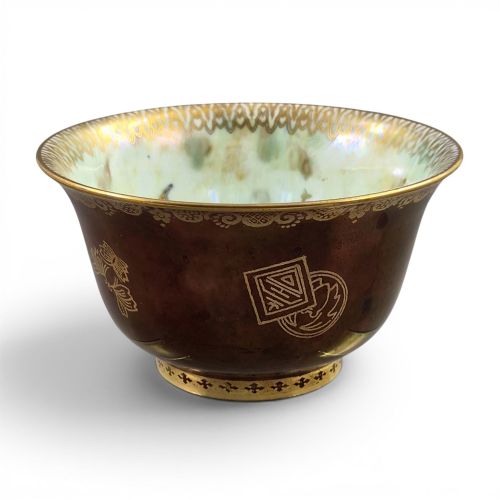
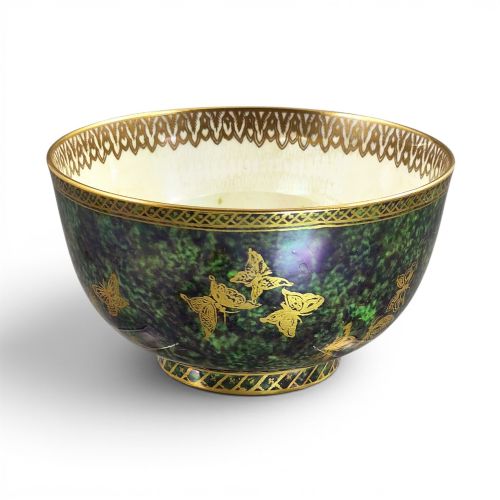
Fairyland lustre pottery encompasses highly decorative bowls and vases produced during the Edwardian period and the 1920s. These items showcase elaborate mythical themes created by renowned designers.
The version most commonly met on this page is the decorative bowl or baluster vase featuring intricate designs like Candlemas, Celestial Dragon, and butterfly patterns. Collectors seek these vibrant pieces for their distinctive narrative imagery and bold colour palettes.
How they were made
Potters shaped these vessels using bone china and porcelain before applying complex glaze combinations. Lustre glaze and metallic glaze provided the shimmering, iridescent surface sheen.
Artists added detailed enamel and gold leaf on top of the base glazes to build up the intricate pictorial scenes. Firing these pieces required precise control to achieve the signature iridescent glow.
Listings feature items from the Edwardian period, 1910, 1910s, and 1920, utilising bone china, porcelain, gold leaf, and lustre glaze.
What varies in quality
The complexity and completeness of the decorative pattern dictate the distinction between standard vessels and exceptional examples. Rich application of gold leaf and detailed enamel work elevate certain bowls and vases above simpler designs.
The clarity of the lustre glaze finish and the boldness of the underlying colour palette define the visual impact of each piece. Skilled execution of intricate motifs such as dragons or lanterns separates finer items from plain production.
Wedgwood·Daisy Makeig Jones
The Fairyland Lustre Pottery Glossary
- Lustre Glaze
- A metallic film applied to pottery that produces an iridescent sheen when fired. This finish creates the signature reflective quality found on these decorative bowls and vases.
- Baluster Vase
- A tall vase with a rounded body and a narrow neck, shaped like an architectural baluster. Several examples utilise this specific silhouette to display elaborate figural scenes.
- Bone China
- A type of soft-paste porcelain containing bone ash, known for high strength and translucency. Manufacturers used this refined material as a smooth canvas for detailed enamel painting.
- Enamel
- Opaque glass-like paint applied to ceramics and fused by firing to produce vibrant surface decoration. Artists used these rich colours to build up imaginative motifs across the pottery.
Fairyland Lustre Pottery: Frequently Asked Questions
What are fairyland lustre pottery pieces?
These items are decorative ceramic vessels painted with imaginative, whimsical scenes using rich enamel and metallic glazes.
They function purely as display objects rather than utilitarian tableware.
How were these ceramic pieces used?
Owners placed these bowls and vases on mantelpieces, sideboards, and display cabinets to showcase their vibrant colours and detailed motifs.
Their intricate designs were intended to be admired up close in well-lit rooms.
How do I live with fairyland lustre pottery?
Display these vessels away from direct, harsh sunlight to protect the delicate enamel and gold leaf details from fading over time.
Position them on stable surfaces where their iridescent glazes can catch ambient indoor light.
How can I tell periods apart?
Items from the Edwardian period often feature specific pattern numbers and softer stylistic influences reflecting Art Nouveau tastes.
Pieces from the 1920s tend to align more closely with Art Deco aesthetics and bolder geometric framing.