


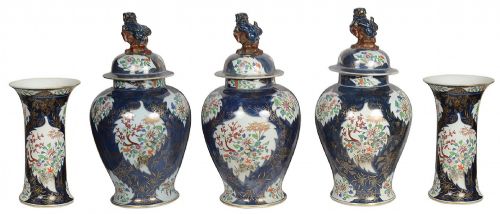


Blue Porcelain Garniture Set
A blue porcelain garniture set brings symmetry and colour to a mantelpiece, pairing central timepieces with matching side vases in porcelain and gilt metal.
Blue Porcelain Garniture Set
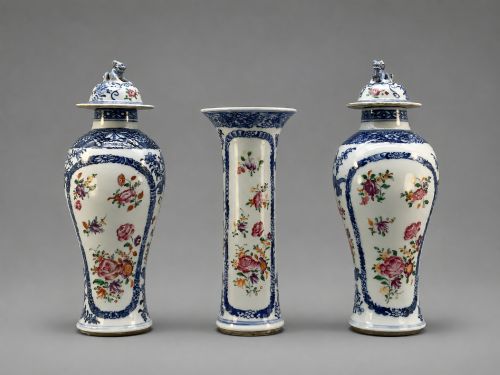
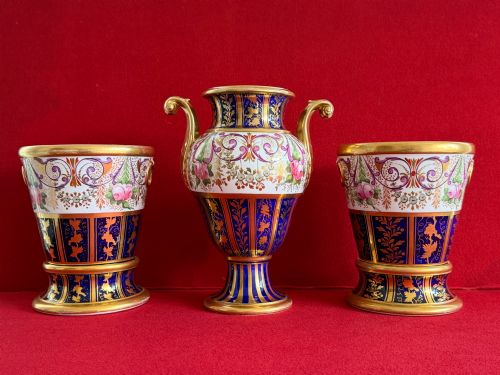
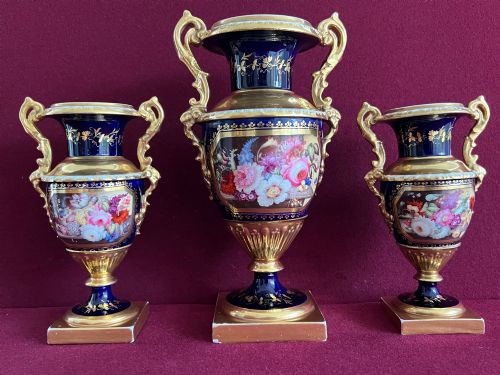
A blue porcelain garniture set typically comprises a central clock flanked by two matching vases, or a trio of coordinating vases designed to display together as a unified decorative scheme. These groupings span diverse origins, including English factories, French porcelain workshops, and East Asian export pieces.
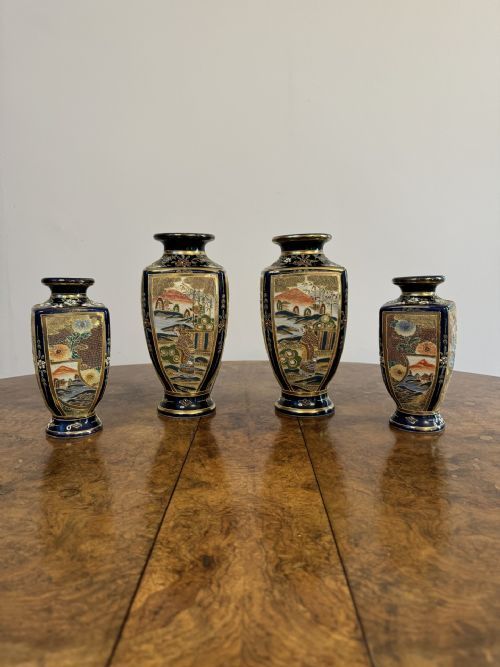
The most frequent examples found in these listings are nineteenth-century French clock sets mounted in ormolu, alongside Chinese and Japanese porcelain vases from the eighteenth and nineteenth centuries. Buyers encounter three-piece configurations most often, though four-piece Japanese Satsuma groupings also appear.
Makers ranging from Spode and Minton to KPM Berlin and Sevres-style ateliers produced these matched arrangements for formal interiors. They functioned as centrepieces for principal reception rooms, anchoring the mantel shelf with balanced proportions and repeated motifs.
Materials and construction
The foundation rests on hard-paste or soft-paste porcelain, thrown or moulded into urn, vase, or clock case forms and painted with cobalt blue underglazes or enamels. Many pieces incorporate gilt bronze, ormolu, or gilded metal mounts that frame the ceramic bodies and provide structural feet or handles.
Makers combined ceramic arts with metalworking, securing porcelain vessels within cast bronze or brass frames using threaded fixings or pins. Gilding techniques applied gold leaf or fire gilding to the metal mounts, contrasting with the deep blue ceramic surfaces.
Blue Porcelain Garniture Set Retail Price Guide 2026
Typical asking prices for blue porcelain garniture set among the pieces listed under this phrase on Sellingantiques today, from the lower quarter to the upper quarter. They describe what is for sale here now, not the wider market.
Early mantel clocks required weekly winding sessions, turning timekeeping into a domestic ritual performed alongside evening tea.
What separates the tiers
Quality reveals itself in the crispness of the porcelain moulding and the depth of the hand-painted blue decoration, where finely rendered details distinguish ambitious factory production from standard commercial output. Superior sets display careful control during firing, maintaining clean ceramic profiles without warping.
The refinement of the metal mounts dictates the upper tier of these pieces, seen in the sharpness of the ormolu casting and the precision of the gilt bronze chasing. When clock movements match the housing in age and provenance, the integrity of the set remains intact.
Spode Porcelain·Minton Porcelain·Thomas Steel·KPM Berlin·Royal Vienna·Vincenti of Paris
The Blue Porcelain Garniture Set Glossary
- Garniture
- A set of matching vases or vessels designed to be displayed together on a mantelpiece or cabinet top.
- Ormolu
- Gilded bronze mounts applied to furniture, clocks, and porcelain vessels to provide decorative borders and structural support.
- Imari palette
- A Japanese ceramic decoration style featuring underglaze blue, iron red, and gold, widely copied in European factories.
- Cloisonne
- Enamelling technique where wire compartments are soldered to a metal base and filled with coloured paste before firing.
- Famille rose
- Chinese porcelain decoration dominated by a palette of opaque pink enamel colours introduced during the Qing dynasty.
Blue Porcelain Garniture Set: Frequently Asked Questions
How do I style a garniture set?
Place the central clock or taller vase in the middle of a mantelpiece, with the matching side vessels positioned symmetrically outward to create visual balance.
Keep the grouping clear of heavy drapery or low architectural mouldings so the matched silhouettes and gilt mounts remain fully visible.
Were these sets made to tell time?
The clock components in three-piece groupings functioned as working timepieces for nineteenth-century drawing rooms, driven by mechanical brass movements.
Side urns and vases served purely as decorative companions to complete the symmetrical arrangement on the shelf.
How do I identify French clock sets?
French nineteenth-century examples often combine Sevres-style porcelain panels with heavy ormolu mounts and cast floral or scrollwork feet.
Movement backplates frequently bear the stamps of Paris makers such as Vincenti, helping to confirm the origin of the piece.
What is the difference between Imari and Chinese export?
Japanese Imari pieces utilise a distinctive palette of iron red, cobalt blue, and gold applied to porcelain bodies during the Edo period or later.
Chinese export and Qianlong pieces focus on different enamelling traditions, such as famille rose palettes or underglaze cobalt painting without the characteristic red and gold Imari saturation.