





Chinese Export Temple Jars
Chinese export temple jars bring vibrant colour and grand scale to a room, offering the decorative ceramic forms created for Western markets.
Chinese Export Temple Jars
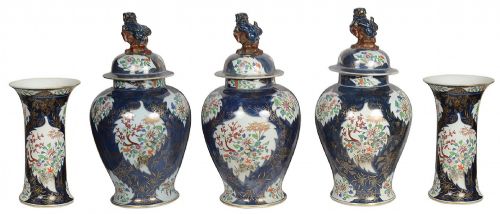
Chinese export temple jars are large lidded ceramic vessels produced for international trade and western interiors. Buyers searching for these pieces encounter impressive lidded vases, garniture sets and converted lamp bases spanning the eighteenth and nineteenth centuries.
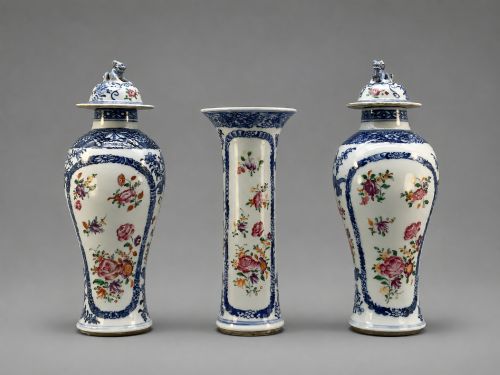
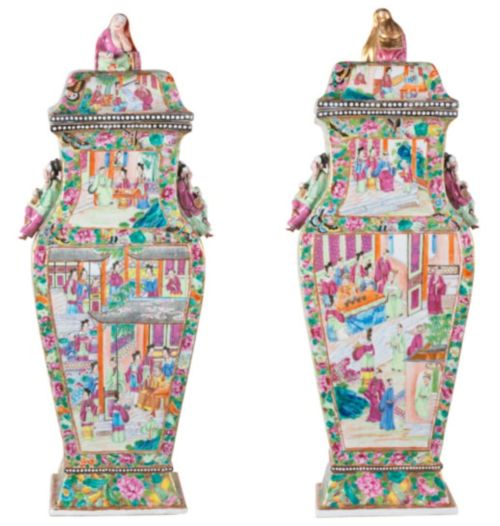
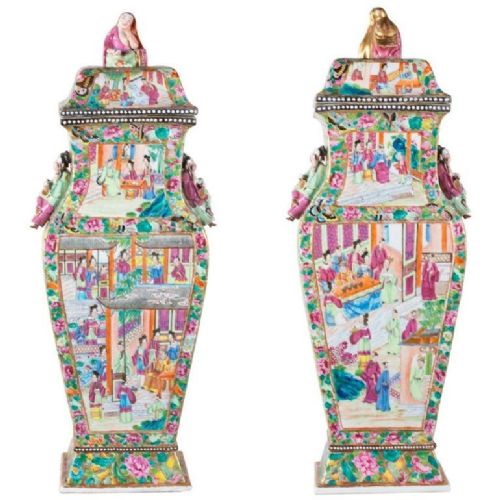
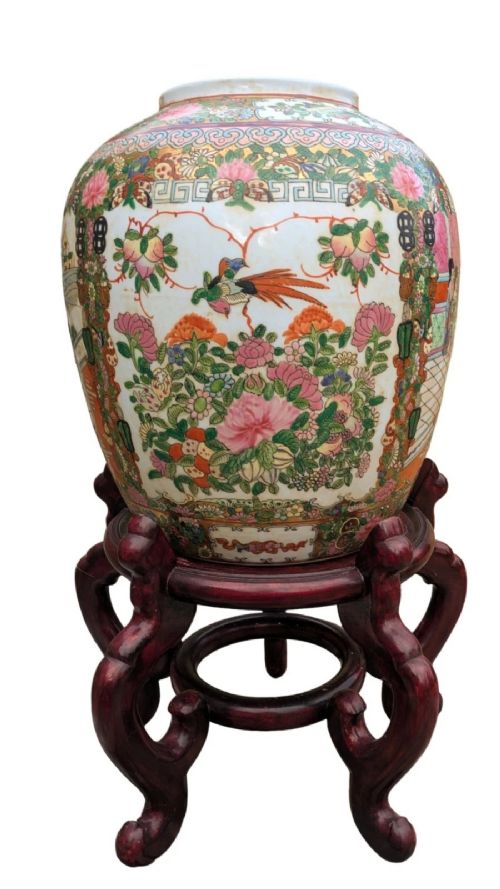
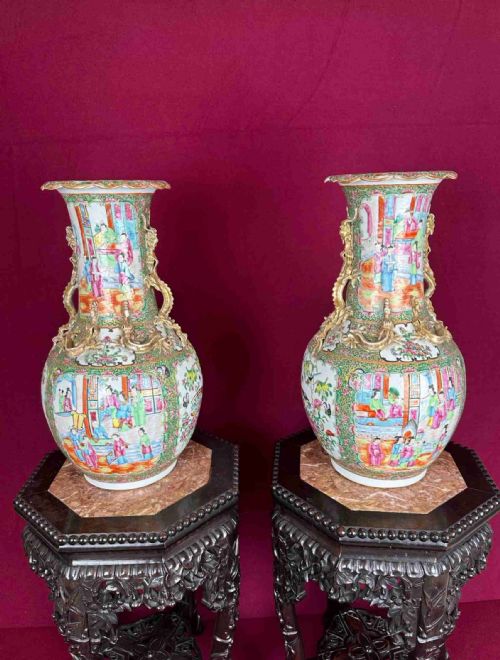
The selection here encompasses eighteenth-century Qianlong period examples alongside nineteenth-century Rose Medallion and Canton wares. Forms range from standalone ginger jars to matching pairs and multi-piece garnitures.
Makers utilised distinct palettes including famille rose and traditional blue and white painting. Many surviving examples show subsequent adaptation into table lamps or inclusion with padouk wood tables.
Production materials and techniques
Potters shaped these vessels from high-fired porcelain before applying detailed hand-painted enamel decoration. Artisans incorporated vibrant colours and gold leaf highlights to define the intricate figurative and floral panels.
Complementary elements incorporate carved padouk wood stands, brass fittings and fabric components for lamp conversions. The combination of durable porcelain and delicate enamel work defines the construction of these decorative items.
Chinese Export Temple Jars Retail Price Guide 2026
Typical asking prices for chinese export temple jars among the pieces listed under this phrase on Sellingantiques today, from the lower quarter to the upper quarter. They describe what is for sale here now, not the wider market.
Some nineteenth-century jars are tall enough to stand nearly a metre high, turning a simple mantel ornament into monumental furniture.
Distinctions in quality
Quality rests upon the precision of the hand-painted enamel work and the clarity of the porcelain body. Superior pieces display crisp brushwork, balanced compositions and well-preserved gilt details across the surface.
Completeness of original matching covers and matching garniture sets elevates a grouping. The integrity of the glaze and the refinement of associated wooden stands further separate standard production from exceptional examples.
The Chinese Export Temple Jars Glossary
- Famille rose
- A palette of opaque enamel colours dominated by pink hues, introduced during the Qing dynasty. This technique allowed artists to achieve delicate tonal gradations in floral and figurative scenes.
- Garniture
- A set of matching vases or jars designed to be displayed together on a mantelpiece or cabinet. These groupings typically comprise three or five pieces of graduated or matching sizes.
- Rose Medallion
- A nineteenth-century decorative style featuring distinct panels filled with figures, birds and flowers. The design layout is typically divided into alternating compartments around a central medallion.
- Padouk
- A heavy, dense tropical timber utilised for custom-made furniture and display stands. Its rich reddish-brown tone makes it a durable choice for bases accompanying oriental ceramics.
Chinese Export Temple Jars: Frequently Asked Questions
What is a temple jar?
A temple jar is a large lidded ceramic vessel originally used for domestic storage or ceremonial purposes in China.
Over centuries, these substantial forms became prized decorative objects in European and American interiors.
How do I date these jars?
Dating relies on examining the porcelain body, the characteristics of the enamel colours and the style of the painted motifs.
Eighteenth-century examples often display softer palettes and finer potting, while nineteenth-century pieces tend towards denser decoration and brighter enamel tones.
Can I use them as lamps?
Many jars are adapted into table lamps to suit modern interior lighting requirements.
This conversion process often involves mounting the porcelain onto wooden or brass bases alongside fitted electrical hardware.
Are the lids original?
The presence of matching original covers is a significant factor in the completeness of a piece.
Careful inspection of the rim and glaze continuity helps confirm whether the lid belongs to the vessel.