


Blue Pearlware Platter
A blue pearlware platter is a sturdy earthenware serving vessel decorated in cobalt pigment, prized for its deep blue transfer prints and utilitarian charm.
Blue Pearlware Platter
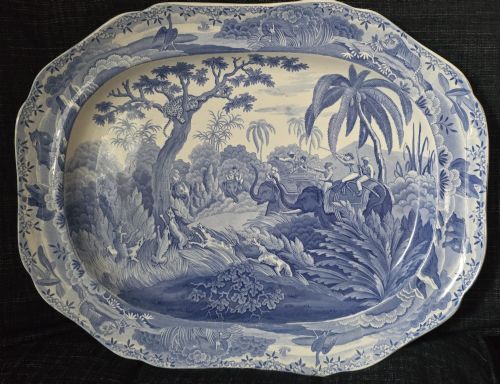
A blue pearlware platter belongs primarily to the late eighteenth and nineteenth centuries, spanning Georgian and Regency periods. These serving dishes appear in large formats for meat and fowl, often featuring characteristic blue transfer-printed scenery.
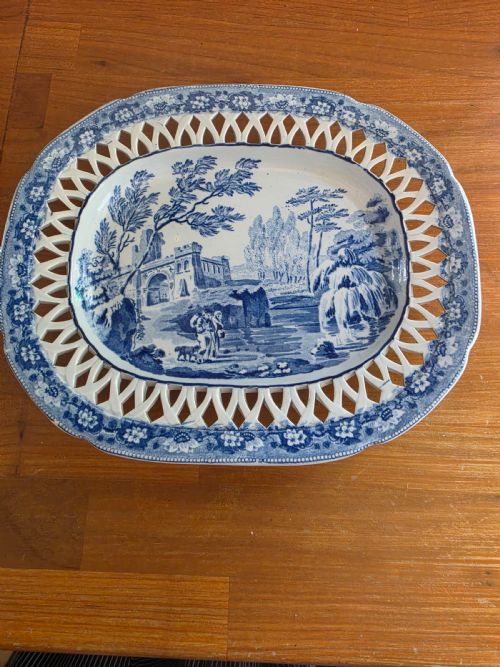
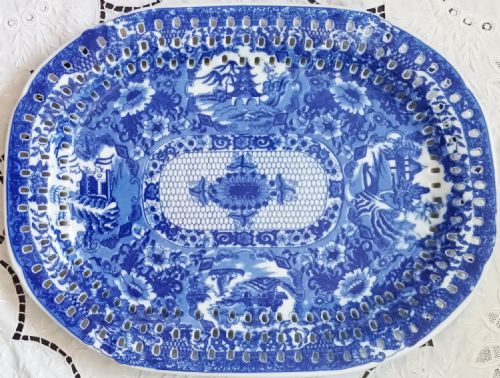
The most typical examples met here carry English country scenes, chinoiserie motifs, or topographical views transferred onto a slightly bluish-tinted ceramic body. They function as robust centrepieces for dining tables, combining decorative ambition with practical service.
Makers and potteries applied various named patterns, from classic willow designs to exotic topographical studies like the Bridge of Lucano or Fair Mount near Philadelphia. Collectors encounter these large plates and serving dishes alongside related drainers, tureens, and chargers.
Materials and Technique
Potteries manufactured these items using refined earthenware bodies coated in a feldspathic glaze containing small amounts of cobalt, which settled into a characteristic bluish pool around footrings and recesses. This pearlware body bridged the gap between earlier creamware and later ironstone.
Makers applied decoration using copper plate transfer printing, pressing tissue paper inked with cobalt pigment onto the bisque or glazed ceramic before firing. This technique allowed intricate patterns such as net borders, classical ruins, and animal scenes to be reproduced consistently across large serving platters.
Listings for blue pearlware span the Georgian, Regency, and Victorian periods, using earthenware bodies finished with cobalt pigment and glaze.
Assessing Quality and Execution
Quality rests in the crispness of the transfer print and the depth of the cobalt pigment against the pearlware glaze. Superior pieces exhibit sharp registration without blurring, smudging, or dry patches in the blue transfer.
Form and modelling also set items apart, particularly where platters incorporate pierced galleries, fretted rims, or integrated draining wells for carving joints of meat. Early pieces with well-defined impressed factory marks or clear named topographical patterns generally represent the finer end of production.
Davenport·Thomas Lakin·Brameld and Co·John Rogers and Son·Spode
The Blue Pearlware Platter Glossary
- Pearlware
- A refined earthenware developed in the late eighteenth century with a glaze containing a small amount of cobalt to counteract the natural cream colour of the clay.
- Transfer printing
- A method of decorating ceramics by engraving a design on a copper plate, pulling an impression on tissue paper, and transferring it onto the pottery piece.
- Cobalt pigment
- A metallic oxide used under the glaze to produce a deep, stable blue colour that withstood high kiln temperatures without fading.
- Fretted rim
- An openwork or pierced border detail cut into the clay edge of a serving dish or platter before firing.
- Meat drainer
- A perforated ceramic insert placed inside a platter to allow juices to pool away from the carved joint during service.
Blue Pearlware Platter: Frequently Asked Questions
How do I clean a blue pearlware platter?
Wash these ceramic pieces gently by hand using warm water and mild soap, avoiding abrasive scrubbers or modern dishwashers that can damage the antique glaze.
Dry them thoroughly with a soft cloth to protect the underlying earthenware body from moisture penetration.
Were these platters used for everyday dining?
Potteries produced these large serving dishes primarily for substantial family meals and formal dining in Georgian and Victorian households. They held roasted meats, fowl, and large courses at the centre of the table.
Many examples retain integrated wells or drainer inserts designed specifically to catch juices during carving.
Can I hang an antique platter on the wall?
Hanging these serving dishes requires a specialist wire hanger with protective plastic coatings that grips the rim securely without placing undue pressure on the earthenware.
Ensure the wall fastening is anchored firmly into a stud or uses a proper wall plug, as larger platters possess considerable weight.