
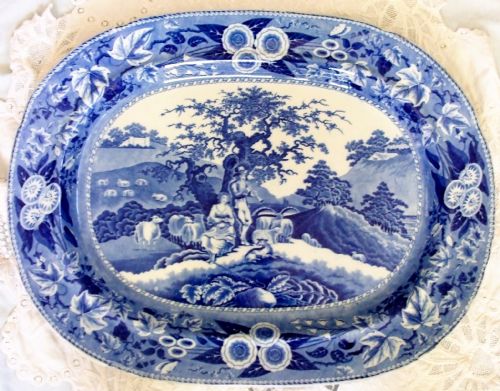


Blue Transferware Meat Tray
A blue transferware meat tray is a large ceramic vessel used for joint service, prized for its deep cobalt scenes.
Blue Transferware Meat Tray
A blue transferware meat tray is a broad serving platter designed for presenting joints of meat at the table. These ceramic pieces appear across the Georgian and Victorian periods, taking forms such as serving platters and meat plates. Examples frequently display traditional landscape patterns, including chinoiserie designs and classical ruins.
The pieces on this page span the nineteenth century, including specific dates around eighteen hundred, eighteen thirty, and eighteen ninety. Makers and patterns range from Thomas Lakin and Don Pottery to Spode and Copeland and Garrett. Collectors encounter earthenware and pearlware fabrics decorated in deep cobalt pigment under a lead glaze.
Materials and production methods
Potters formed these large serving dishes from earthenware or pearlware bodies, shaping them into substantial platters to support heavy roasts. Artisans applied cobalt pigment using copper plate transfer printing, transferring detailed engraved scenes onto the ceramic surface. A clear lead glaze was then applied over the transfer print before firing to seal the design and provide a glossy finish.
Listings feature earthenware and pearlware fabrics decorated with cobalt pigment under lead glaze, spanning the Georgian and Victorian eras.
Judging the quality of transferware platters
Quality rests upon the clarity of the cobalt transfer print and the crispness of the engraved scene across the ceramic surface. Superior pieces maintain registration without blurring or smudging in the transfer, showing sharp details in complex motifs like architectural ruins or pastoral figures. The proportion and weight of the earthenware body, alongside an even glaze application, distinguish fine serving dishes from standard utilitarian platters.
Spode·Copeland and Garrett·Thomas Lakin·Don Pottery·Mason·Elkin Knight and Bridgwood
The Blue Transferware Meat Tray Glossary
- Transferware
- A pottery decoration technique where an engraved copper plate applies a printed design onto ceramic bisque using metallic oxides before glazing. This method allowed intricate pictorial scenes to be produced efficiently across large serving platters.
- Pearlware
- A refined earthenware body developed in the late eighteenth century featuring a subtle bluish tinge in the glaze to mimic Chinese porcelain. It forms the smooth substrate for many early nineteenth-century transfer-printed meat dishes.
- Earthenware
- A porous, opaque ceramic body fired at lower temperatures than stoneware or porcelain, requiring a vitreous glaze to hold liquids. It serves as the primary material for nineteenth-century English meat platters.
- Chinoiserie
- A decorative style reflecting European interpretations of East Asian artistic traditions, frequently featuring pagodas, bridges, and figures. This aesthetic appears across numerous nineteenth-century blue and white pottery patterns.
Blue Transferware Meat Tray: Frequently Asked Questions
What were blue transferware meat trays used for?
These large ceramic platters served as the central vessel for presenting roast meat and joints at grand dining tables. Their generous surface area accommodated substantial meals during nineteenth-century dining.
Some specialised forms included integrated wells or reservoirs to catch carving juices during service. They functioned both as practical dining room items and as decorative displays.
How do I date a transferware meat tray?
Dating relies on ceramic body composition, maker marks stamped or printed on the reverse, and stylistic indicators of the transfer pattern. Pearlware bodies typically point toward the early decades of the nineteenth century.
Later Victorian pieces often feature heavier earthenware fabrics and different registration marks. Comparing the pattern name and border style with known pottery production eras helps narrow the date further.
Are these platters safe for daily use?
While these antique earthenware dishes remain structurally robust, historic lead glazes and porous bodies make modern food use inadvisable. Acidic foods can interact with nineteenth-century glaze surfaces over time.
Most collectors prefer to display these serving platters on walls, dressers, or table stands. Gentle cleaning with lukewarm water without harsh detergents preserves the cobalt print.
What is the difference between earthenware and pearlware?
Pearlware is a specific refined iteration of earthenware developed to achieve a whiter, porcelain-like appearance by adding cobalt to the transparent glaze. This creates a distinct bluish pooling effect in crevices and around foot rims.
Standard earthenware used for meat trays often presents a warmer, creamier body tone underneath the printed design. Both materials were widely employed by Staffordshire potteries throughout the nineteenth century.