



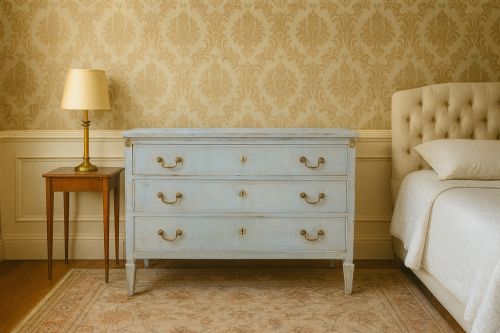

Blue Painted Storage Chest
A blue painted storage chest brings regional character and practical utility into a room through centuries-old pine, oak, and hand-applied pigments.
Blue Painted Storage Chest
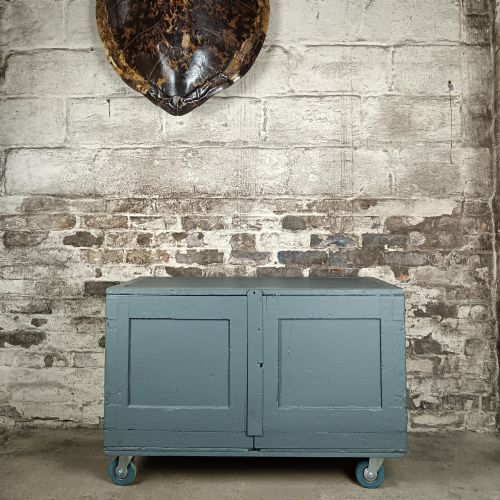
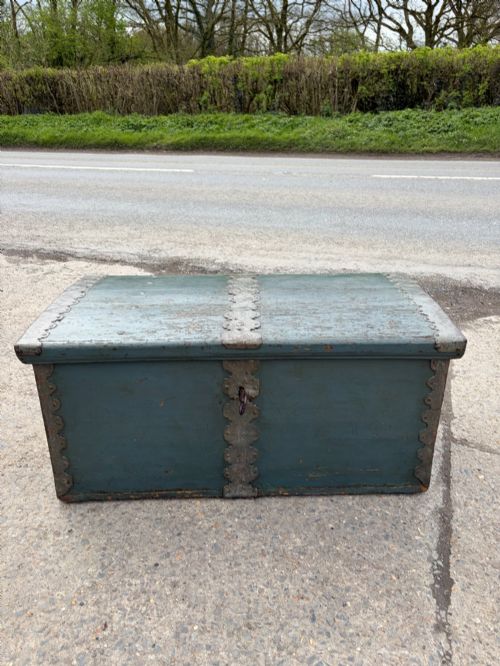
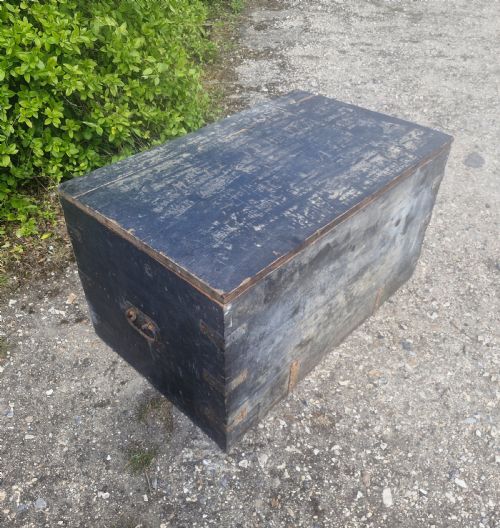
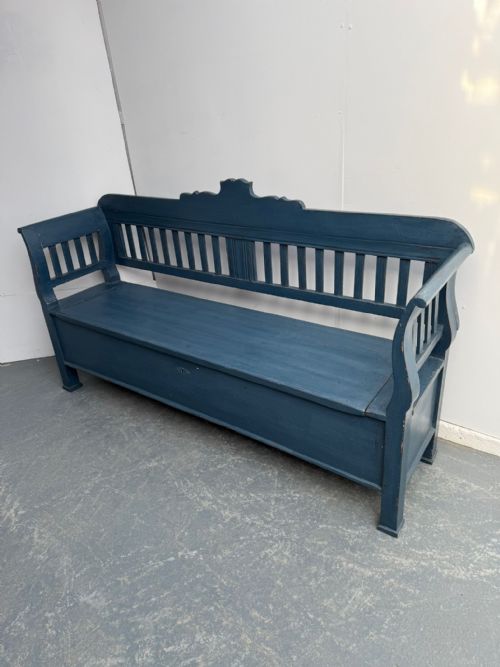
A blue painted storage chest encompasses regional blanket boxes, marriage coffers, commodes, and dome-top trunks from the eighteenth and nineteenth centuries. The pieces on this page originate primarily from Swedish, English, Hungarian, Italian, and Austrian workshops, reflecting both rustic country traditions and refined neoclassical tastes.
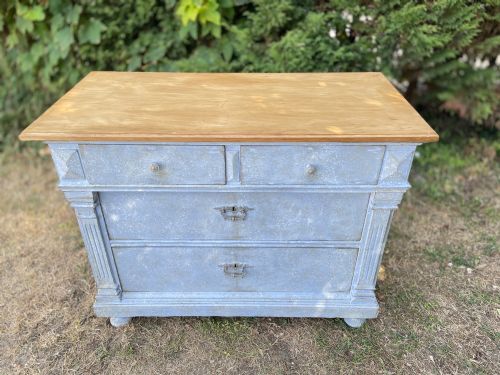
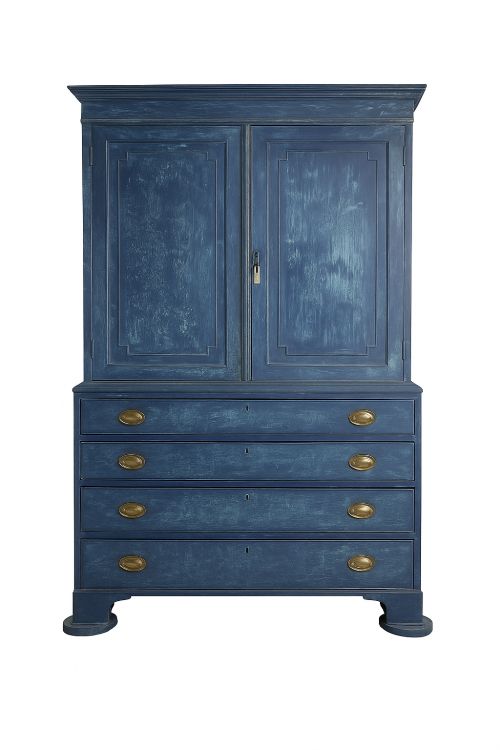
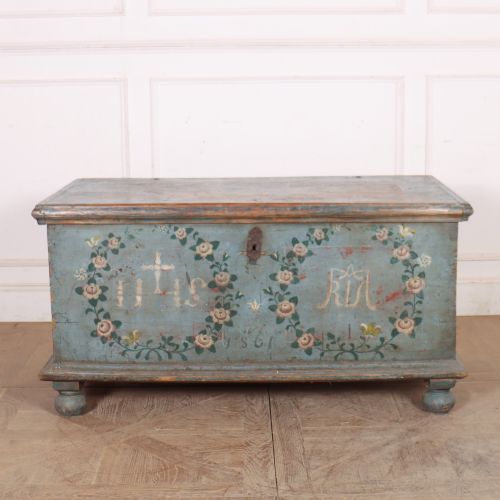
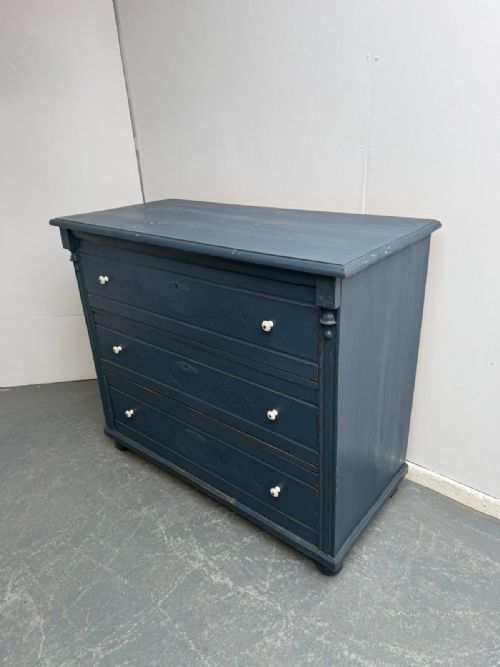
The version most commonly met on this page is the nineteenth-century Scandinavian pine coffer or marriage chest, often finished in original blue or teal paint. Alongside these sit Georgian and Victorian chests of drawers and commodes featuring hand-painted surfaces, faux marble tops, and iron or brass hardware.
Materials and Construction
Carpenters built these pieces predominantly from solid pine and oak, using traditional dovetail joints, pegged framing, and panelled construction to ensure durability. Iron hinges, locks, and brass handles secure the lids and drawers of trunks, coffers, and campaign cases.
Makers applied natural pigments over wooden surfaces, sometimes layering colours or creating mottled and distressed finishes. Protective coats of paint preserved the soft woods beneath, leaving surfaces that show the brush marks of their period.
Several marriage chests include hidden internal compartments designed for safely storing wedding documents and household currency.
Gradations of Merit
Quality rests in the survival of original painted surfaces rather than later restorations or over-painting. Pieces retaining their earliest layers of blue, teal, or mottled pigment carry greater authenticity.
The integrity of the structural timber and regional hardware further separates standard utility items from finer examples. Hand-carved details, intact metal bindings, and authentic period locks distinguish superior coffers and commodes.
The Blue Painted Storage Chest Glossary
- Commode
- A low chest of drawers or cabinet on short feet, common in eighteenth and nineteenth-century continental European interiors. These pieces often feature decorative painted motifs or faux marble tops.
- Cofer
- A large strongbox or chest with a hinged lid, traditionally used for storing valuables, linen, or documents. Examples often display dome tops and wrought iron reinforcements.
- Marriage chest
- A ceremonial box commissioned to mark a wedding, frequently inscribed or painted with specific regional folk art designs. They served as practical household storage for the new couple.
- Mule chest
- A storage chest fitted with one or more drawers at the base beneath the main lift-top compartment. This form bridges the evolution between the traditional coffer and the chest of drawers.
- Campaign case
- Portable furniture designed for military officers on the move, constructed for frequent transport. These pieces typically incorporate robust handles, protective brass corners, and durable framing.
Blue Painted Storage Chest: Frequently Asked Questions
What is a blue painted storage chest used for?
These pieces served historical households for storing heavy textiles, blankets, clothing, and household provisions. In modern settings, they function as living room coffee tables, bedroom linen storage, or hallway statement furniture.
Their robust timber construction and hinged lids or deep drawers provide practical concealment for modern clutter while adding distinct regional character to a room.
How do I tell an 18th-century chest from a 19th-century one?
Dating relies heavily on construction methods, hardware styles, and the evolution of decorative painting techniques. Eighteenth-century pieces, such as Baroque or early Gustavian examples, often exhibit heavier timber framing, hand-wrought ironwork, and specific regional joinery.
Nineteenth-century items frequently show industrial improvements in hardware and machine-sawn timber elements alongside folk art or revival decorative styles.
Are the blue painted finishes original?
Many listings preserve original or early period paint layers, which develop a soft patina and subtle craquelure over time. Dealers describe whether a surface shows authentic age-related wear or later decorative refreshing.
Examining the interface between the paint, iron fittings, and underlying timber helps determine the historical continuity of the exterior colour.
How do I care for an antique painted wood chest?
Protect the fragile historical paint layers by keeping the chest away from direct sunlight, extreme temperature shifts, and excessive moisture. Dust the surface gently with a dry, soft cloth without applying modern chemical polishes.
Maintaining stable indoor humidity prevents the underlying pine or oak from shrinking and preserves the stability of both the wood and the pigment.