




Antique Iron Travel Trunk
An antique iron travel trunk is a heavy-duty container built for transit, combining utilitarian metalwork with timber or leather for long journeys.
Antique Iron Travel Trunk
An antique iron travel trunk is a substantial storage piece designed for personal conveyance, appearing across the eighteenth, nineteenth, and early twentieth centuries. When searching for this phrase, a buyer encounters robust constructions intended to withstand the rigours of transit by carriage, ship, or rail.
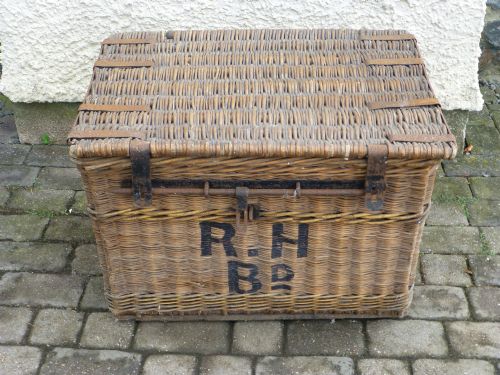
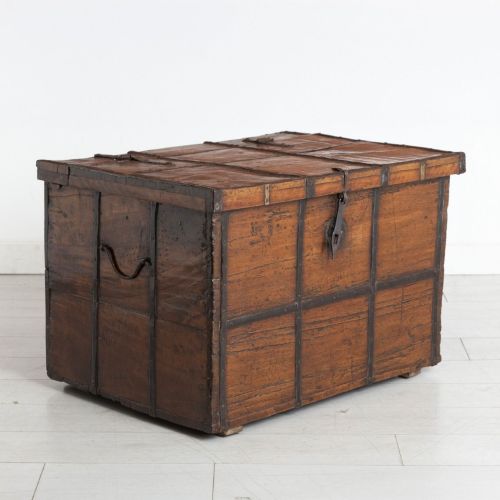
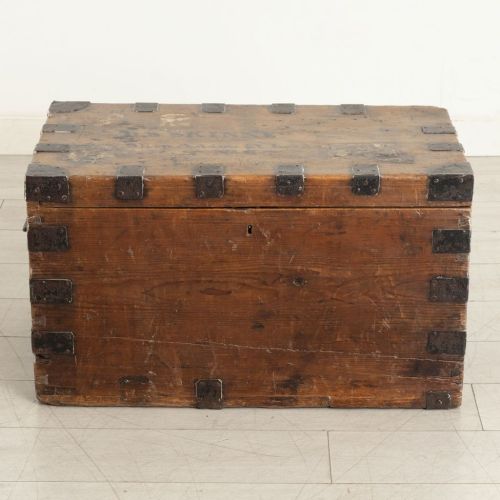
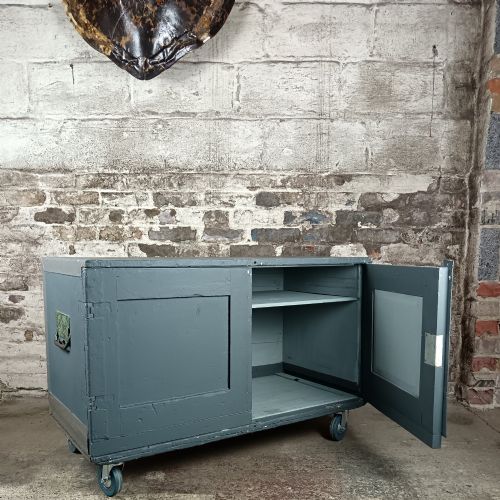
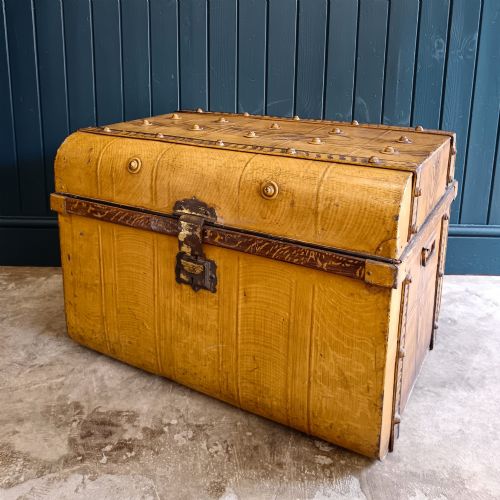
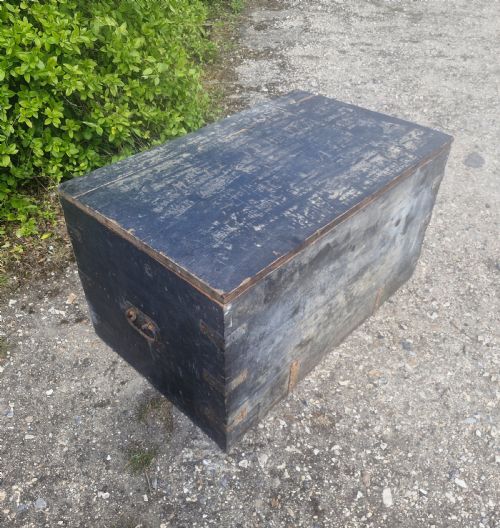
The most common examples on this page are nineteenth-century and Victorian pine trunks strengthened with iron bands, sheet metal, or brass corners. Many feature painted surfaces, dome tops, or specialised linings such as zinc or red interiors.
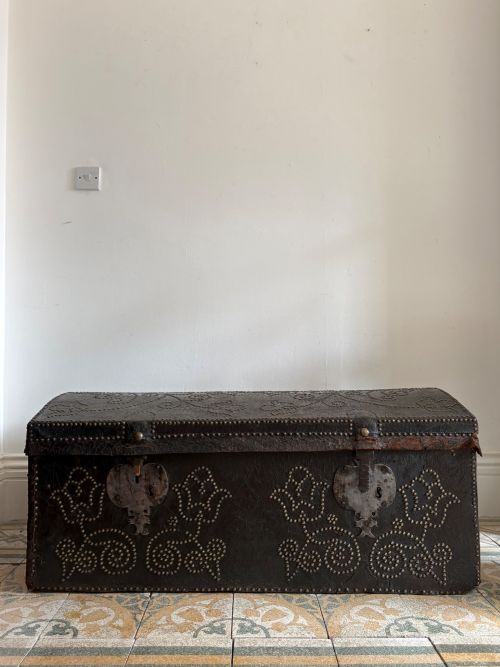
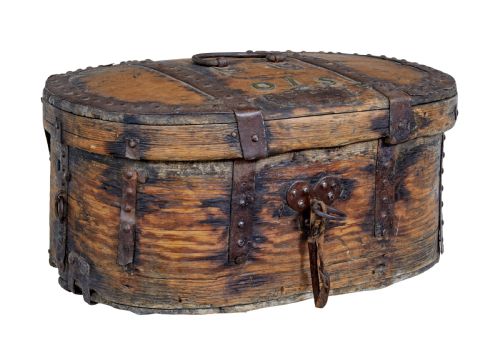
Earlier variants from the eighteenth century emerge in oak, hide, or leather with dense iron studding and robust carry handles. Military campaign pieces also feature prominently, built for transport by officers and officials.
How they were made
These trunks rely on a primary carcase of timber such as pine, oak, or mahogany, joined to form rigid storage boxes. Makers then reinforced these wooden bodies with iron bands, steel binding, or sheet metal cladding to protect against heavy handling.
Surface treatments and hardware define the construction details, utilising brass corners, leather or hide coverings, and iron stud work. Interiors frequently showcase specialised linings in zinc or painted finishes, alongside makers' labels and provenance markings.
Antique Iron Travel Trunk Retail Price Guide 2026
Typical asking prices for iron travel trunk among the pieces listed under this phrase on Sellingantiques today, from the lower quarter to the upper quarter. They describe what is for sale here now, not the wider market.
Listings feature travel trunks spanning the eighteenth century, the Georgian era, and the Victorian period up to the early twentieth century.
What varies in quality
Quality rests in the grade of materials and the complexity of the hardware, separating standard utility pieces from high-status containers. Finer examples display meticulous iron banding, superior cabinet timbers like mahogany or golden oak, and intact internal linings.
Allen of London·Elkington·H D Dean·Seabrook of St.Pauls
The Antique Iron Travel Trunk Glossary
- Campaign chest
- A portable storage box or chest designed for military officers on active service, typically built in sections with recessed brass handles for ease of transport.
- Dome top
- A rounded lid construction designed to shed water during travel and provide extra internal capacity for garments.
- Hide
- Untanned or dressed animal skin used as a tough outer covering for early trunks and coffers.
- Iron bound
- A method of reinforcing wooden chests with straps, bands, or corners of iron to prevent structural splitting during transit.
- Zinc lined
- An internal protective metal sheathing applied to trunks to keep contents dry from moisture during long voyages.
Antique Iron Travel Trunk: Frequently Asked Questions
How do I date an antique iron travel trunk?
Dating relies on the structural materials, hardware styles, and any accompanying maker labels or provenance. Eighteenth-century examples often feature leather, hide, and heavy iron studding on oak frames, while nineteenth-century versions typically employ pine reinforced with iron bands or sheet metal.
Later Victorian and turn-of-the-century trunks introduce specialised metal linings, such as zinc, and more refined brass or steel fittings. Examining the construction methods of the internal compartments and hinges provides further chronological clues.
Were these trunks used for military travel?
Many trunks serve as campaign chests and transport packing cases built specifically for military officers and travellers on active service. These pieces emphasise sturdy construction with reinforced corners and recessed handles designed to endure rough handling in the field.
Civilian travel trunks share similar robust qualities but often incorporate decorative leatherwork, painted finishes, or dome tops suited for carriage and steamship journeys.
How can I use an antique travel trunk at home?
These trunks function effectively as living room coffee tables, blanket chests, or heavy-duty storage repositories for household items. Their substantial lids and sturdy wooden or metal carcases provide a stable surface alongside concealed storage space.
Placing a trunk at the foot of a bed or within a hallway utilises its historic utility while adding texture and character to an interior scheme.
What is the difference between a dome top and a flat top trunk?
Dome top trunks feature a curved lid that historically encouraged water runoff during outdoor travel and accommodated bulky garments without crushing them. They tend to appear on earlier eighteenth and nineteenth-century hide or pine examples.
Flat top trunks became increasingly popular later in the nineteenth century as steamer trunks, designed to stack neatly in luggage compartments and cabins during transit.