





Antique Metal Coffer
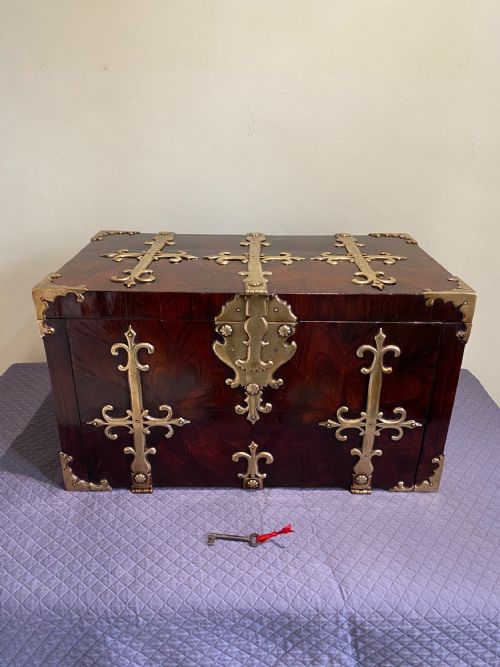
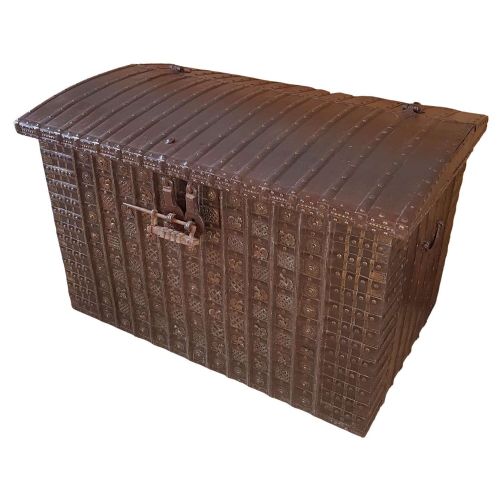
When you search for an antique metal coffer, you are looking at heavy-duty storage pieces reinforced with iron, brass, and steel.
Antique Metal Coffer
An antique metal coffer is a robust storage container built to secure valuables, travel across continents, or hold household goods. These pieces bridge the gap between utilitarian duty and fine craftsmanship, serving historically as portable strongrooms, silver chests, and domestic storage.
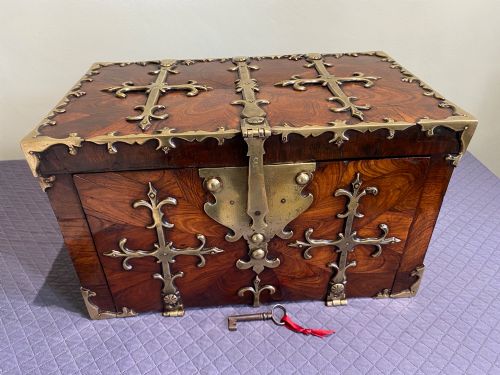
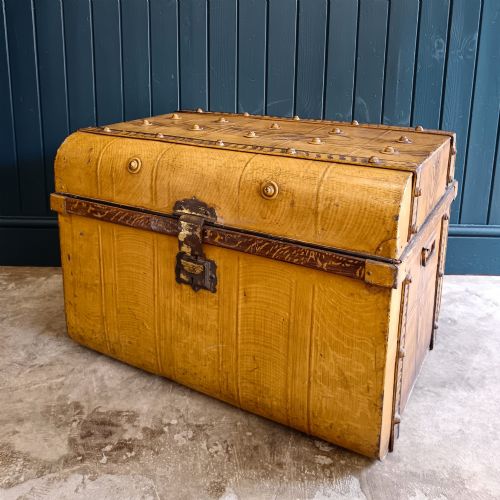
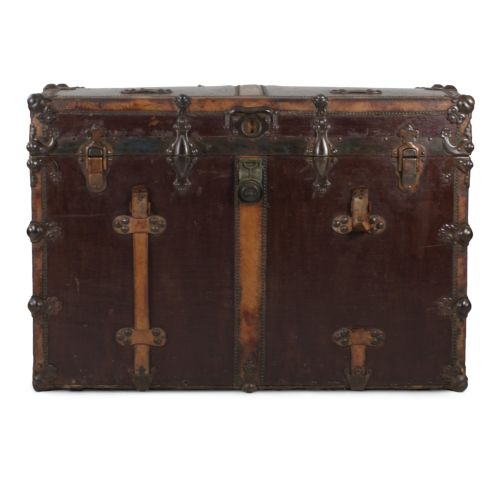
The versions you meet on this page span several centuries, featuring early iron-bound strongboxes alongside Victorian travel trunks and Arts and Crafts log bins. Materials range from solid oak and pine encased in banded iron to kingwood veneers, leather, and heavy cast steel.
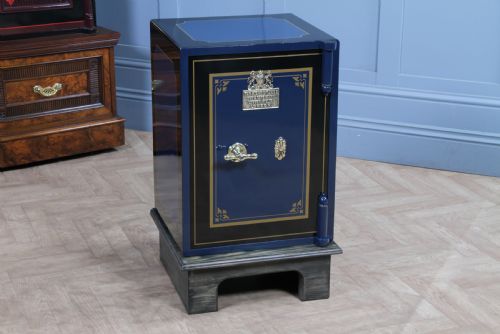
Origins vary widely across the selection, taking in English oak silver chests, Continental steel trunks, German safes, and Indian dowry chests. This geographic and chronological spread means form follows function closely, shifting from medieval security caskets to nineteenth-century campaign luggage.
How they were made
Makers constructed these pieces using dense timbers such as oak, pine, and teak as a core structural base, often lining them with zinc or paper to protect contents from moisture. They reinforced these wooden carcases with strapwork, corner brackets, and heavy bands of wrought iron, steel, or brass.
Security relied on intricate mechanical engineering, employing complex internal locking mechanisms, multi-bolt systems, and concealed keyholes operated by specialised keys. Surface treatments varied from natural waxed finishes and leather coverings to painted facades, faux-wood effects, and polished metal fittings.
Materials recorded across the selection include heavy cast iron, wrought iron, brass, steel, copper, alongside oak, pine, teak, and kingwood.
What varies in quality
Quality rests primarily on the integrity of the locking mechanism and the original operational condition of the internal hardware. Pieces retaining their complex multi-bolt locks and working keys stand apart from those altered or stripped of their original mechanisms.
Construction depth dictates value, separating standard pine travel trunks from heavily armoured strongboxes and finely veneered seventeenth-century pieces. The calibre of hand-forged ironwork, precision joinery, and surviving original linings such as decorated paper or fabric determine the standing of each example.
Samuel Pratt·Tanns Defiance London·Seabrook of St Pauls London
The Antique Metal Coffer Glossary
- Armada chest
- A heavy steel or iron strongbox produced in Nuremberg, Germany, featuring a complex lid-locking mechanism that engages multiple bolts simultaneously. These pieces were exported widely across Europe for securely storing money and documents.
- Silver chest
- A heavy wooden box, frequently oak or pine, reinforced with iron strapping and lined with baize or leather to hold family silver. They were designed for secure household storage and safe transport during travel.
- Damchiya
- A traditional Indian dowry chest constructed from heavy wood and banded with decorative ironwork, used for storing textiles and valuables. These pieces often incorporate elaborate locking systems and secret compartments.
- Strongbox
- A secure metal or metal-bound box built specifically to resist forced entry, utilising heavy cast iron, steel plates, and specialised internal levers. They served banks, merchants, and wealthy households.
Antique Metal Coffer: Frequently Asked Questions
How were antique metal coffers used?
These pieces served multiple duties across centuries, functioning primarily to transport valuables safely during travel or to secure currency and documents within a home. Merchants, military officers, and noble households relied on them to protect silver, legal papers, and bullion.
Over time, many transitioned into stationary domestic roles, acting as blanket boxes, log bins, or specialised storage furniture. Their robust construction ensured contents remained safe from theft, fire, and moisture during long journeys.
How do I date an iron bound chest?
Dating relies heavily on construction methods, fastener types, and the evolution of locking mechanisms. Early pieces from the sixteenth and seventeenth centuries feature hand-forged iron strapwork, dovetail joints, and complex internal lid locks that require specialised keys.
Later nineteenth-century examples display machine-rolled steel, brass corners, zinc linings, and maker labels associated with the Victorian travel boom. Stylistic revivals also occur, so examining the timber core and interior linings helps confirm the true period.
Are the locks on these coffers functional?
Many retain their original locking mechanisms, though operational status varies depending on whether keys survived over the centuries. Complex multi-bolt systems found on Armada chests and Victorian safes are often intact, while others operate as secure latches.
Restoration work on these mechanisms requires specialist knowledge to preserve the original internal levers and warding. Buyers should check individual listings to confirm if a working key is present with the piece.
Where should I place a metal coffer at home?
Their heavy presence makes them well-suited as focal points in a living room, hallway, or study, often doubling as coffee tables or blanket storage. Placing them away from direct heat sources protects the underlying timbers and leather or painted surfaces.
Due to their substantial weight, especially iron-bound and cast steel variants, ensure the chosen floor surface can support the load. They anchor a room effectively when paired with lighter contemporary furniture.