


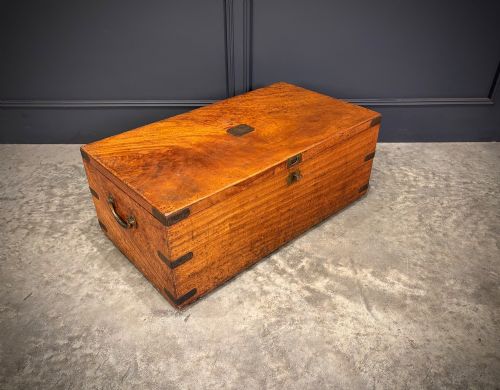

Vintage Military Coffer
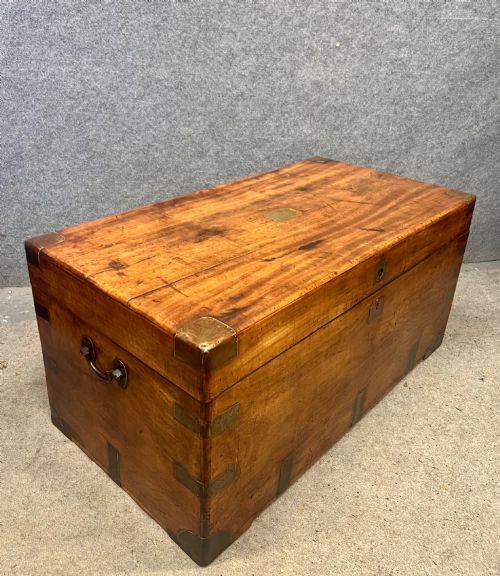
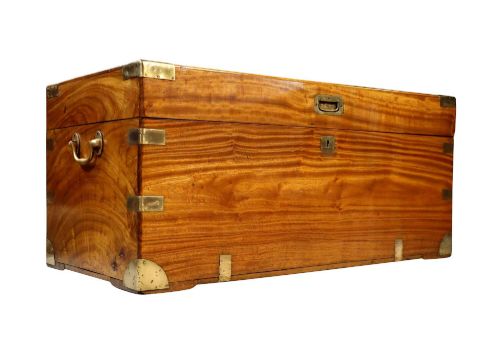
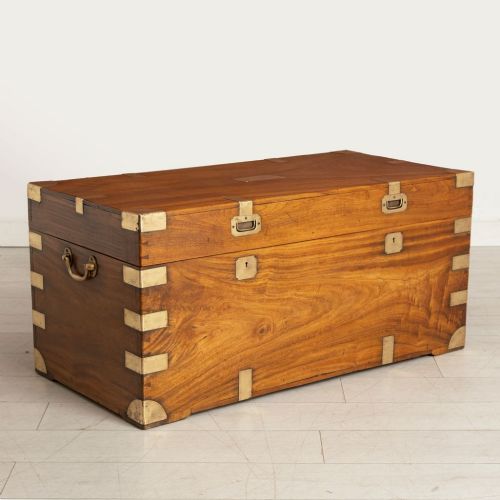
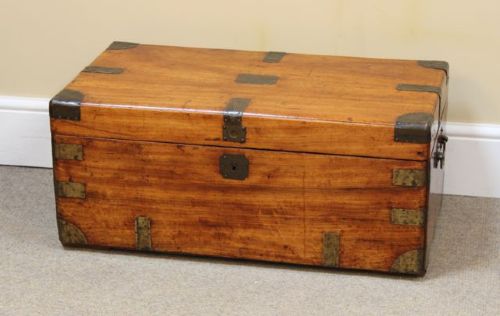
A vintage military coffer offers portable storage built for travel, combining robust timbers with flush hardware designed to withstand rough transport.
Vintage Military Coffer
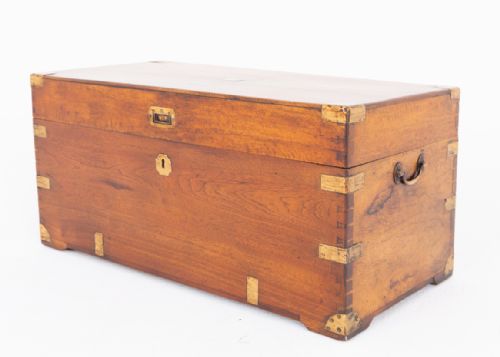
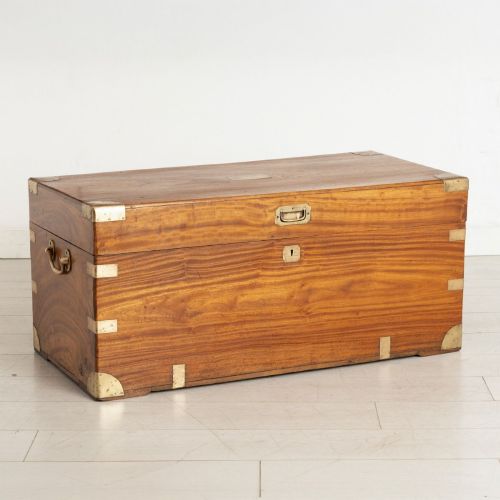
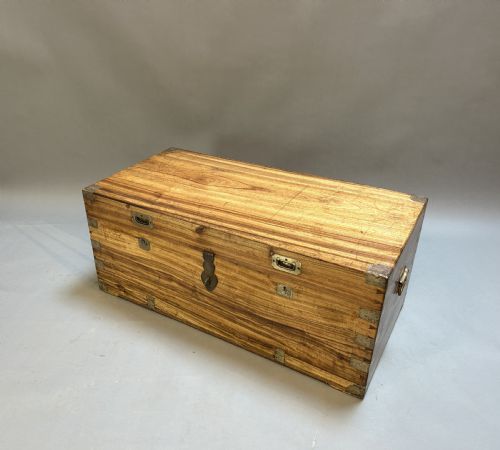
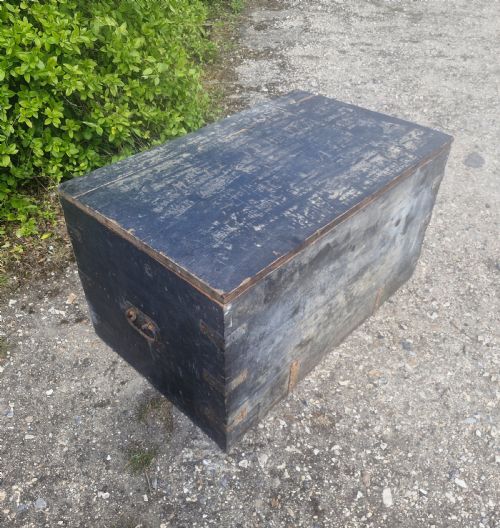
A vintage military coffer serves as a durable travel trunk constructed for officers and regiments on the move during the nineteenth and early twentieth centuries. These chests provide rigid storage designed to withstand long journeys by land and sea.
Camphor wood and teak form the core of what you will encounter on this page, often framed in sections to facilitate packing and transport. The pieces range from standard camphor chests to fitted travel trunks and maritime pine boxes.
The style spans Victorian military campaign designs through to early twentieth-century examples. Most surviving pieces date from the nineteenth century, including specific periods like the 1850s, 1860s, and 1880s.
How they were made
Timber selection prioritises dense, resilient woods such as camphor wood and teak, chosen for their durability and resistance to insects and moisture during overseas service. Pine and walnut also appear in specific regional or maritime contexts.
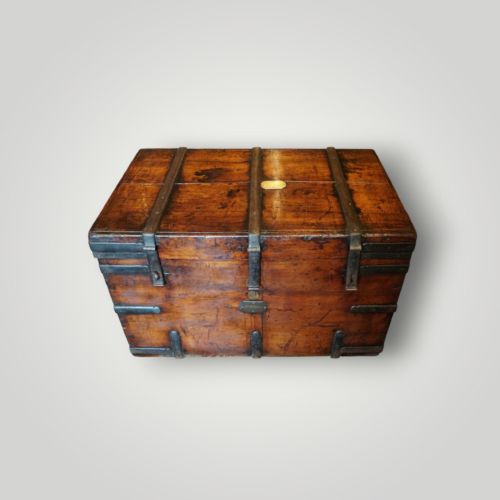
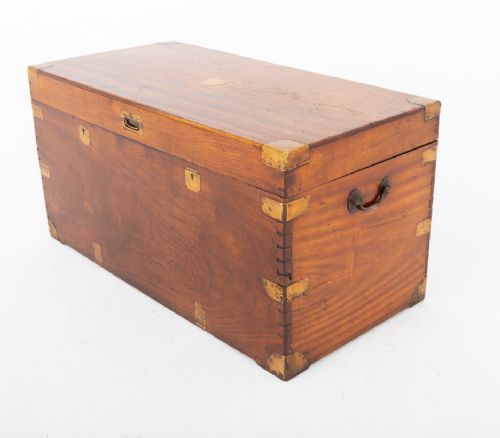
Brass corners, straps, and flush-fitting handles reinforce every joint to protect the box against the impacts of transit. Iron bindings and locks add structural integrity to heavy transport cases and travel trunks.
Sir Randolph Isham Routh KCB, Waterloo Commissary General, once relied on an iron-bound trunk listed here.
What varies in quality
The sophistication of the internal fittings distinguishes standard transit trunks from officer-grade receptacles. Fitted compartments, secret drawers, and original hardware elevate the utility and complexity of a piece.
The weight and gauge of the brass hardware, alongside the thickness of the camphor wood or teak planks, define the structural grade. Original keys, operational locks, and intact travel inscriptions denote higher preservation levels.
The Vintage Military Coffer Glossary
- Campaign chest
- A modular storage chest built in sections with recessed brass handles to facilitate stacking and transport on military campaigns. These trunks were designed to travel across rough terrain without sustaining damage.
- Camphor wood
- An aromatic timber frequently utilised for military coffers because its natural scent repels insects. It also withstands humid climates exceptionally well.
- Flush hardware
- Handles, brackets, and keyplates inset into the wood so they do not protrude beyond the surface. This prevents snagging during loading and transport.
- Brass binding
- Metal strips secured along the edges and corners of a chest to reinforce the joints against heavy impacts. It provides both structural strength and visual definition.
- Maritime pine
- A resinous softwood employed in coastal and shipboard storage boxes. It offers a distinct grain pattern compared to tropical hardwoods.
Vintage Military Coffer: Frequently Asked Questions
How were military coffers used?
Officers utilised these chests to transport uniforms, maps, and personal belongings during active service and relocation. The robust construction protected contents from moisture and rough handling on campaigns.
Many examples feature sectional designs or reinforced corners to withstand frequent loading onto carts, ships, and pack animals.
What woods are most common?
Camphor wood and teak dominate the selection, valued for their durability and resilience in harsh climates. Pine and walnut appear less frequently in specific maritime or domestic contexts.
Camphor wood is particularly prevalent due to its natural aromatic properties which kept pests away from stored textiles.
How do I identify a campaign chest?
Look for recessed brass handles, reinforced metal corners, and sectional construction meant for easy dismantling. These functional traits distinguish military travel trunks from standard domestic furniture.
Many pieces also bear campaign-related details such as regimental inscriptions, zinc linings, or original locks with keys.
How do I care for camphor wood?
Keep the wood away from direct heat sources and harsh sunlight to prevent the natural oils from drying out. Regular dusting with a soft cloth maintains the finish.
Avoid heavy liquid polishes that can dull the grain and seal the distinctive natural scent of the camphor timber.