
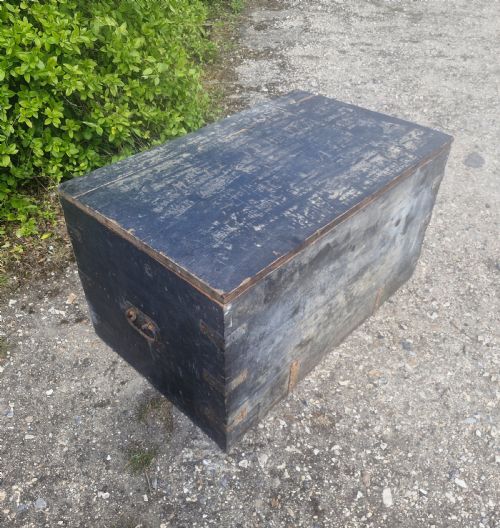

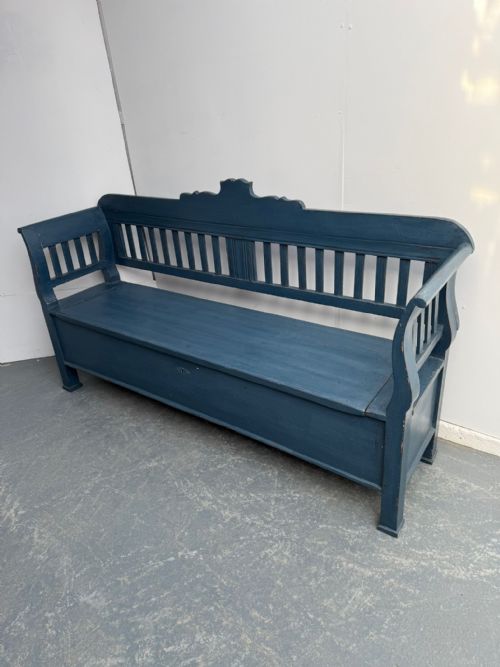


Blue Painted Storage Box
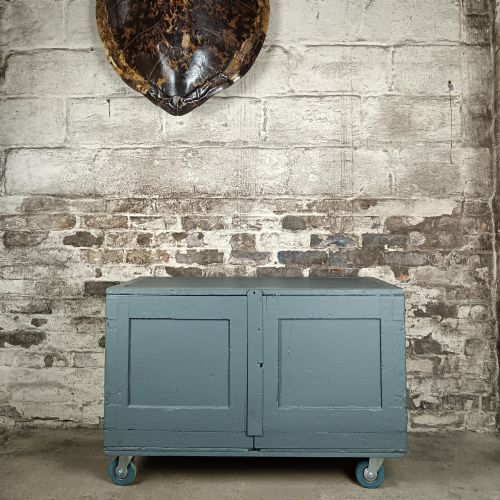
A blue painted storage box brings robust folk tradition into a modern room, offering sturdy utility wrapped in centuries of hand-finished pigment.
Blue Painted Storage Box
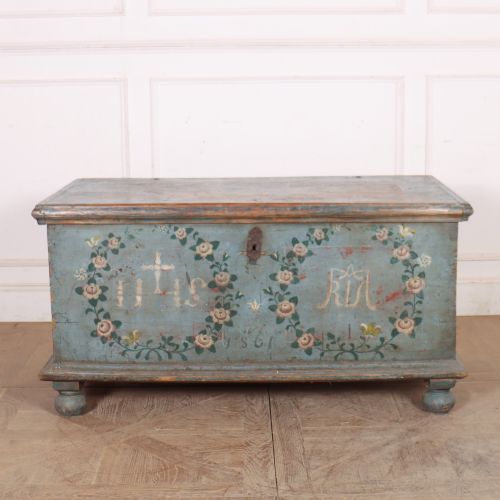
A blue painted storage box encompasses a variety of utilitarian vessels designed to hold household goods, blankets, and provisions across diverse domestic settings. Buyers seeking this search phrase encounter pieces ranging from heavy Scandinavian marriage chests and dome-top coffers to smaller bentwood apothecary boxes, log containers, and military trunks.
The material record on this page leans heavily towards pine construction, accompanied by wood, painted wood, wrought iron, and iron fittings. Pieces span the Georgian, Victorian, and later eras, with significant representation from Swedish folk art traditions alongside English, Norwegian, and Alpine regional pieces.
Forms extend beyond simple square boxes to include mule chests with lower drawers, bench settles with integrated storage, and cylindrical tine food boxes. These items served essential domestic functions in rural and military contexts before finding a place in contemporary interiors.
Materials and Technique
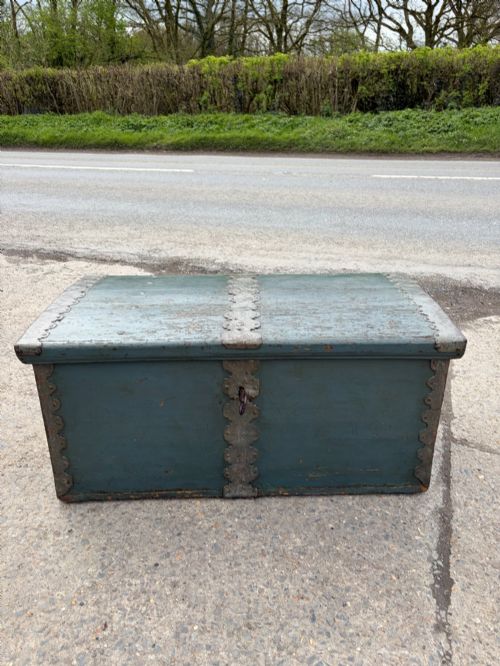
Makers constructed these boxes primarily from solid pine and native woods, utilising traditional joinery such as dovetailing or pegged joints to withstand heavy daily use. Metal reinforcement frequently appears in the form of wrought iron bands, hinges, and corner plates to secure lids and corners against travel or frequent opening.
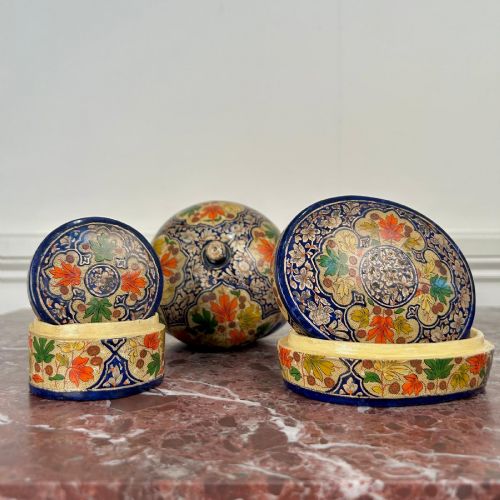
Surfaces received layers of oil- or water-based blue paint, often applied as an original decorative finish or folk art scheme that evolved over generations. Smaller containers like the tine box employed bentwood construction, while papier-mâché and lacquer emerged in specific regional traditions.
Listings feature pine, oak, and painted wood items spanning the Georgian and Victorian eras, dominated by Scandinavian folk art aesthetics.
Assessing Quality
Quality rests in the integrity of the original paint surface and the balance of regional folk decoration against structural wear. Pieces retaining unrefreshed, weathered layers of early blue pigment demonstrate higher integrity than those stripped or heavily overpainted in later decades.
The sophistication of regional hand-painting - whether Scandinavian floral motifs or simple geometric banding - distinguishes standard utility items from masterworks of folk art. Construction solidity, original iron hardware, and intact interior compartments further elevate the stature of a chest or box.
The Blue Painted Storage Box Glossary
- Coffer
- A heavy wooden chest traditionally used for storing valuables, linen, or dry goods. These sturdy containers often feature hinged lids and iron reinforcement.
- Mule chest
- A storage chest characterised by one or more drawers built into the base beneath the main compartment. This form bridges the gap between a simple box and a chest of drawers.
- Tine
- A traditional Scandinavian wooden food box or container made from bent thin wood with overlapping seams stitched together. They frequently possess tight-fitting lids and original decorative painting.
- Cassone
- A large Italian marriage chest used historically to transport a bride's dowry to her new home. These items often display elaborate painted or carved decoration.
- Dome top
- A lid style curving upward in a semicircle or segment of a circle, designed to shed water and maximise internal storage volume. This profile appears frequently on 19th-century travel trunks and coffers.
Blue Painted Storage Box: Frequently Asked Questions
What is a blue painted storage box used for?
These boxes function primarily as versatile containers for blankets, bedding, books, and household clutter while serving as statement furniture pieces. Their robust construction allows them to double as low benches or coffee tables in living spaces.
Historically, they held marriage dowries, clothing, or food provisions in rural farmhouses and military campaigns. Today, they integrate easily into hallways, bedrooms, and reception rooms to hide everyday items out of sight.
How do I date a painted wooden chest?
Dating relies on examining the construction methods, nail types, hinge styles, and the layering of the paint itself. Hand-forged wrought iron hardware and dovetail joints cut by hand typically point toward Georgian and early nineteenth-century origins.
Paint analysis helps reveal whether the blue pigment is original or applied during a later period of folk restoration. Secondary woods used inside the box and stylistic motifs tied to specific regions like Sweden or the Alpine areas also narrow down the era of production.
Are these boxes waterproof for outdoor use?
These historical wooden containers were built for indoor domestic, military, or farm storage rather than constant exposure to the elements. Placing them outside exposes the pine timbers and original painted surfaces to moisture damage, warping, and flaking.
They thrive best in climate-controlled indoor environments where humidity levels remain stable. Regular indoor placement preserves the integrity of the historical paint layers and iron fittings.
What is a marriage chest?
A marriage chest is a decorative storage box commissioned or given to celebrate a wedding, often painted with the couple's initials, dates, or symbolic folk motifs. In regions like Sweden and Italy, these pieces formed a central part of a bride's dowry.
They frequently feature vibrant blue painted finishes and elaborate floral artwork unique to the maker's village or valley. Their narrative decoration makes them distinct among standard domestic storage vessels.