
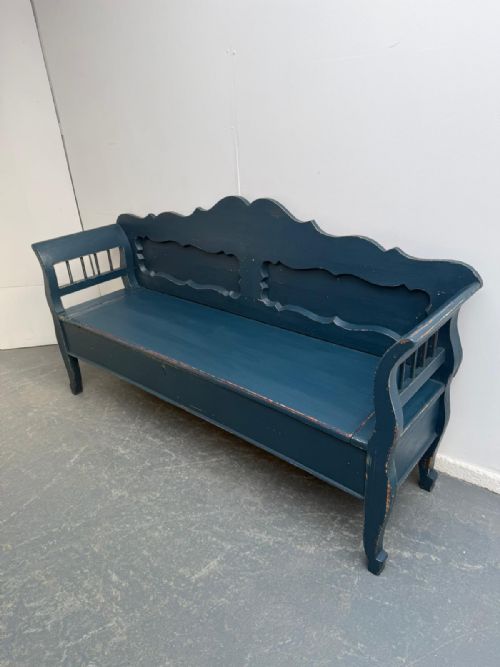


Blue Painted Coffer
A blue painted coffer brings domestic history into a room through pigment and timber.
Blue Painted Coffer
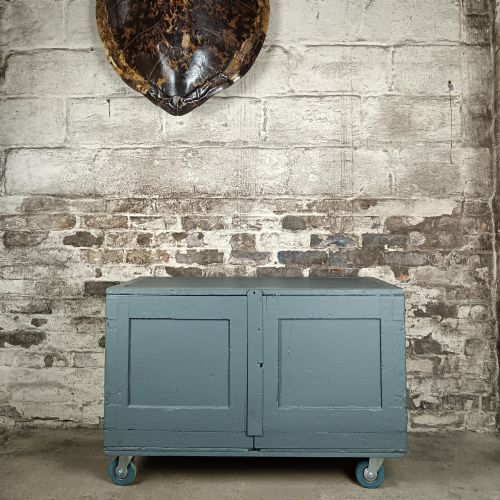
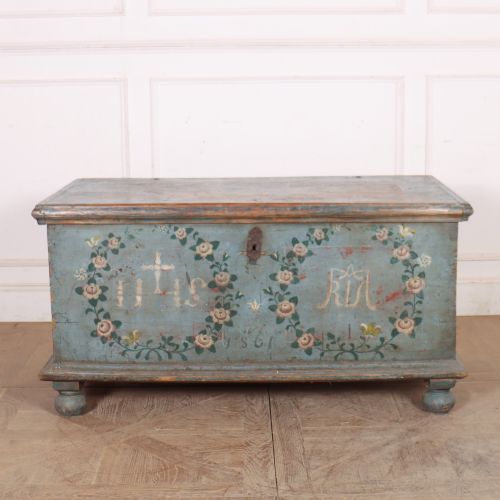
A blue painted coffer serves as a storage box or blanket chest, shaped by regional folk traditions across Europe. These pieces emerge primarily from Scandinavian, Hungarian, Italian, and English workshops, spanning the eighteenth century through to the early twentieth century.
The most common examples on this page are nineteenth-century Swedish pine coffers and dome-top chests, often finished in vibrant tempera or original blue paint. Alongside these sit rustic country benches, mule chests, and military campaign trunks adapted for domestic storage.
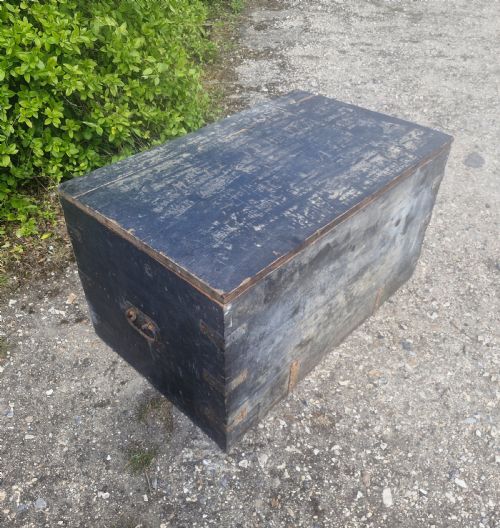
Collectors encounter various forms ranging from small oval strong boxes to large marriage chests and primitive shepherds coffers. Each object reflects the utilitarian needs of past households combined with local decorative arts.
How they were made
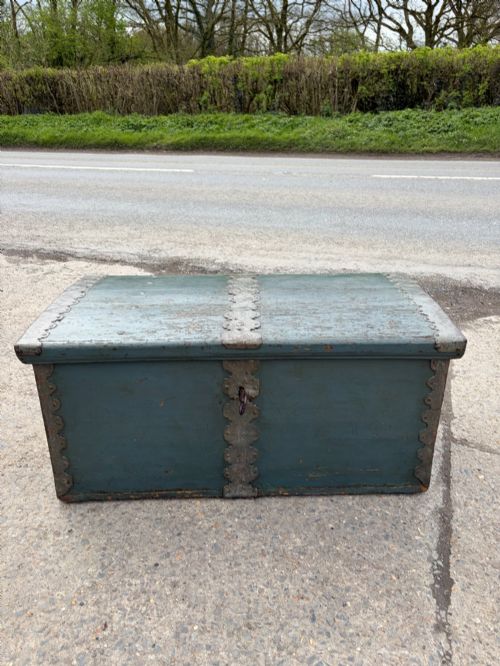
Craftsmen built these coffers using solid pine, oak, and other native woods, joined with traditional carpentry methods suited to everyday service. Iron, wrought iron, and brass provided robust hinges, lock plates, and corner brackets.
Surfaces were prepared for decoration using paint, tempera paint, or pigmented washes applied directly to the wood. Hand-painted motifs often defined marriage chests and folk art boxes, preserving the brushwork of regional makers.
Blue Painted Coffer Retail Price Guide 2026
Typical asking prices for blue painted coffer among the pieces listed under this phrase on Sellingantiques today, from the lower quarter to the upper quarter. They describe what is for sale here now, not the wider market.
Shepherds kept these rustic coffers close at hand for storing provisions during long lonely watches over wandering flocks.
What varies in quality
Quality rests in the survival of original surface finishes and the integrity of the timber construction. Pieces retaining their earliest blue paint layer command attention because later overpainting obscures the primary character.
The sophistication of the hand-painted decoration separates standard utilitarian boxes from exceptional folk art examples. Structural soundness in the lid, base, and iron hardware also determines the standing of each piece.
The Blue Painted Coffer Glossary
- Tempera paint
- A permanent, fast-drying painting medium consisting of coloured pigment mixed with a water-soluble binder. It produces a matte finish common on folk art pieces.
- Mule chest
- A traditional storage chest featuring one or more drawers beneath the main compartment. This form bridges the gap between the simple coffer and the chest of drawers.
- Cassone
- A large Italian chest or coffer traditionally commissioned for a bride's trousseau. These pieces frequently display elaborate painted or carved decoration.
- Dome top
- A rounded lid style designed to shed water and increase internal capacity. It appears frequently on nineteenth-century travel and storage trunks.
Blue Painted Coffer: Frequently Asked Questions
How were coffers used originally?
Households relied on these sturdy boxes to store valuable textiles, blankets, clothing, and documents. Their heavy construction and lockable lids kept contents safe from dampness and theft.
Over time, they also served as seating benches in kitchens and halls, doubling as functional furniture and secure storage.
How do I care for original paint?
Keep painted wooden pieces away from direct sunlight and severe humidity fluctuations to prevent the timber from warping and the pigment from flaking. Dust gently with a dry, soft cloth.
Avoid modern chemical polishes or harsh cleaning agents, as these can strip away historic tempera and oil-based paint layers.
Why do some have dome tops?
Dome-top construction allowed water to run off easily during transport and prevented heavy items from being stacked on top of the lid. This shape maximised internal storage space for bulky items like blankets.
Carpenters favoured the arched design for travelling trunks and strong boxes that needed extra structural resilience.