

Blue Ironstone Ceramic
Blue ironstone ceramic pieces are sturdy nineteenth-century servants of the dining table that offer deep cobalt transfer prints and durable bodies.
Blue Ironstone Ceramic
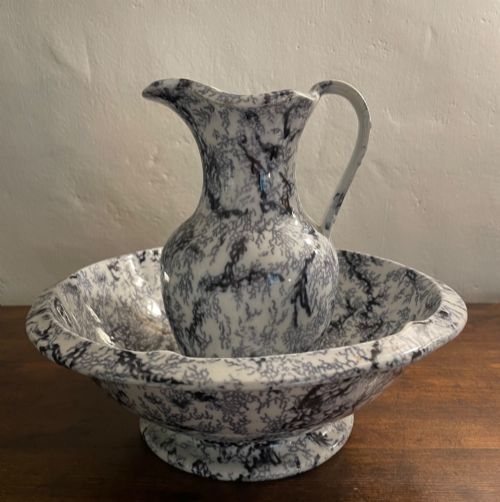
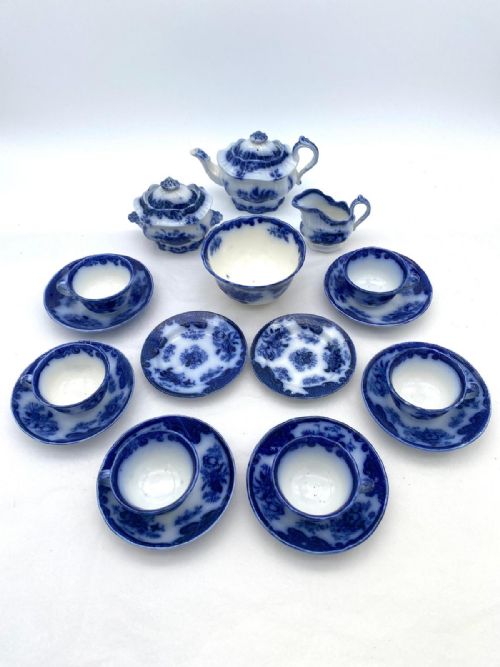
When you search for blue ironstone ceramic, you are looking at nineteenth-century tablewares and display vessels that bridge the gap between heavy earthenware and true porcelain. These pieces were designed to withstand heavy daily use while offering decorative appeal through rich blue transfer printing and painted motifs.
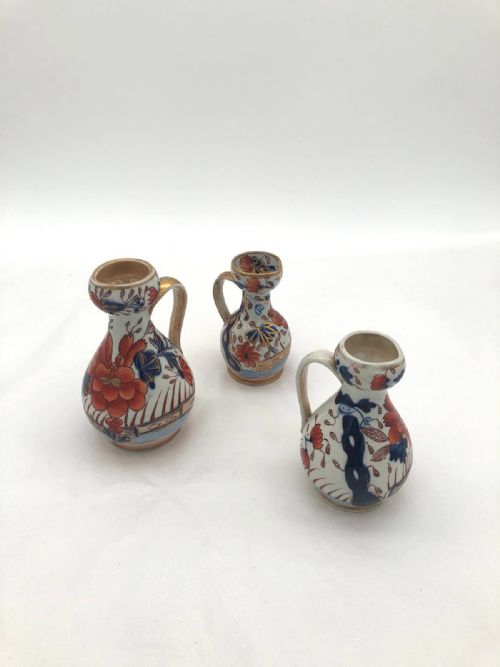
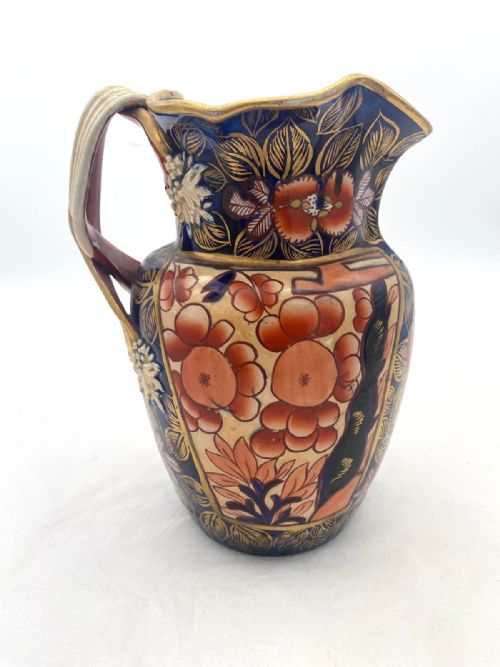
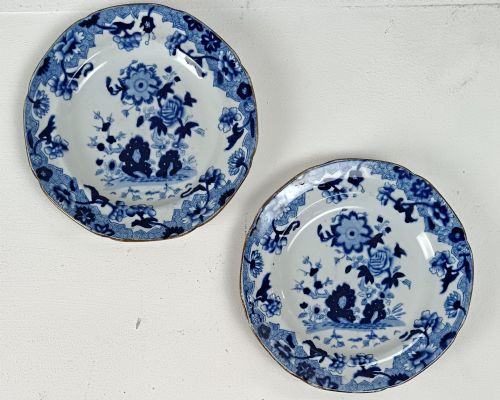
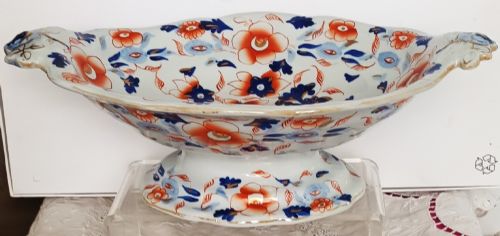
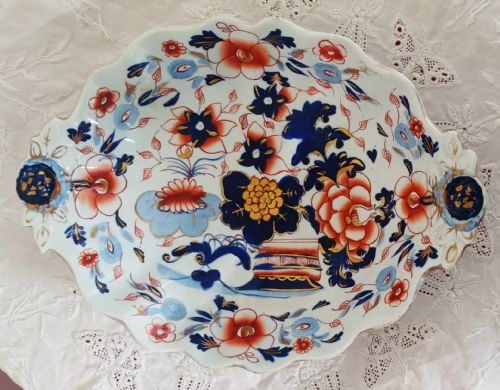
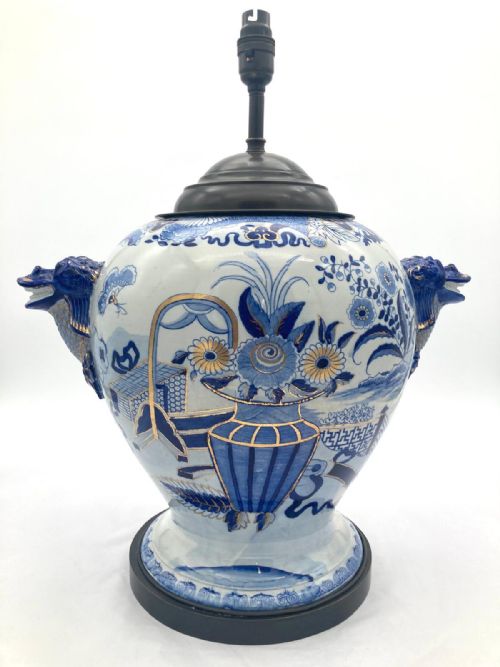
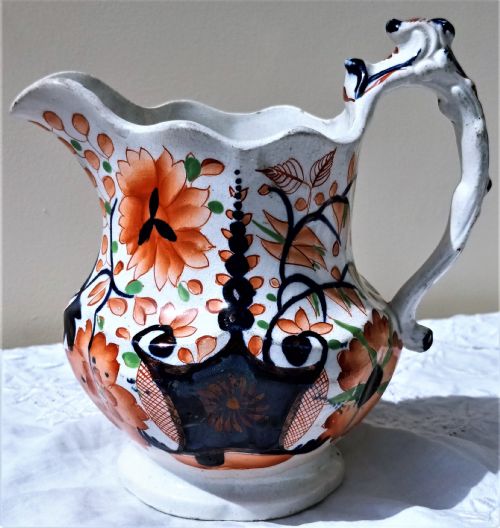
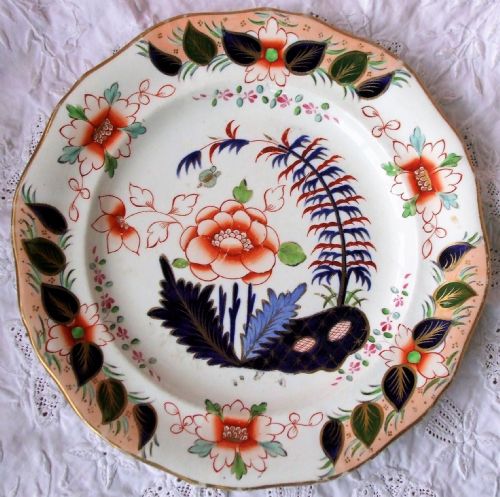
On this page, you are most likely to meet jugs, serving platters, and tureens dating from the Georgian, Regency, and Victorian periods. Forms range from simple tea plates to large covered bowls and decorative vases displaying Chinoiserie and Imari patterns.
The objects originate primarily from English potteries active during the 1800s, utilising dense ceramic bodies that survived decades of service. Collectors often find matching sets of plates or individual serving pieces bearing traditional cobalt designs.
Materials and construction
The core material is a heavy-duty earthenware body patented to imitate Chinese porcelain, combining china stone and ball clay to produce a remarkably robust ceramic. Glazes are applied over transfer-printed or hand-painted cobalt designs before firing at high temperatures.
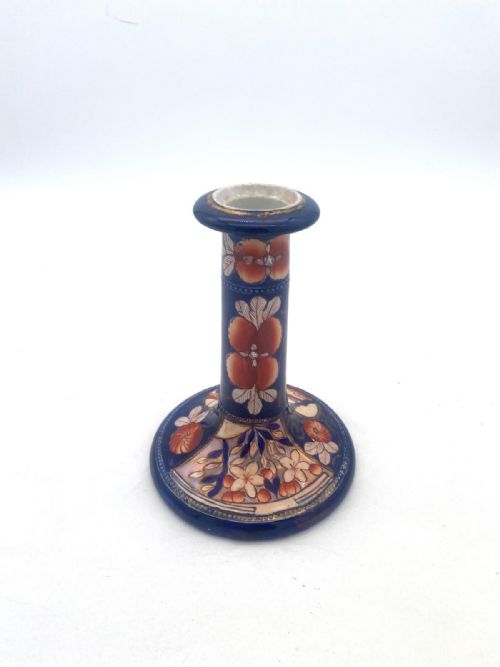
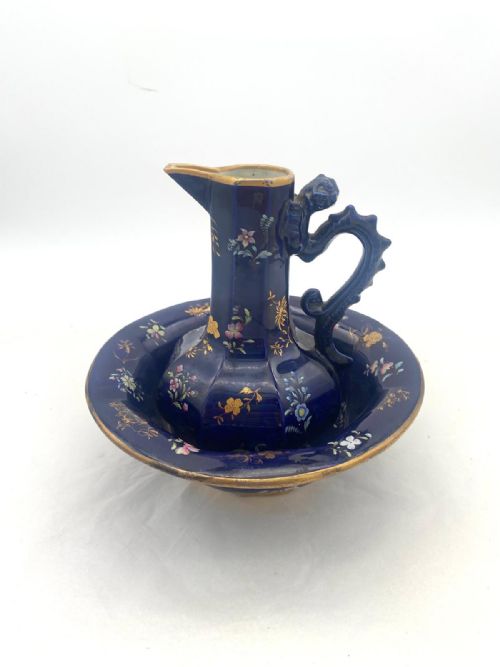
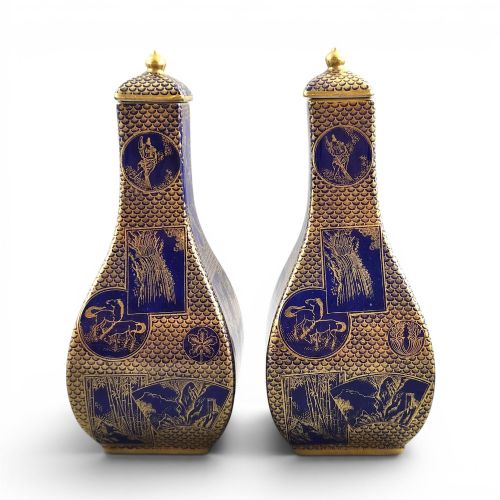
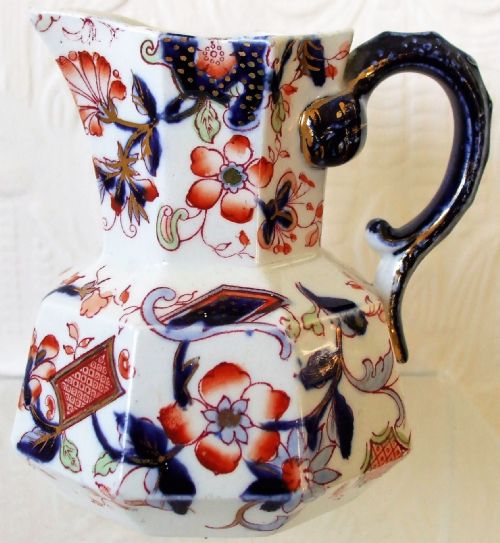
Makers frequently enhanced the blue ground and transfer prints with gilt highlights or gold leaf accents, particularly on formal vessels. Enameled details and applied elements like grotesque handles give specific pieces a sculptural quality.
Listings feature nineteenth-century materials including ironstone, earthenware, and gold leaf applied across serving platters, jugs, and tureens.
Judging quality in blue ironstone ceramic
Quality rests upon the crispness of the transfer print and the depth of the cobalt blue ground colour. Stronger pieces display sharp pattern registration without blurring or bleeding in the glaze.
The modelling of applied elements, such as serpent handles on hydra jugs or the precise moulding of octagonal vases, separates standard utility wares from exhibition-grade production. Gilding retention and the overall weight and balance of the ceramic body also determine value.
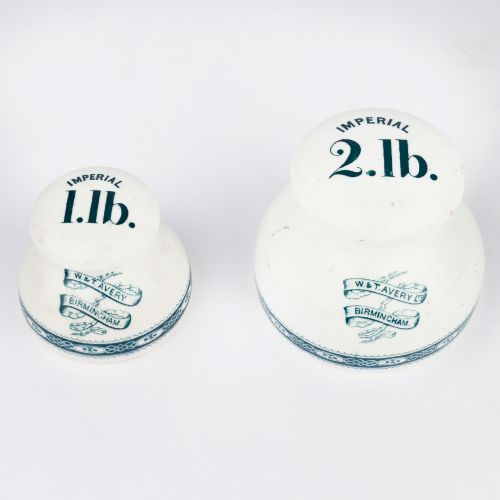
Mason's Ironstone·Spode New Stone·John Davenport of Longport·John Ridgway·Hicks and Meigh·Keeling and Co·Copeland·W and T Avery
The Blue Ironstone Ceramic Glossary
- Ironstone
- A dense, heavy ceramic paste patented in the early nineteenth century to provide a durable alternative to porcelain. It resists chipping and holds deep cobalt glazes remarkably well.
- Transfer print
- A decoration technique where an engraved metal plate transfers a design onto tissue paper, which is then stamped onto the ceramic body. This method allowed for intricate blue patterns across plates and jugs.
- Comport
- A raised dish or bowl used for serving fruit or sweets centrally on a dining table. These often feature footed bases and elaborate patterned wells.
- Mazarine
- A deep, rich shade of dark blue used as a solid ground colour on Victorian and Georgian display vessels. It provides a striking contrast against gilt highlights.
- Gilding
- The application of gold leaf or gold paint to ceramic rims, handles, and borders. It signals a higher decorative tier of tableware.
Blue Ironstone Ceramic: Frequently Asked Questions
How do I date blue ironstone ceramic?
Dating relies on maker marks stamped or printed on the underside, stylistic cues like Regency shapes, and the depth of the cobalt transfer print.
Early pieces often feature impressed registry marks or specific maker banners from the Georgian and Victorian eras.
Can I use these plates for daily dining?
While these ceramics were originally built for heavy service, their age and glaze integrity make gentle handling advisable today.
Hand washing preserves the delicate gold leaf and prevents modern detergents from dulling the nineteenth-century glaze.
What is the difference between ironstone and porcelain?
Ironstone is a heavy, opaque earthenware ceramic containing feldspar and china stone designed for durability. Porcelain is translucent, vitrified, and fired at much higher temperatures.
Ironstone offers a thicker, heavier wall that withstands heavy handling better than delicate china.
Why are some pieces marked as Chinoiserie?
Chinoiserie refers to European interpretations of traditional Chinese artistic motifs, popular on nineteenth-century tableware.
These patterns typically feature imaginary landscapes, pagodas, and exotic figures rendered in deep blue transfer print.