


Blue Guilloche Enamel Silver
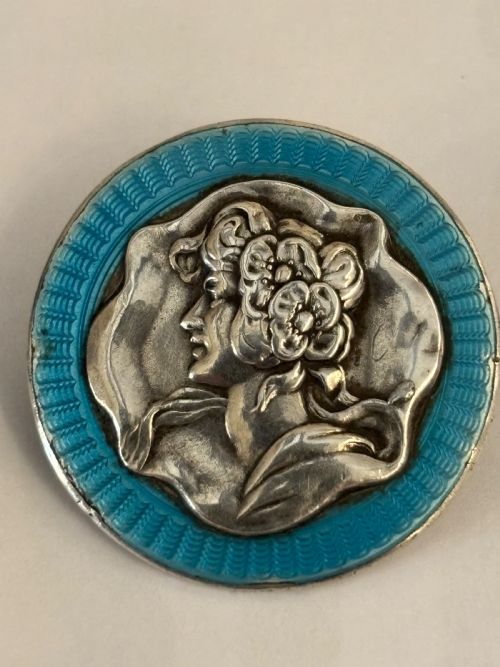
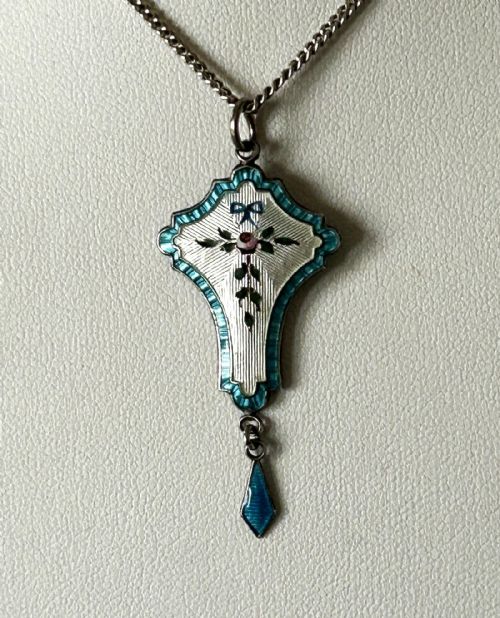
Blue guilloche enamel silver pieces combine precision engine-turned engraving with translucent coloured glass over precious metal for a striking finish.
Blue Guilloche Enamel Silver
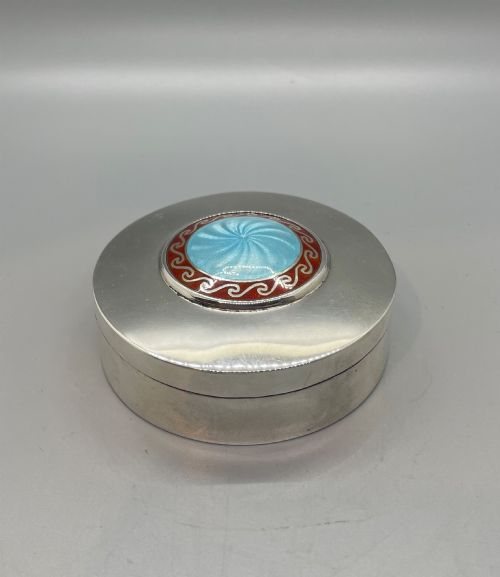
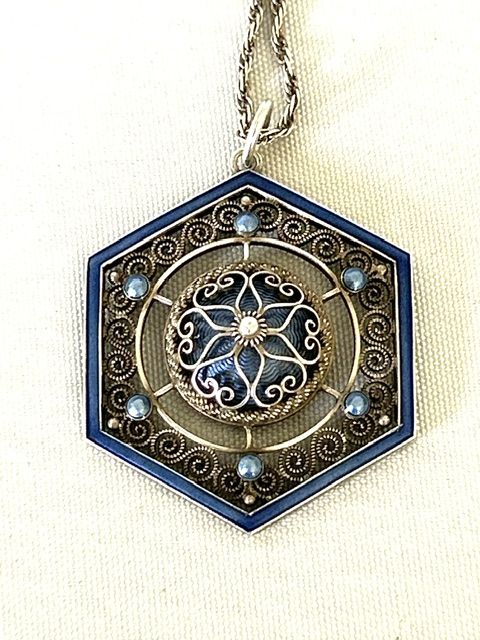
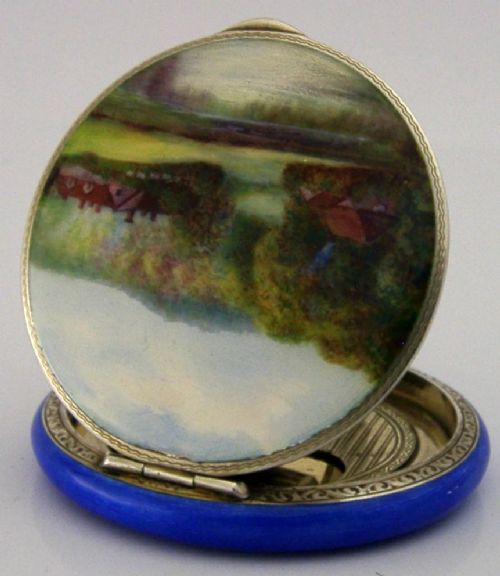
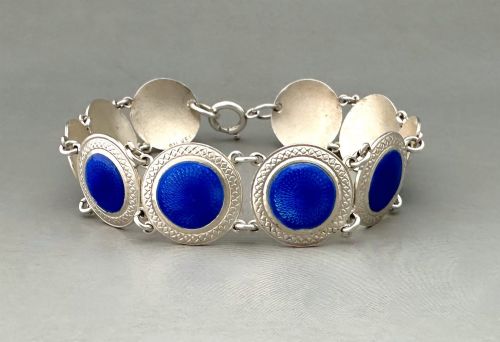
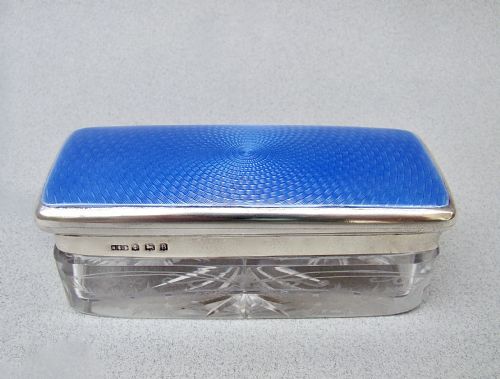
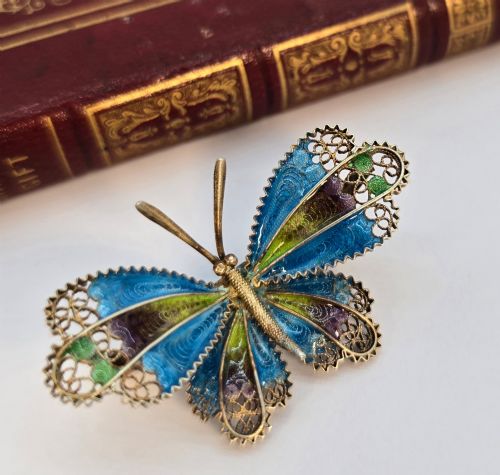
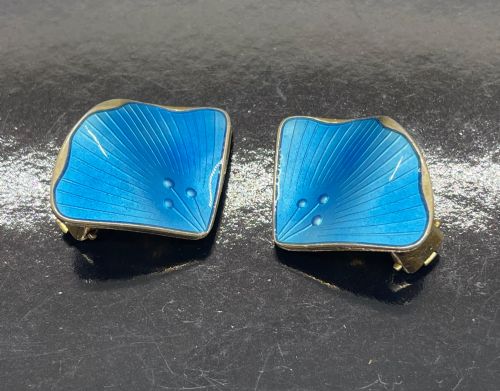
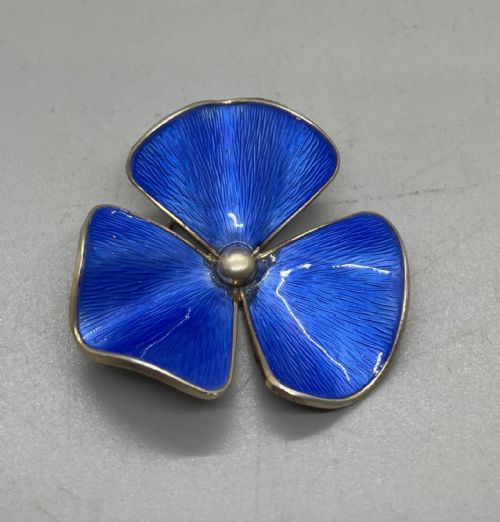
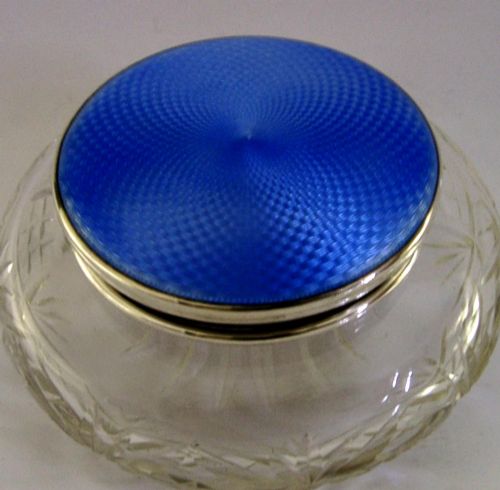
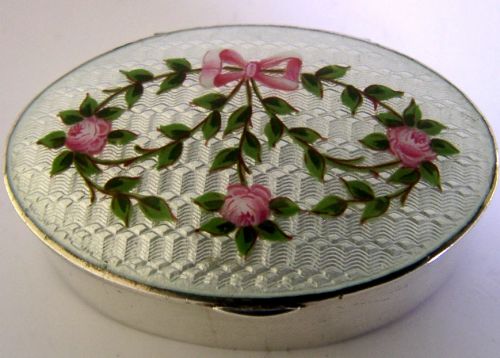
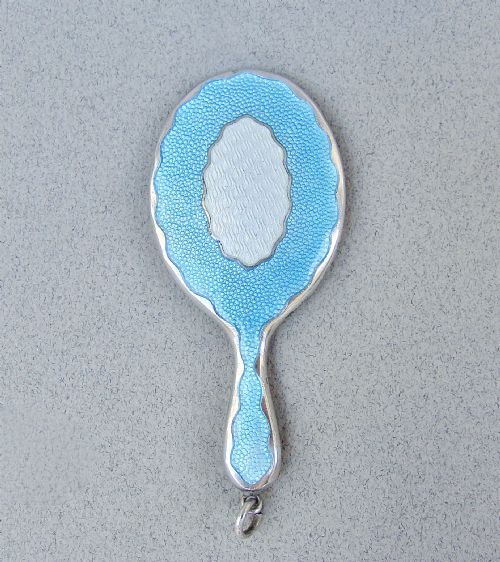
When searching for blue guilloche enamel silver, collectors encounter an array of decorative objects designed for personal adornment and domestic use. The selection spans vanity items such as compacts, dressing table jars, scent bottles, and hand mirrors alongside wearable pieces including brooches, pendants, and bracelets.
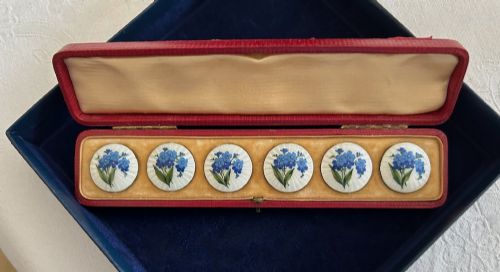
The objects originate primarily from the early twentieth century, with notable representation from the Edwardian era through the Art Deco period and mid-century Scandinavian design. Compacts and jars often bear hallmarks from Birmingham and London silversmiths, while Scandinavian workshops contribute floral brooches and minimalist bar designs.
How they were made
Makers construct these items using sterling silver as a foundation, sometimes applying a layer of gold wash known as silver gilt. Artisans use a mechanical lathe to engrave precise geometric patterns, such as sunbursts or waves, directly into the metal surface.
Vitreous enamel in shades of blue is applied in powdered form over the engraved silver and fired in a kiln. The translucent quality of the enamel allows the machined pattern beneath to reflect light, creating depth and movement across the surface of compacts, boxes, and brooches.
Tiny blue enamel egg charms wait quietly alongside heavy inkwells, proving that even paperwork needs a spot of colour.
What varies in quality
The sophistication of the engine-turned engraving sets finer items apart, as deeper and more complex geometric motifs catch the light with greater intensity. The clarity and consistency of the vitreous enamel layer also dictate overall standard, with superior pieces showing an even distribution of colour free from cloudiness or bubbles.
The caliber of the underlying silversmithing contributes significantly to the piece, evident in crisp Birmingham or London hallmarks, substantial gauge silver, and intricate framing on items like handheld mirrors, powder compacts, and scent bottles.
Marius Hammer·Henry Clifford Davis·Henry Williamson·Broadway and Co·Henry Matthews·David Andersen·Henry Perkins and Sons·William Neale and Son Ltd
The Blue Guilloche Enamel Silver Glossary
- Guilloche
- An ornamental technique in which a mechanical lathe engraves a precise, repetitive pattern into a metal substrate. This engraved texture serves as the visual base for translucent enamel coatings.
- Vitreous Enamel
- A material made by fusing powdered glass to a metal surface at high temperatures in a kiln. The resulting glossy coating provides durable colour for silver accessories and compacts.
- Silver Gilt
- Sterling silver that has been coated with a thin layer of gold on its surface. This finish adds a warm tone underneath the blue enamel layers of brooches and earrings.
- Sterling Silver
- An alloy of silver containing ninety-two point five percent silver and seven point five percent other metals, usually copper. It provides the rigid structural body for vanity jars, cigarette cases, and mesh purses.
Blue Guilloche Enamel Silver: Frequently Asked Questions
What is blue guilloche enamel silver?
These items consist of sterling silver objects decorated with mechanical machine-engraved patterns beneath translucent blue glass enamel.
Craftsmen produced them extensively for vanity sets, smoking accessories, and jewellery during the early decades of the twentieth century.
How were vanity jars used?
Dressing table jars and powder compacts held cosmetics, creams, and pins on Edwardian and Art Deco dressing tables.
Their decorative silver and enamel lids added vibrant colour and polished style to bedroom furnishings.
How do I date these pieces?
British pieces feature hallmarks that indicate the assay office, such as the anchor for Birmingham or leopard's head for London, alongside date letters.
Stylistic cues like geometric Art Deco motifs or flowing Art Nouveau lines also help narrow down the period of manufacture.
How should I care for enamel items?
Glass enamel requires gentle handling to prevent scratching or chipping against harder surfaces.
Clean the silver components with a soft polishing cloth while avoiding harsh chemical dips that might damage the vitreous coating.