





Blue Green Wool Tapestry
A blue green wool tapestry brings centuries of woven history into a room, offering rich botanical imagery and grand mythological scenes.
Blue Green Wool Tapestry
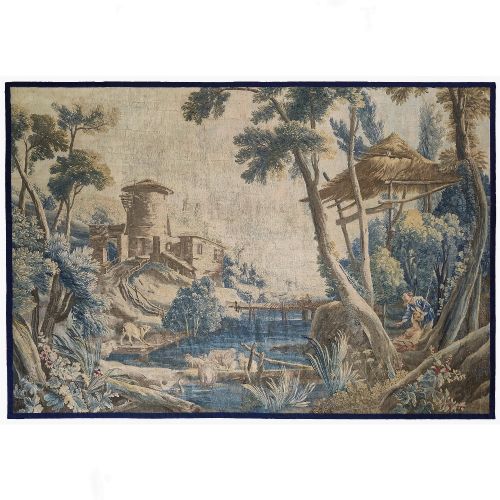
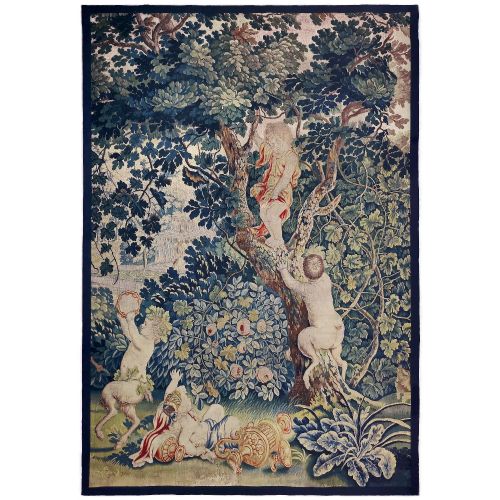
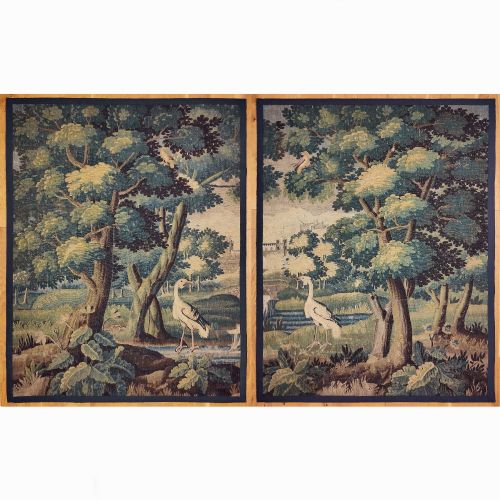
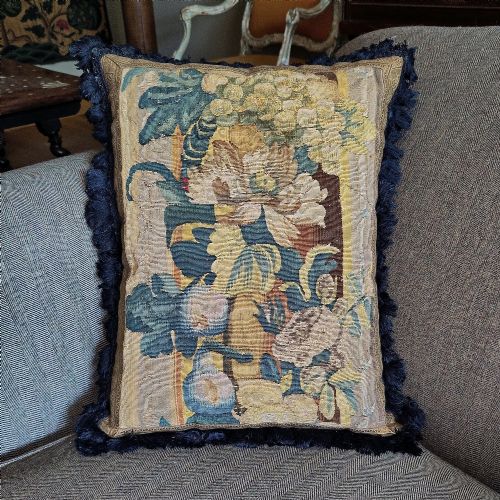
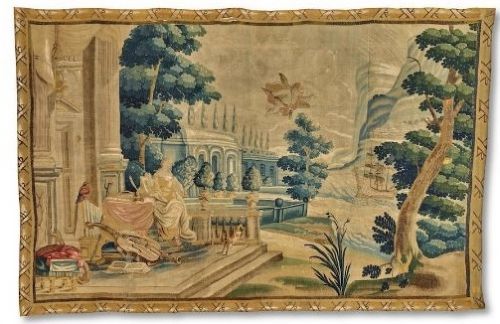
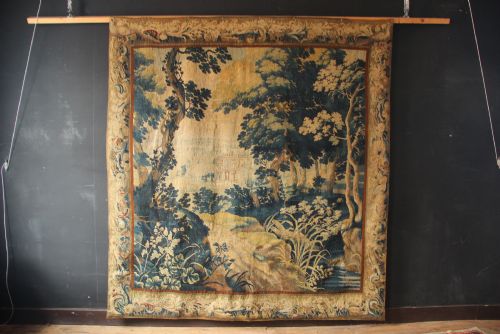
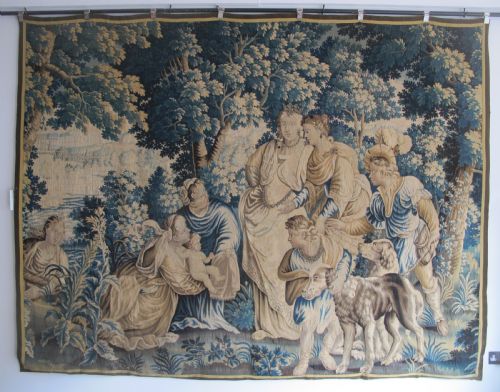
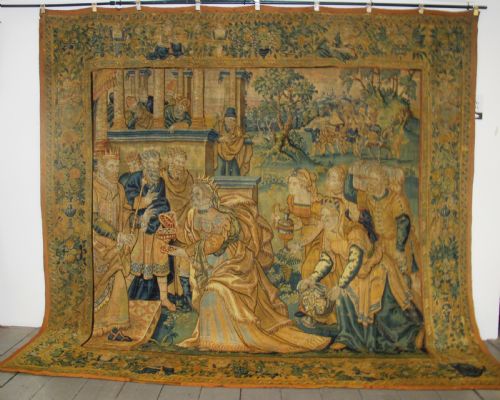
A blue green wool tapestry represents historical textile art primarily originating from Flemish and French workshops during the sixteenth, seventeenth, and eighteenth centuries. When searching for a blue green wool tapestry, buyers encounter large wall hangings, verdure panels, cushions, and framed fragments that showcase dense woodland landscapes or narrative scenes. These textiles transform large interior surfaces by introducing muted tones of foliage and sky rendered in organic dye palettes.
The pieces available on this page lean heavily towards seventeenth-century Flemish production and eighteenth-century Aubusson weaving. Verdure designs featuring game parks, foliage, and mythological subjects dominate the selection, alongside architectural borders repurposed as cushions or smaller panels. Each format retains the textural warmth and visual depth characteristic of early European weaving traditions.
Materials and Construction
Makers constructed these textiles predominantly using a wool foundation supplemented by silk and linen threads to achieve varying textures and light reflection. Artisans wove these materials on high-warp and low-warp looms, interlocking dyed yarns to build complex pictorial surfaces without loose float threads on the reverse. Cotton also appears in certain elements, reflecting the organic composition of historical textile manufacture.
The distinctive blue and green tones derive from natural dye baths applied to wool and silk fibres long before chemical alternatives existed. Over centuries, these plant-based dyes mellowed into the characteristic verdigris and indigo hues that define antique verdure and landscape scenes. The physical weight of the wool gives these wall hangings a dense, sound-dampening structure.
Blue Green Wool Tapestry Retail Price Guide 2026
Typical asking prices for blue green wool tapestry among the pieces listed under this phrase on Sellingantiques today, from the lower quarter to the upper quarter. They describe what is for sale here now, not the wider market.
The inventory includes wall tapestries, cushions, fragments, and large-scale verdure panels attributed to Flemish and French weaving traditions.
Distinctions in Quality
Quality in these textiles rests upon the density of the weave and the complexity of the pictorial depth achieved by the weaver. Superior examples employ finer silk highlights alongside wool to illuminate foliage, water, and figures, creating a distinct sense of perspective within the landscape. Workshops in centres like Aubusson and Flanders achieved varying degrees of chromatic nuance, separating standard decorative panels from monumental artistic works.
The survival of the original borders and the structural integrity of the wool warp determine the overall standing of a piece. Fragments and cushions demonstrate the versatility of the medium, but complete large-scale panels with intact narrative elements represent the highest tier of historical preservation. The subtlety of the colour transition between blue shades and green foliage dictates the visual sophistication of the finished hanging.
The Blue Green Wool Tapestry Glossary
- Verdure
- A tapestry style dominated by lush botanical foliage, trees, and landscape views, often featuring birds or small animals. These scenes form the majority of surviving domestic wall hangings from the seventeenth century.
- Aubusson
- A traditional weaving centre in France known for producing fine tapestries and carpets from the seventeenth century onwards. Aubusson pieces frequently depict pastoral scenes and refined mythological narratives.
- Flemish
- Pertaining to the historic region of Flanders, which served as a major European powerhouse for tapestry production during the sixteenth and seventeenth centuries. Flemish weavers excelled in creating dense, multi-layered verdure and historical compositions.
- Warp
- The vertical or longitudinal threads held under tension on a loom that form the structural foundation of the textile. Weavers pass the coloured weft yarns entirely through these structural threads to build the design.
Blue Green Wool Tapestry: Frequently Asked Questions
How do I hang a heavy tapestry?
Mounting a large textile requires distributing the weight evenly across the entire top edge rather than suspending it from isolated points. Conservators typically sew a wide strip of sturdy cotton webbing to the back, through which a flat metal or wooden batten slides.
This method prevents undue stretching and keeps the wool panel hanging flat against the wall without placing stress on the historic fibres.
Can tapestries be displayed in direct sunlight?
Direct sunlight poses a significant risk to antique wool and silk dyes, causing natural pigments to fade or shift over decades. Placing these textiles on interior walls away from windows or bright glazed doors preserves the original depth of the blue and green tones.
UV-filtering glass or museum-grade protective films on nearby windows also help shield the organic materials from harmful radiation.
What is the difference between a panel and a fragment?
A tapestry panel is a complete or nearly complete pictorial composition designed to function as a standalone hanging or wall covering. A fragment represents a surviving section cut from a larger historical textile, often repurposed later into cushions or smaller decorative displays.
Both categories retain the original weaving techniques, but panels preserve the original narrative context of the workshop.