


Blue Gold Porcelain Dish
A blue gold porcelain dish brings cobalt grounds and metallic leaf together in cabinet plates and serving dishes.
Blue Gold Porcelain Dish
A blue gold porcelain dish combines deep cobalt blue grounds with extensive gilding, forming decorative plates, cabinet plates, and serving dishes. These forms originate from eighteenth-century manufactories and continue through nineteenth-century workshops into twentieth-century studios.
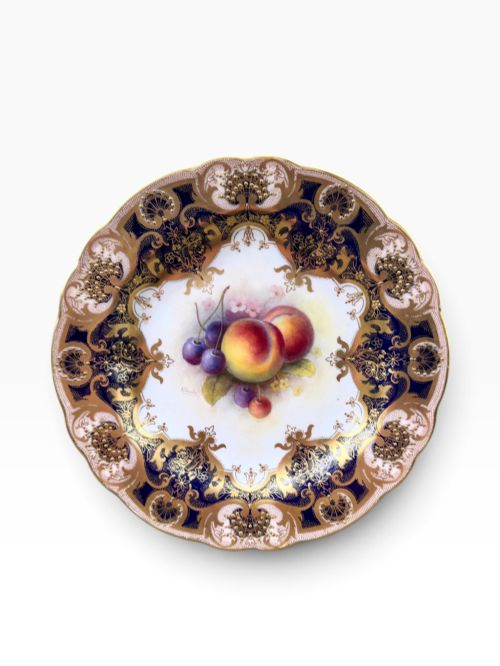
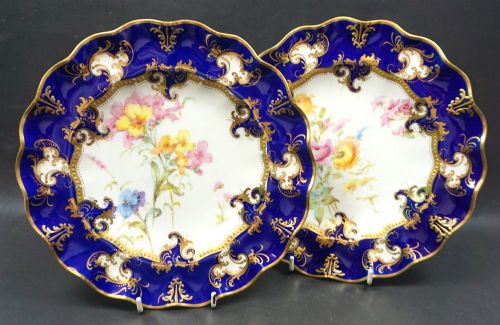
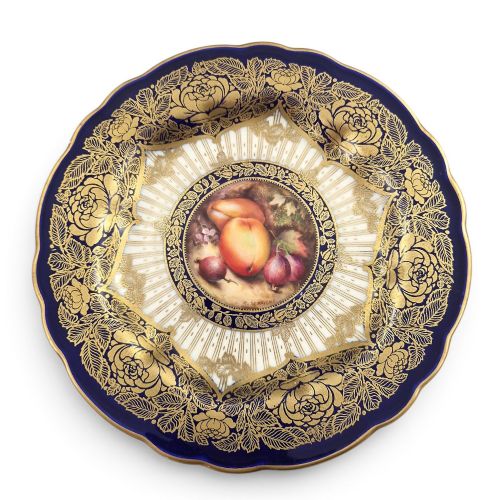
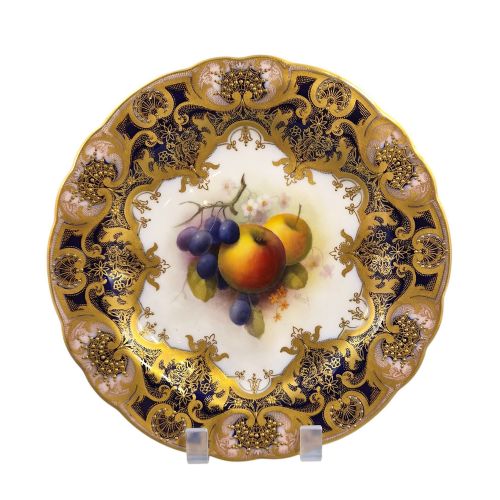
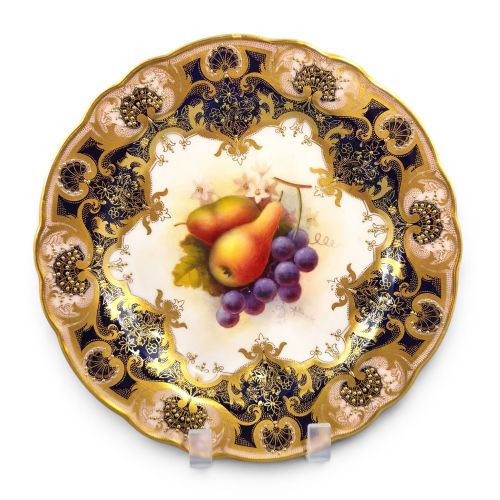
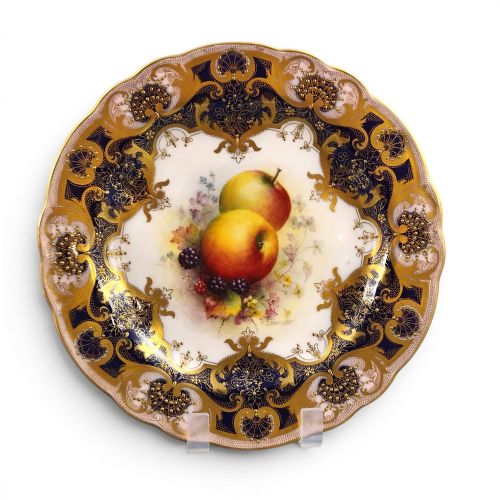
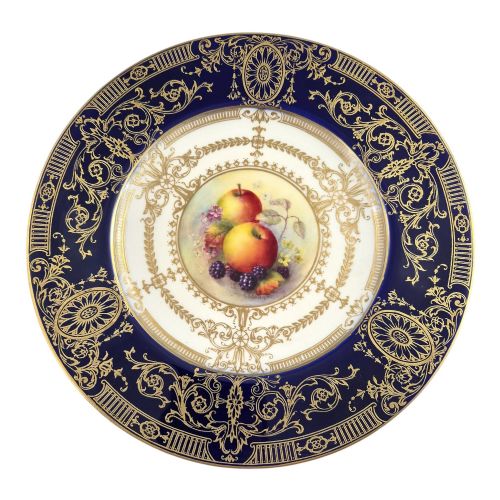
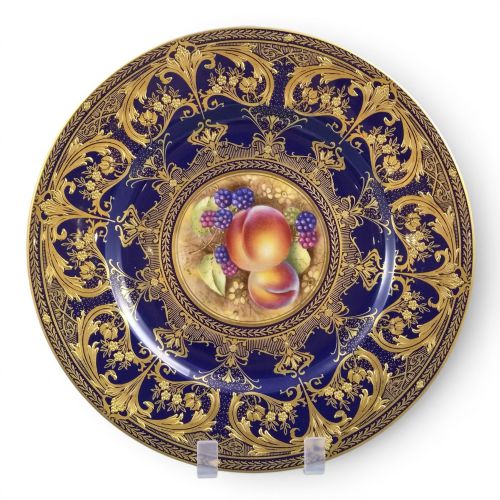
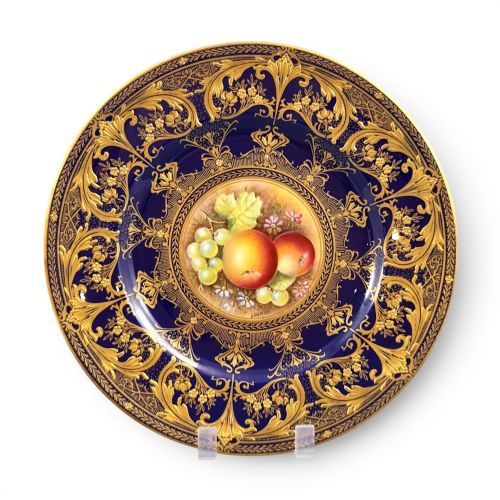
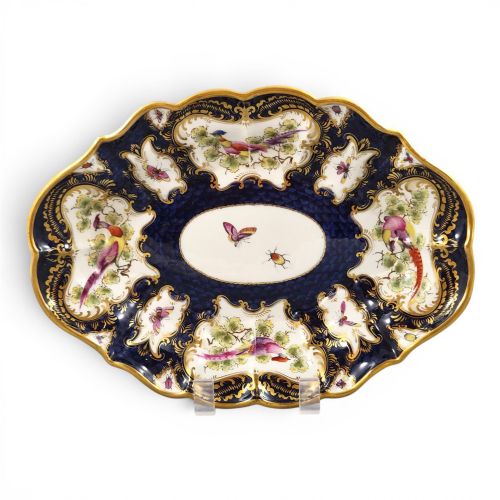
The version most commonly met on this page is the hand-painted cabinet plate or dessert dish from English potteries and continental factories. These examples utilise cobalt backgrounds to frame botanical subjects, mythological scenes, and painted fruit.
Makers shaped these wares for display in cabinets or use on dining tables during the Georgian, Victorian, and Edwardian eras. Collectors select them for the interplay between rich blue glaze and applied gold leaf.
How they were made
Potters formed bodies from porcelain and bone china before applying cobalt blue glazes and enamels to the surface. Artisans fired these pieces multiple times to fix the colours and vitrify the glaze.
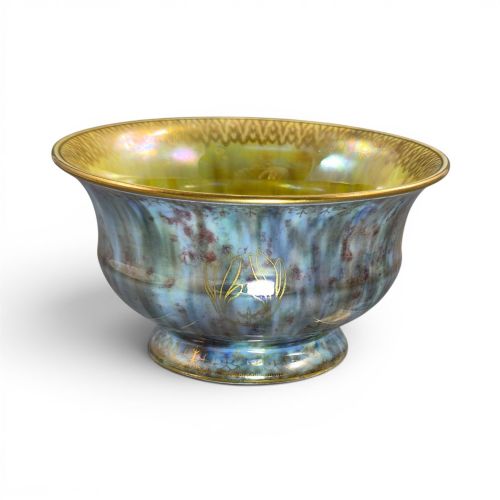
Craftsmen applied gold leaf, gilding, and lustre glaze by hand, often tooling the metal surface after firing to create textured highlights. Workshops combined these metallic applications with hand-painted reserves depicting figures, fruit, and foliage.
Several cabinet plates preserve hyper-realistic painted fruit signed by artists who spent decades perfecting a single peach.
What varies in quality
Quality separates through the precision of the hand-painted detail and the thickness of the applied gilding. Superior plates display intricate brushwork by named artists rather than transferred outlines.
The depth of the cobalt ground and the complexity of the tooled gilt borders determine the upper tier of production. Simpler moulded shapes with standard transfer prints occupy the commercial lower end of the range.
Royal Worcester·Royal Crown Derby·Wedgwood·Coalport·Meissen
The Blue Gold Porcelain Dish Glossary
- Cabinet plate
- A decorative plate intended for display in a cabinet rather than for dining use. These pieces often feature elaborate painted scenes and heavy gilding.
- Cobalt blue
- A deep blue pigment derived from cobalt oxide, used extensively as an underglaze or ground colour on porcelain. It provides a stable background for applied gold leaf.
- Gilding
- The application of gold leaf or gold powder to the surface of porcelain. Artisans burnished the metal to achieve a reflective finish against the glaze.
- Lustre glaze
- A ceramic glaze containing metallic oxides that produce an iridescent, shimmering surface. This technique creates rainbow effects across the ceramic body.
- Reserve
- An untreated panel left blank within a coloured or patterned ground to receive hand-painted decoration. Painters filled these spaces with botanical studies or mythological figures.
Blue Gold Porcelain Dish: Frequently Asked Questions
How were cabinet plates displayed?
Owners placed these dishes in glazed wooden cabinets to protect the delicate gilding and hand-painted surfaces from dust and handling.
Display stands also held individual plates on sideboards and mantelpieces during the nineteenth and twentieth centuries.
What is lustre glaze?
Lustre glaze is a metallic finish that creates an iridescent sheen on the ceramic surface when fired in a reduced oxygen atmosphere.
Potters used this technique to add shimmering, multicoloured light effects to decorative bowls and miniatures.
How do I identify porcelain periods?
Makers marked their wares with impressed symbols, painted backstamps, and pattern numbers underneath the base. Comparing these ciphers with factory records reveals the decade of production.
Stylistic shifts in the gilding and the subject matter of the painted reserves also indicate the manufacturing era.
Were serving dishes used daily?
Elaborate serving dishes with heavy gilding and cobalt grounds served primarily during formal dining occasions and dessert courses.
Households reserved these decorative pieces for special guests, keeping everyday tableware in separate sets.