





Antique Dessert Service Plate
An antique dessert service plate brings the refined formality of historic dining tables into modern spaces through hand-painted botanical studies and gilded porcelain.
Antique Dessert Service Plate
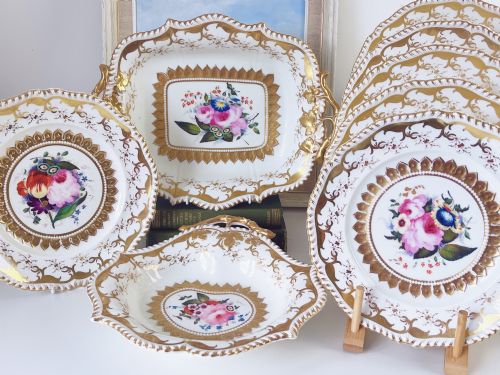
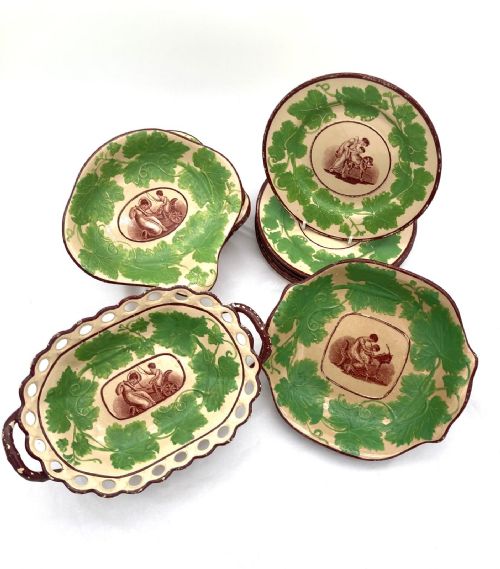
An antique dessert service plate is a specialised table ceramic created for the final course of a formal meal, frequently appearing as individual plates or as part of larger composite sets alongside comports and serving dishes. When searching for this phrase, buyers encounter varied forms spanning Georgian creamware, Regency porcelain, and Victorian bone china.
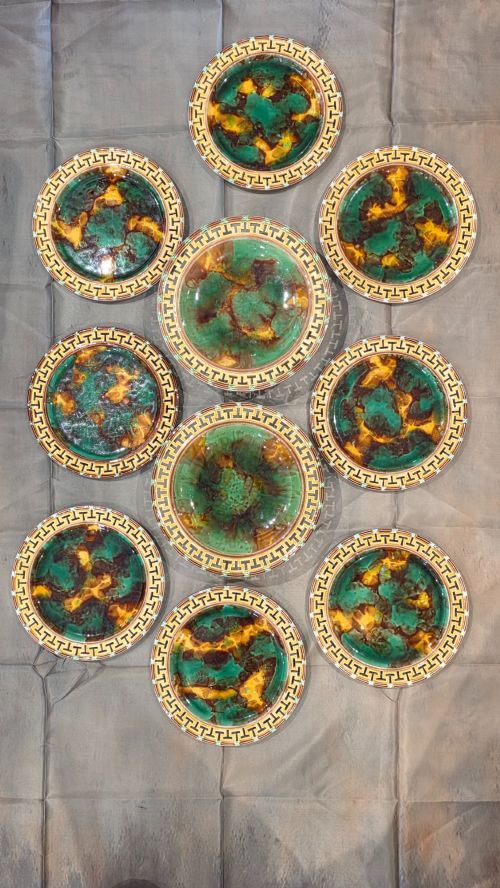
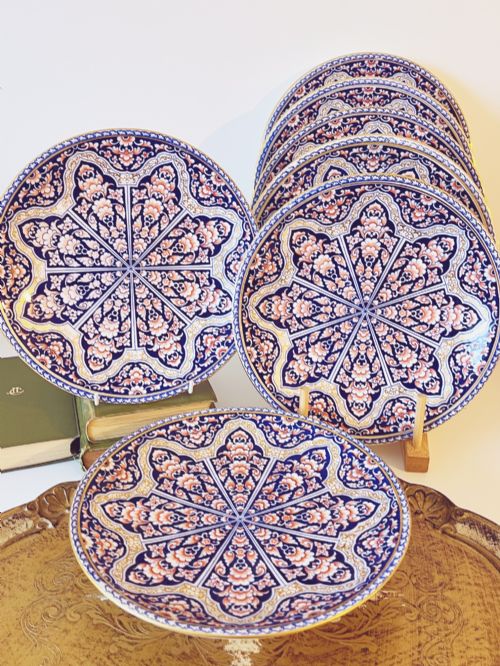
The pieces on this page represent the diverse output of nineteenth-century ceramic manufacturers, from earthenware and ironstone to delicate porcelain bodies. They range from single cabinet plates painted with fruit or landscapes to matched groupings intended for display or occasional use.
How they were made
Potters shaped these vessels using traditional paste bodies such as bone china, earthenware, creamware, and ironstone, which were then fired and finished with clear or coloured glaze. Surface decoration often relied on hand-painted floral or landscape motifs combined with gold leaf gilding and enamel highlights.
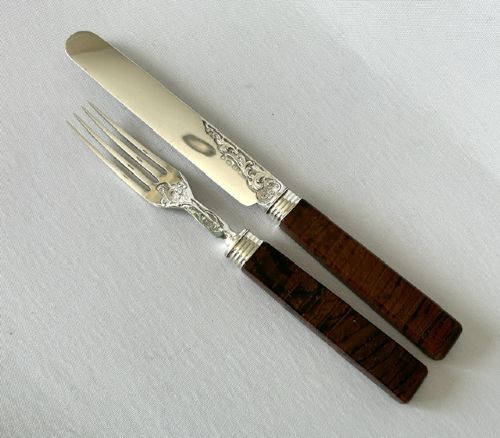
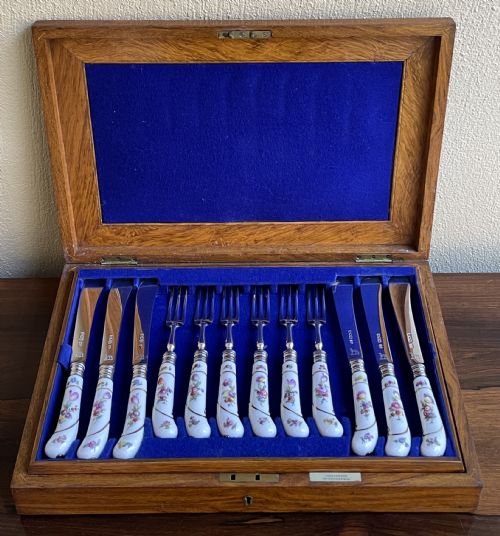
Many items incorporate secondary materials such as silver plate, mother-of-pearl, and velvet, particularly in cased cutlery and serving sets designed to accompany the porcelain plates.
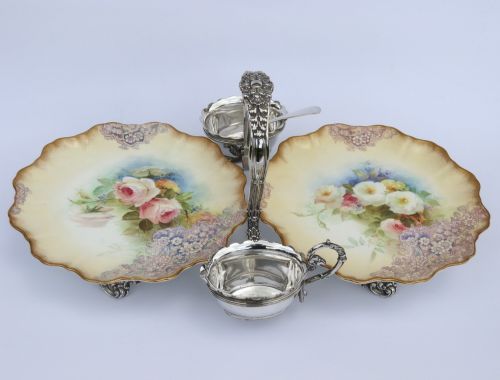
Some Victorian dessert sets required specialised silver-plated grape scissors and nutcrackers to handle the post-dinner fruit course with proper etiquette.
What varies in quality
Quality in these ceramic pieces is defined by the crispness of the porcelain body, the precision of the hand-painted brushwork, and the preservation of the original gold leaf and enamel details. Skilled artist-painted panels, such as botanical or fruit studies, elevate a plate above standard factory-printed decoration.
The integrity of the glaze and the complexity of moulded or jewelled borders further distinguish superior examples from simpler utilitarian tableware of the period.
Grainger Lee And Co·Wedgwood·Royal Crown Derby·Walker And Hall·Doulton Burslem·John Ridgway·Rockingham Pottery·Spode·Minton·Carrington·Flight Barr And Barr·Barr Flight And Barr·Hukin And Heath·Mason S
The Antique Dessert Service Plate Glossary
- Comport
- A raised serving dish or pedestal bowl used centrally within a dessert service. It stands higher than the surrounding plates to create visual hierarchy on the table.
- Creamware
- A refined earthenware developed in the eighteenth century with a pale yellowish cream glaze. It provided a smooth, stable surface for enamel decoration.
- Ironstone
- A durable heavy earthenware patented in the nineteenth century to imitate Chinese porcelain. It resists chipping while offering a sturdy base for printed and painted patterns.
- Bone china
- A porcelain body containing bone ash that produces a strong, slightly translucent material. It became a preferred medium for fine Victorian tableware.
- Majolica
- A heavy earthenware type covered with brightly coloured lead glazes. It produced vivid, tactile surfaces popular during the nineteenth century.
Antique Dessert Service Plate: Frequently Asked Questions
How were antique dessert plates used?
These plates were brought out at the conclusion of a formal dinner for the final course of fruit, sweetmeats, and cheese. They were often paired with specialised cutlery made of silver plate and mother-of-pearl.
Because they served a lighter, more decorative function than dinner plates, makers lavished them with hand-painted botanicals, landscapes, and rich gilding designed to be admired under candlelight.
Can I use these plates for dining?
While these ceramics were originally functional tableware, their age and delicate enamel or gold leaf decoration mean most owners prefer gentle handling. Hand washing is essential to protect historic glazes and metallic details from detergent damage.
Many collectors choose to display individual plates on stands or mount them on walls to enjoy the hand-painted artwork daily without risking wear.
How do I identify different periods?
Georgian plates often feature creamware bodies or early porcelain with restrained neoclassical motifs and hand-painted botanicals. Regency examples frequently showcase apple green or pink grounds with delicate gilding.
Victorian pieces tend toward bolder ornamentation, including majolica glazes, jewelled borders, and eclectic revival styles like Rococo.
What is the difference between a plate and a comport?
A dessert plate is a flat, shallow vessel meant for individual guest use during the final course. A comport is a raised, footed dish or pedestal bowl designed to hold fruit or sweetmeats in the centre of the table.
Together, a service typically combined multiple flat plates with one or more comports to create a balanced display.