
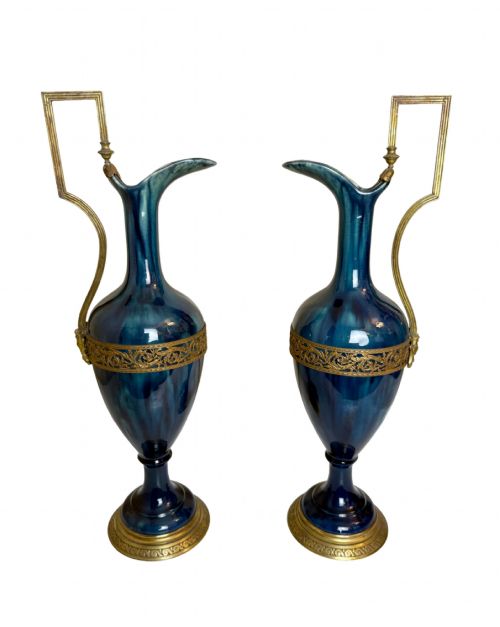
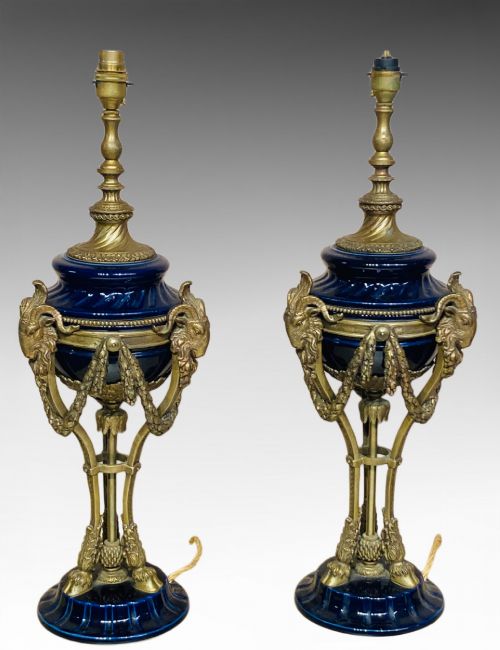
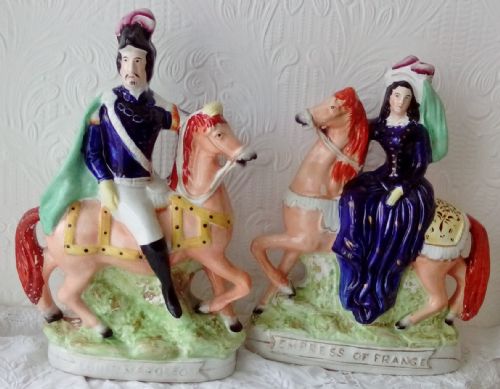


Blue Glazed Porcelain Pair
A blue glazed porcelain pair brings symmetry and rich colour to a room, offering matching forms crafted in ceramic and mounted in bronze.
Blue Glazed Porcelain Pair
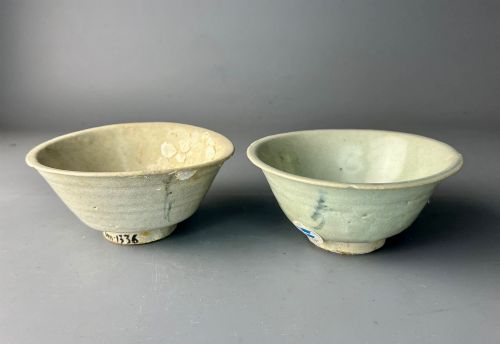
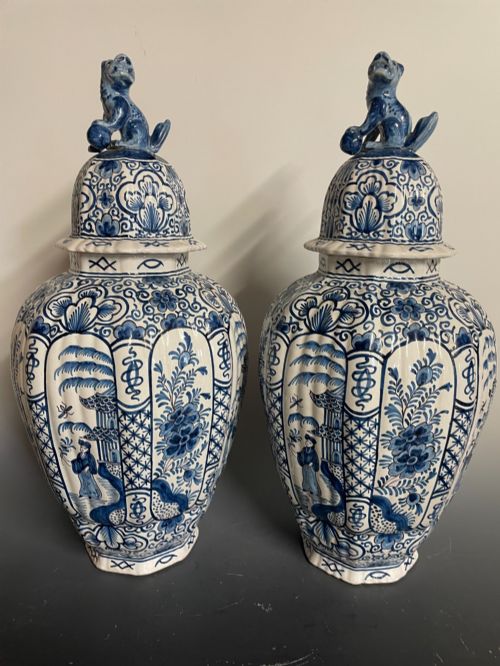
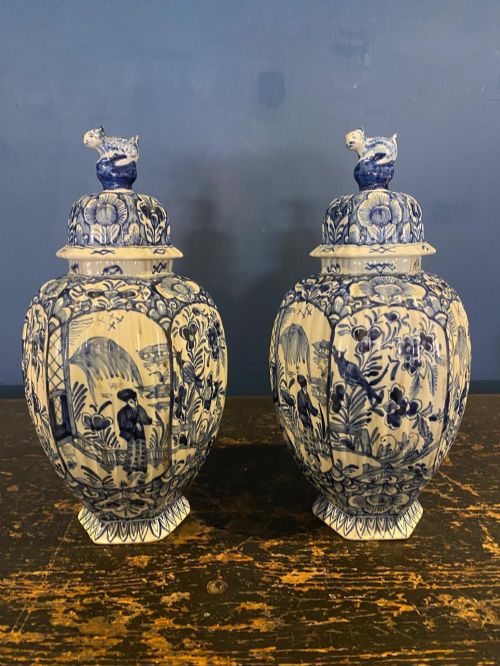
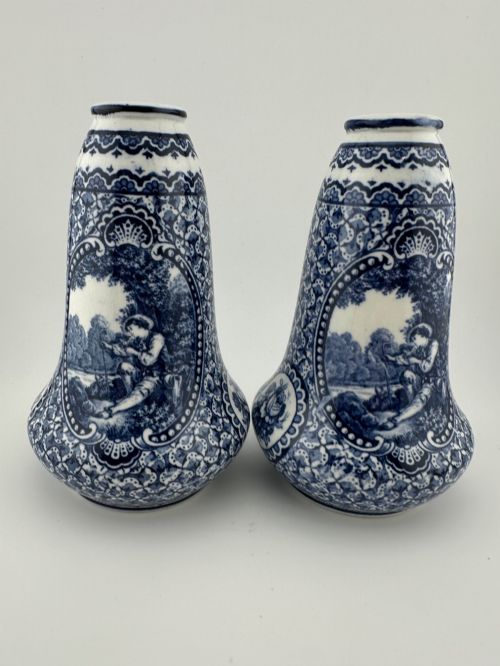
When you search for a blue glazed porcelain pair, you encounter symmetrical sets spanning table lamps, decorative vases, urns, and figural groups. These objects originate from European factories and Asian kilns across the nineteenth and early twentieth centuries.
You are most likely to meet nineteenth-century French and English decorative pieces alongside Asian export ceramics, often adapted later into lighting or retained as display urns.
The selection ranges from Staffordshire pottery figures and Carlton Ware cobalt vessels to French faience and gilt bronze mounted vases.
How they were made
Potters shaped the clay bodies on the wheel or pressed them into moulds before applying cobalt or turquoise glazes and firing them at high temperatures. Many items received hand-painted details or gilt embellishments during subsequent kiln runs.
Metalworkers fitted mounts, bases, and trims in gilt bronze, ormolu, brass, or gold leaf to frame the ceramic bodies. Fabric elements appear on lamps converted in later decades.
Listings feature Victorian, Edwardian, and Art Deco periods alongside materials such as earthenware, gilt bronze, and porcelain.
What varies in quality
The depth and consistency of the blue glaze dictate the visual impact of the pair, separating flat surfaces from those with rich variation and crackle patterns. Precision in moulding defines the crispness of facial expressions on figures and the symmetry of urns.
The integration of metal mounts reveals the maker's hand, where heavy, finely chased ormolu or gilt bronze signifies superior workshops compared to simple brass fittings. Preservation of the original gilding and the alignment of the matching pieces determine the overall standing of the set.
Royal Bonn Franz Anton Mehlem·Carlton Ware·Bloor Derby·Vion And Baury·Royal Capodimonte Factory
The Blue Glazed Porcelain Pair Glossary
- Ormolu
- Gilded bronze mounts applied to furniture, clocks, and porcelain vessels. This technique was widely used by French makers in the nineteenth century to elevate decorative objects.
- Crackware
- A ceramic glaze patterned with a network of fine cracks intentionally created during cooling. It appears on Chinese and European pieces alike.
- Faience
- Tin-glazed earthenware produced across Europe, particularly in France. It provides an opaque white surface suitable for painted blue decoration.
- Enamel
- Vitreous material fused to a ceramic or metal surface through firing. It adds durable, glossy colour highlights to figures and vases.
- Staffordshire pottery
- Earthenware produced in the English county of Staffordshire. Makers there specialised in figures, animals, and spill holders for the domestic market.
Blue Glazed Porcelain Pair: Frequently Asked Questions
Are these pieces always sold together?
Matching pairs are kept together to preserve their decorative symmetry and historical integrity on display surfaces.
Separating them diminishes their value and visual balance in an interior setting.
How are antique lamps wired safely?
Many ceramic bases were drilled or mounted for electricity during the twentieth century by professional lighting shops.
Modern buyers often have a qualified electrician inspect the internal wiring and replace old cords.
Where were these pairs displayed originally?
Owners placed matching vases and urns on mantelpieces, pedestals, and console tables in nineteenth-century reception rooms.
Figurines and pottery groups decorated cabinets and smaller parlor surfaces.
How do I date a ceramic pair?
Makers' marks stamped or painted on the underside provide the most reliable indication of factory and period.
Glaze characteristics, mount styles, and manufacturing techniques also help narrow the decade of production.