




Blue Glass Vanity Jar
A blue glass vanity jar sits on a dressing table to hold powders, trinkets and scents while adding colour to the room.
Blue Glass Vanity Jar
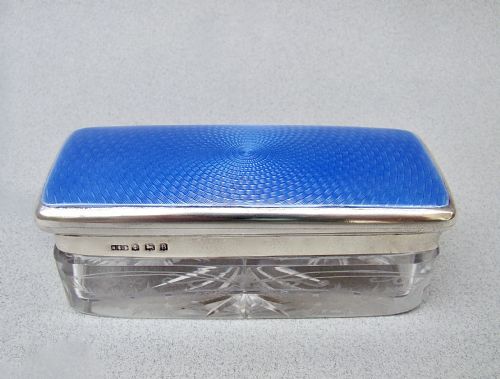
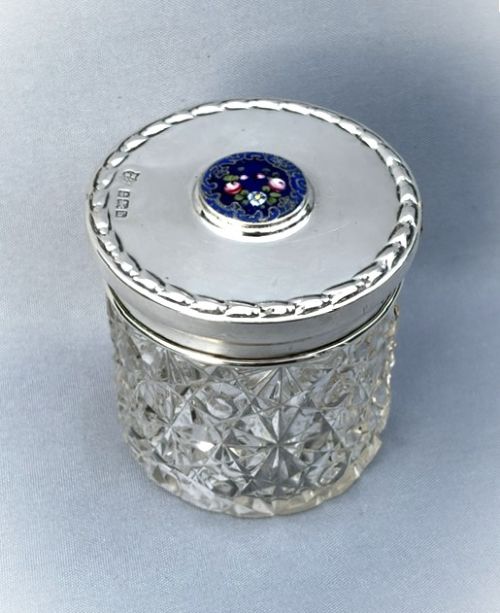
A blue glass vanity jar brings vibrant colour and practical storage to the dressing table, appearing in forms such as lidded pots, powder boxes and dressing table jars. When searching for a blue glass vanity jar, buyers encounter pieces ranging from Regency travelling boxes to Art Deco lidded bowls.
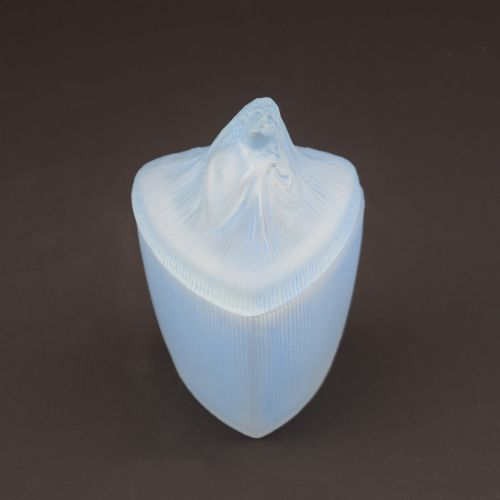
The selection includes English and French pieces spanning the nineteenth and twentieth centuries. Makers and designers such as Henry Clifford Davis and Rene Lalique created notable examples featuring decorated lids and fitted cases.
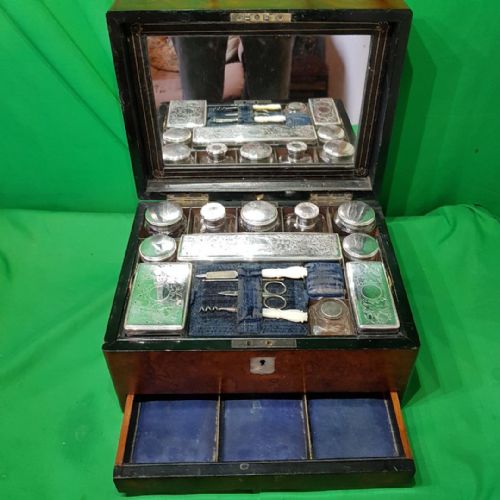
Varying in scale from small trinket pots to large travelling sets in burr walnut and rosewood, these items served the daily grooming routines of past centuries. Many combine deep blue Bristol or Clichy glass with sterling silver and enamel covers.
Materials and construction
Makers utilised free-blown and mould-blown glass, often shaping Bristol blue or Clichy glass into jars, bowls and scent bottles. Cut glass techniques added faceted surfaces that catch the light.
Lids and mounts were fashioned from sterling silver, brass and enamel, frequently featuring guilloche decoration or hand-painted floral details. Fitted wooden boxes employed burr walnut and rosewood to house glass vessels securely.
Blue Glass Vanity Jar Retail Price Guide 2026
Typical asking prices for blue glass vanity jar among the pieces listed under this phrase on Sellingantiques today, from the lower quarter to the upper quarter. They describe what is for sale here now, not the wider market.
Listings feature items from the Regency period through to the Art Deco era, incorporating materials such as sterling silver, velvet and burr walnut.
What determines quality
Quality depends on the crispness of the glass cutting, the weight of the silver mounts and the intricacy of the enamel work. Finely detailed guilloche enamel and well-preserved velvet linings distinguish superior examples.
The integrity of the fit between glass bodies and metal lids indicates higher manufacturing standards. Signed works by established makers command greater interest among collectors.
Henry Clifford Davis·Rene Lalique
The Blue Glass Vanity Jar Glossary
- Guilloche enamel
- A decorative technique where an engraved metal surface is covered with translucent enamel, showing geometric patterns beneath. This finish appears frequently on Art Deco silver and enamel jar lids.
- Bristol blue glass
- A distinct deep cobalt blue glass produced in Bristol during the eighteenth and nineteenth centuries. Pieces from this tradition often feature on nineteenth-century dressing tables.
- Clichy glass
- Glass produced by the French factory known for its rich colours and intricate paperweights. Clichy dressing table jars show high craftsmanship from the nineteenth century.
- Burr walnut
- A highly figured wood veneer derived from walnut tree growths, valued for rich grain patterns. This material forms the exterior of elaborate nineteenth-century vanity boxes.
Blue Glass Vanity Jar: Frequently Asked Questions
How do I date a blue glass vanity jar?
Dating relies on hallmarks on the silver mounts, stylistic indicators such as Art Deco geometric lines or Victorian floral motifs, and manufacturing techniques visible in the glass.
Examining the materials, such as burr walnut boxes or guilloche enamel, helps narrow the decade of production alongside any maker stamps or registry marks.
What is the difference between a vanity jar and a powder box?
Vanity jars generally feature deeper vessels suitable for various trinkets, pins and creams used during dressing routines.
Powder boxes are specifically wider and shallower to accommodate loose face powder and puffs, often topped with decorative enamel lids.
How were these jars used historically?
These jars sat on dressing tables and inside travelling vanity cases to hold cosmetics, fragrances, hairpins and small jewellery items.
Wealthy owners used them as part of matching dressing sets to keep grooming essentials organised and protected from dust.
Are silver and enamel lids fragile?
Silver mounts and enamel lids require careful handling because enamel can chip if struck against hard surfaces and silver tarnishes over time.
Gentle cleaning with appropriate metal polish keeps silver bright without scratching the delicate glass bodies or enamel surfaces.