




Blue Glass Trinket Pot
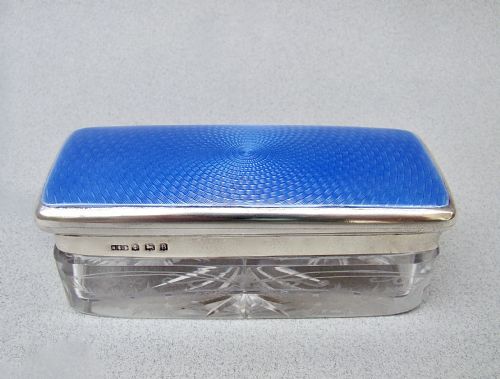
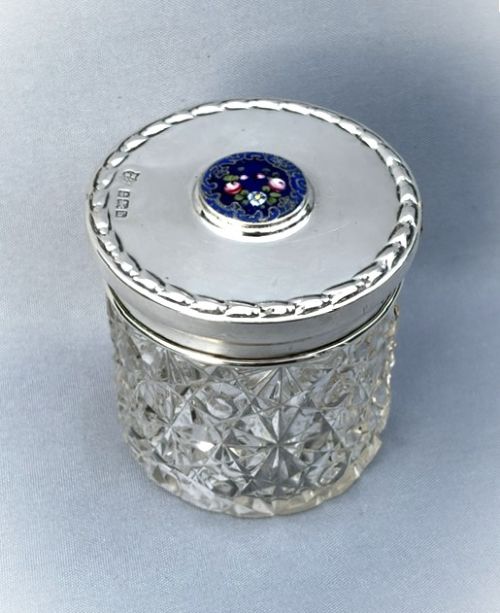
These blue glass trinket pot pieces are dressing table essentials that bring colour and period charm to a room.
Blue Glass Trinket Pot
When you search for a blue glass trinket pot, you are looking at small lidded containers designed for dressing tables and vanity setups. These items range from compact powder boxes to larger lidded bowls intended to hold small personal items.
The versions you are most likely to meet on this page span the Edwardian period, the 1920s, the 1930s, and the nineteenth century. They appear in styles such as Art Deco, Art Nouveau, and nineteenth century French design.
Makers and origins include English production alongside distinct French pieces. Forms encompass vanity jars, dressing table jars, powder boxes, and lidded bowls.
How they were made
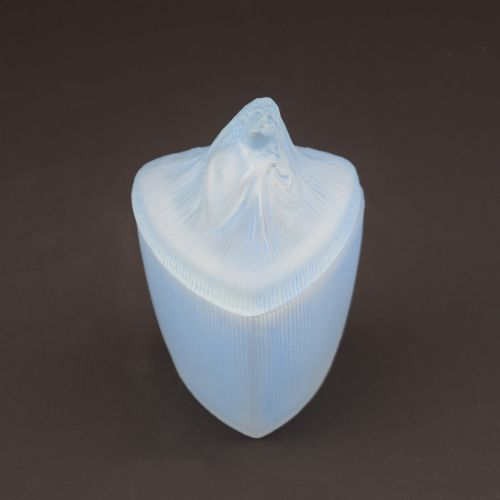
The construction of these pieces relies on moulded or cut glass paired with precious metals. Bristol blue glass and Clichy glass form the bodies, often shaped into opalescent or frosted finishes.
Metal mounts in sterling silver and silver provide fitted lids and rims. These silver elements frequently feature detailed enamel work, including guilloche patterns and surface enamelling.
Blue Glass Trinket Pot Retail Price Guide 2026
Typical asking prices for blue glass trinket pot among the pieces listed under this phrase on Sellingantiques today, from the lower quarter to the upper quarter. They describe what is for sale here now, not the wider market.
Several of these pots retain their original function as powder boxes, ready to hold the ghost of a long-vanished face powder.
What varies in quality
Quality in these items rests upon the crispness of the glass cutting and the precision of the metalwork. Pieces with sharp facet cuts in the glass and substantial silver weight stand apart from simpler iterations.
The execution of the enamel also dictates the grade of the piece. Smooth, even guilloche patterns and undamaged enamel decoration represent superior workmanship compared to plain or uneven surfaces.
Henry Clifford Davis·René Lalique
The Blue Glass Trinket Pot Glossary
- Bristol blue glass
- A deep, intense cobalt blue glass traditionally produced in the English city of Bristol during the eighteenth and nineteenth centuries.
- Guilloche enamel
- A decorative technique where an intricate geometric pattern is mechanically engraved beneath a transparent layer of enamel.
- Opalescent glass
- Glass exhibiting a milky, iridescent appearance that shifts in tone depending on the light source.
- Clichy glass
- Glassware originating from the nineteenth century French factory located in Clichy, known for distinctive coloration and quality.
Blue Glass Trinket Pot: Frequently Asked Questions
What is a blue glass trinket pot used for?
These jars served on nineteenth and early twentieth century dressing tables to hold pins, powder, and small cosmetic items.
Today they function well on a modern vanity or bedside table for storing small pieces of jewellery.
How do I date a blue glass trinket pot?
Dating relies on hallmarks stamped on the silver mounts, stylistic cues from periods like Art Deco or Edwardian design, and manufacturing methods.
English pieces often carry assay office marks and date letters, while French items rely on maker stamps and distinct glass characteristics.
Are these pots made of solid glass?
Most pieces combine a glass body with fitted silver or metal lids and mounts. The glass itself varies from pressed or cut designs to Bristol blue and opalescent varieties.
Precious metal components are typically hallmarked sterling silver.
How should I clean my trinket pot?
Gentle dusting with a soft cloth keeps the glass and enamel clean. Avoid submerging pieces with silver and enamel mounts in water to protect the inner adhesives and metal.
Use appropriate silver polish only on the metal parts while avoiding contact with the glass or enamel surface.