




Victorian Blue Glass Pot
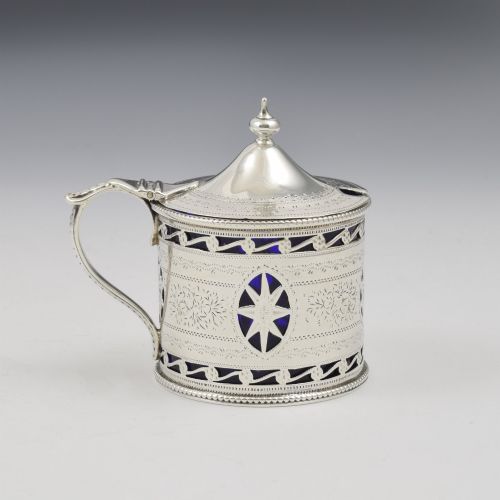
A victorian blue glass pot brings intense cobalt colour and bright silver mounts together on the dining or dressing table.
Victorian Blue Glass Pot
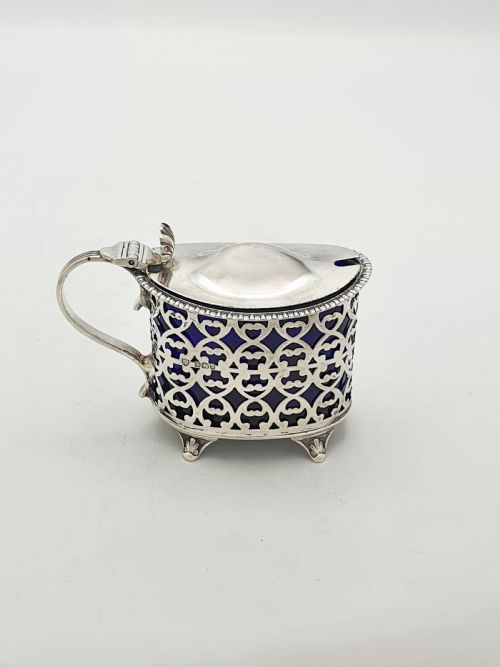
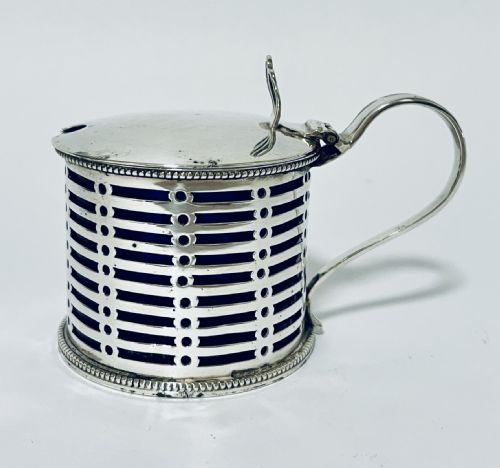
When you search for a victorian blue glass pot, you encounter small condiment vessels, dressing table jars, and sugar bowls produced during the nineteenth century. The most common forms on this page are mustard pots featuring rich cobalt liners paired with sterling silver frames.
Many examples combine pierced silver work with deep blue glass, allowing the vibrant colour to show through openwork floral or geometric designs. Other pieces take the form of French enamelled jars and white latticinio glass bowls with blue cane rims.
Originating largely from British workshops and French makers such as Baccarat and Clichy, these objects span from the early Victorian era through to the Edwardian period. They survive both as individual cabinet items and as functional tableware.
Materials and construction
The glass bodies rely on traditional blowing techniques, incorporating metallic oxides to achieve deep cobalt and Bristol blue tones. Makers sometimes added white latticinio threads and coloured canes to the molten metal for decorative effect.
Silver mounts and pierced frames were shaped using hammering, casting, and piercing methods before being hallmarked to record the metal standard and date. Enamelled decoration on French dressing table jars was hand-painted onto the glass or metal surface before firing.
Victorian Blue Glass Pot Retail Price Guide 2026
Typical asking prices for victorian blue glass pot among the pieces listed under this phrase on Sellingantiques today, from the lower quarter to the upper quarter. They describe what is for sale here now, not the wider market.
Cherubs and birds occasionally peer out from the pierced silver mounts, watching over the mustard.
Assessing quality and character
Quality rests on the crispness of the silver piercing and the weight of the glass vessel. Finer mustard pots exhibit detailed repoussé work, such as cherub and bird motifs, alongside heavy, unblemished cobalt liners that fit their metal frames precisely.
The distinction between standard tableware and exceptional pieces often lies in the provenance and maker attribution, such as signed French glass or recognised British silversmiths. Intricate enamel work and undamaged latticinio canes elevate decorative dressing table jars above simpler utility items.
Nathan & Hayes·Baccarat·Charles Stuart Harris
The Victorian Blue Glass Pot Glossary
- Cobalt glass
- A deep blue glass coloured with cobalt oxide during the melting process. This intense hue defines many nineteenth-century condiment liners and dressing table jars.
- Bristol blue glass
- A vivid deep blue glass traditionally associated with the English city of Bristol. It appears frequently in nineteenth-century mustard pots and cruet sets.
- Latticinio
- Opaque white glass threads encased within clear or coloured glass. It creates delicate net or ribbon patterns across sugar bowls and tableware.
- Pierced silver
- Metalwork cut through with decorative open patterns. This technique allows the blue glass liner beneath to show through clearly.
- Cruet set
- A matched group of condiment pots and bottles held in a frame. These vessels traditionally contained mustard, vinegar, oil, and pepper for the dining table.
Victorian Blue Glass Pot: Frequently Asked Questions
How do I clean a blue glass pot?
Wash the glass gently in warm, soapy water using a soft cloth, avoiding harsh abrasives that might scratch the surface. Remove any silver liner from its mount first to protect the metal and prevent water from becoming trapped between the fitted parts.
Dry the glass thoroughly with a lint-free cloth before returning it to the display cabinet or table. Polish the silver frame separately with a dedicated cloth, taking care not to let polish residue touch the antique glass.
Were these pots used only for mustard?
While mustard pots form the majority of silver and blue glass tableware on this page, similar vessels served other dining purposes. Sugar bowls and condiment pots also utilised deep cobalt liners to hold various table provisions.
In addition to dining items, the same cobalt and Bristol blue glass was formed into dressing table jars for cosmetics and trinkets. These bedroom pieces often featured hinged silver lids or enamelled decoration rather than open frames.
How do I spot a replacement glass liner?
Examine the fit of the glass inside the silver frame to see if it sits level and matches the internal contours properly. A replacement liner may feel loose or leave uneven gaps against the pierced silver work.
Check the glass colour and thickness against known period examples, as modern replacements often show a different tone or modern manufacturing marks. Original liners typically exhibit minor base wear consistent with age and regular insertion into the metal mount.