


Silver Lid Glass Pot
When you search for a silver lid glass pot, you are looking at small dressing table vessels and table containers that combine solid metal mounts with clear or coloured glass.
Silver Lid Glass Pot
A silver lid glass pot encompasses a wide range of desktop and dressing table items, spanning small trinket boxes, heavy vanity jars, and preserve containers. These objects bridge the gap between practical domestic items and decorative dressing table accessories from the late nineteenth century through to the mid-twentieth century.
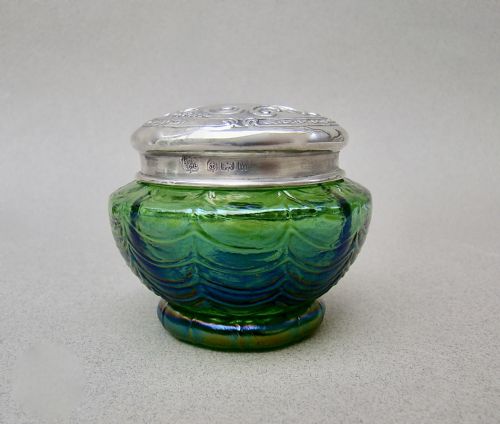
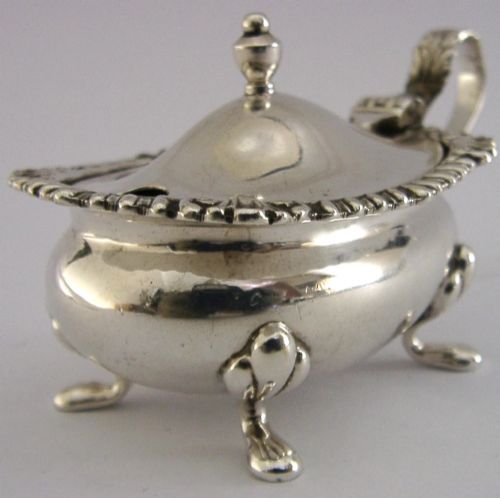
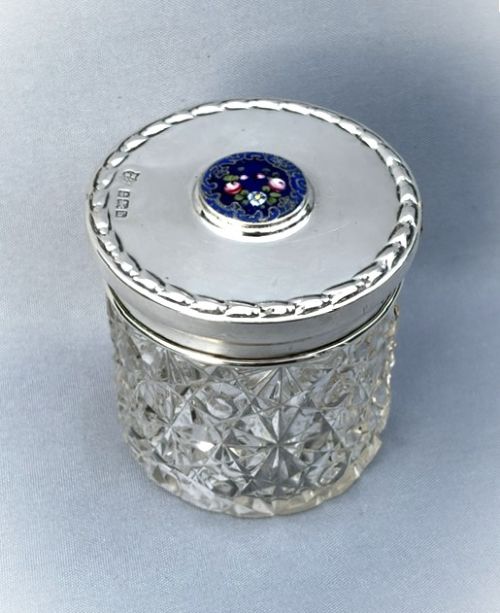
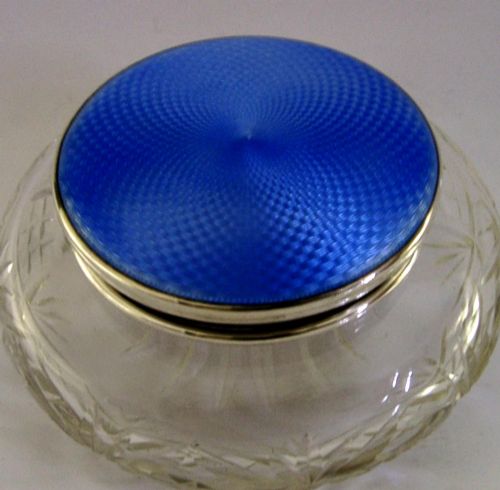
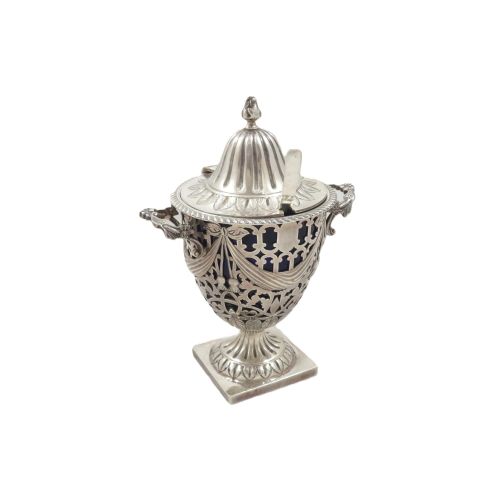
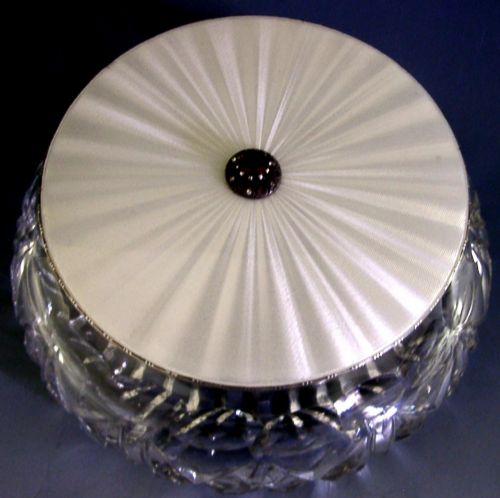
The most common examples on this page date from the Edwardian and Art Deco periods, frequently taking the form of cut crystal dressing table jars or small trinket boxes with hallmarked sterling silver lids. Alongside these vanity items, tablewares such as mustard pots, jam jars, and biscuit barrels appear regularly.
Origins stretch from English provincial assay offices in Birmingham and Sheffield to Victorian London workshops and nineteenth-century French glasshouses like Clichy. Pieces range from modest utilitarian stamp boxes and glue pots to large, heavy overlay vessels designed for prominent display.
How they were made
The glass bodies are typically formed by heavy cutting, moulding, or facet-cutting crystal and coloured glass, including cranberry and satin glass varieties, to catch the light. Silversmiths then fashioned matching sterling silver or silver-plated lids and collars, often securing them with cork or internal collars to ensure a snug fit on the glass rim.
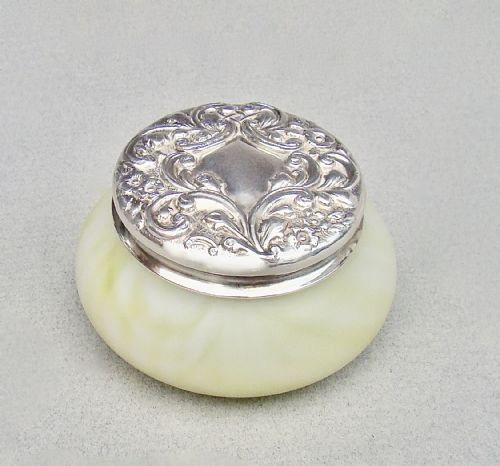
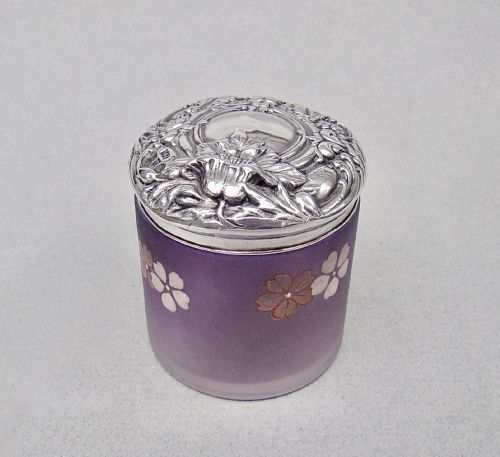
Surface decoration on the silver elements frequently includes guilloche enamel work in blue or other shades, tortoiseshell inlays, and intricate Art Nouveau floral repoussé work. Hallmarks stamped directly onto the silver lids provide precise dates and assay office marks, anchoring the production methods securely to British silversmithing standards.
What varies in quality
Quality in these containers is dictated by the weight of the metal and the depth of the glass cutting rather than the mere presence of silver and glass. Heavy gauge sterling silver lids resist denting and warping far better than thin stamped sheets, while deep, sharp facet cutting on crystal bodies creates a heavier, more resonant vessel.
The integration between the metal mount and the glass body separates standard production items from finer work. Superior examples feature perfectly fitted collars, intact enamel without chipping, and maker marks from notable workshops that demonstrate high-standard craftsmanship across both materials.
A. J. Pepper & Co·A. Bromet & Co·Walker & Hall·Henry Matthews·Asprey
The Silver Lid Glass Pot Glossary
- Assay mark
- A stamp indicating the testing of precious metal purity by an official office such as Birmingham or Sheffield. These small punches reveal the exact year and city of manufacture.
- Cranberry glass
- A rich red glass coloured by the addition of gold chloride during the melting process. It is frequently seen in Victorian and Edwardian biscuit barrels and trinket boxes.
- Guilloche
- A decorative mechanical technique engraved into metal before translucent enamel is applied over the top. This creates a repeating, wavy geometric pattern beneath the glassy surface.
- Hobnail cut
- A sharp, geometric surface pattern cut into heavy glass that resembles the hobnails found on heavy boots. It maximises the refractive sparkle of crystal dressing jars.
- Repousse
- A metalworking method where the silver is hammered from the reverse side to form raised relief designs. It is particularly characteristic of Art Nouveau lids on this page.
Silver Lid Glass Pot: Frequently Asked Questions
What were glass pots with silver lids used for?
These vessels served various domestic and vanity functions, from holding pins, rouge, and trinkets on a dressing table to containing mustard, jam, or honey at the dining table.
Desk variants also functioned as inkwells, stamp boxes, or glue pots, keeping functional items concealed beneath decorative metal lids.
How can I date a silver lidded glass pot?
The easiest way to date these items is by examining the hallmarks stamped onto the silver lid or mount, which indicate the assay office, standard of silver, and an annual date letter.
Stylistic cues like Art Nouveau whiplash lines or geometric Art Deco forms also help narrow down the period when hallmarks are rubbed or missing.
Are the glass liners removable for cleaning?
Many table pots, such as mustard pots and jam jars, feature removable glass liners intended to protect the outer silver or silver-plated frame from acidic contents.
Vanity jars and trinket boxes, however, usually feature permanent glass bodies where the silver collar is fixed directly to the rim with cement or mechanical fit.
How do I care for silver and glass together?
Cleaning requires keeping silver polish away from the glass body and preventing harsh liquids from seeping under fixed silver collars, which can loosen the internal cement.
Soft cloths and gentle cleaning agents preserve both the crystal clarity and the polished finish of the hallmarked metal mounts without causing damage.