



Blue Glass Silver Condiments
Blue glass silver condiments bring rich colour and metalwork together on the dining table, combining cobalt liners with precious or plated silver.
Blue Glass Silver Condiments
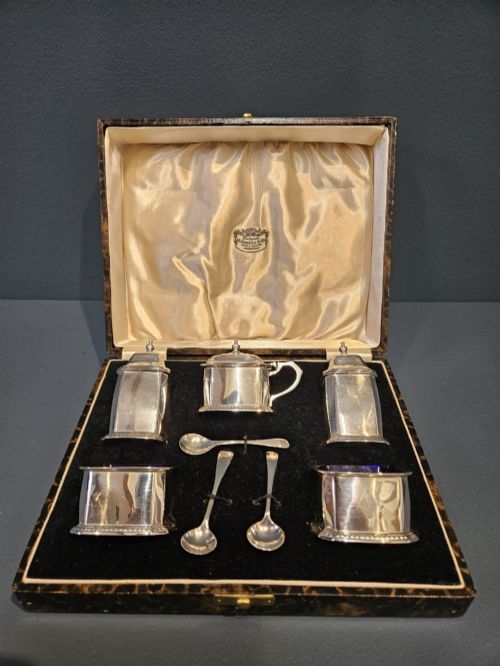
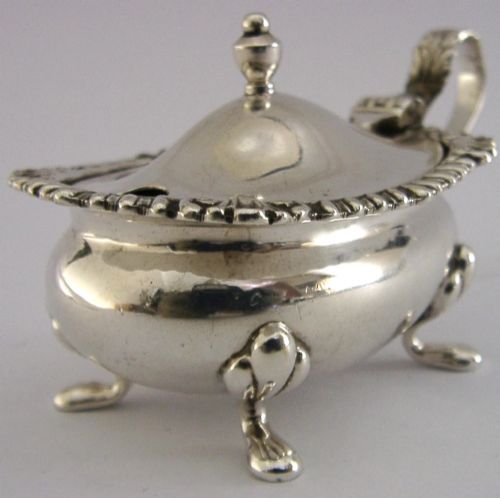
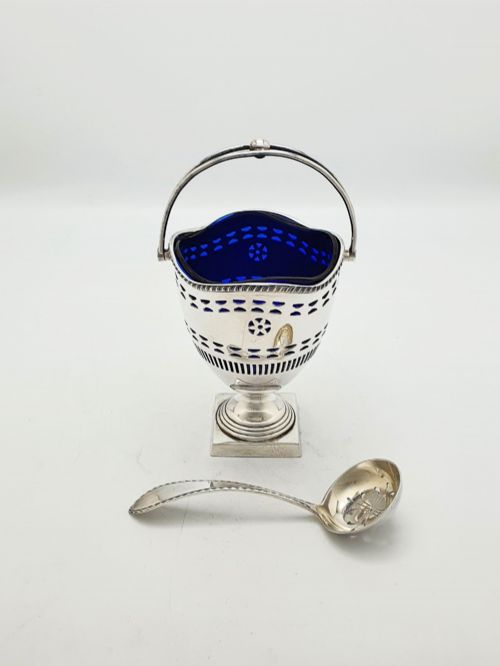
When you search for blue glass silver condiments, you encounter tableware designed to hold salt, mustard, or sugar. These pieces typically take the form of small open salt cellars, lidded mustard pots, sugar bowls, and larger cruet sets holding multiple vessels.
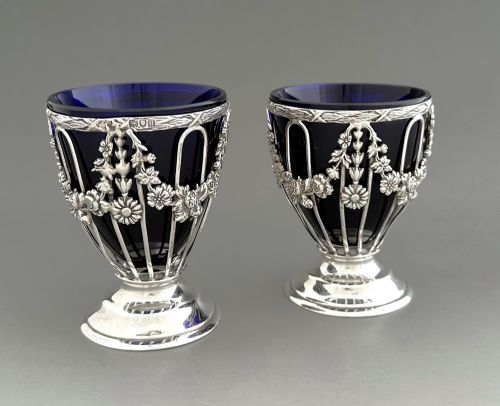
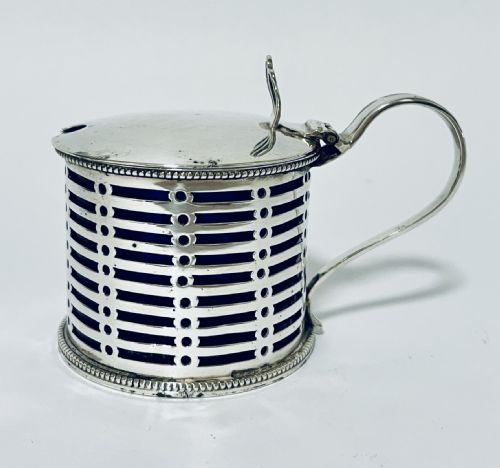
The objects on this page span the Victorian, Edwardian, and Art Deco periods, alongside Georgian and William IV examples. Pierced drum shapes, boat-shaped salt cellars, and wirework tubs appear regularly across these dates.
Makers paired deep cobalt glass inserts with sterling silver or silver plate frameworks. The contrasting materials create a striking visual effect that defined formal dining tables across the nineteenth and twentieth centuries.
Materials and methods
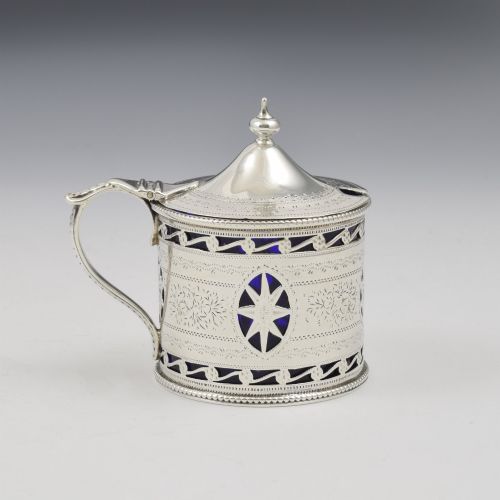
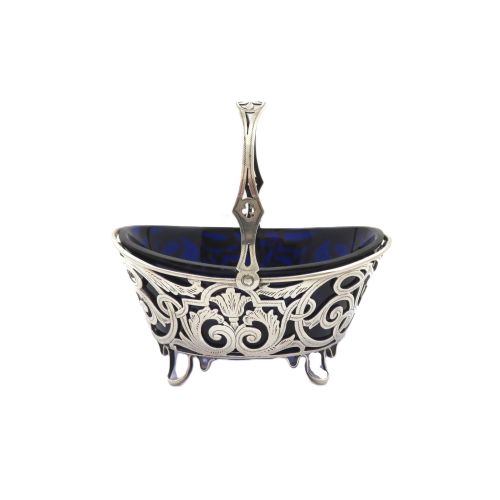
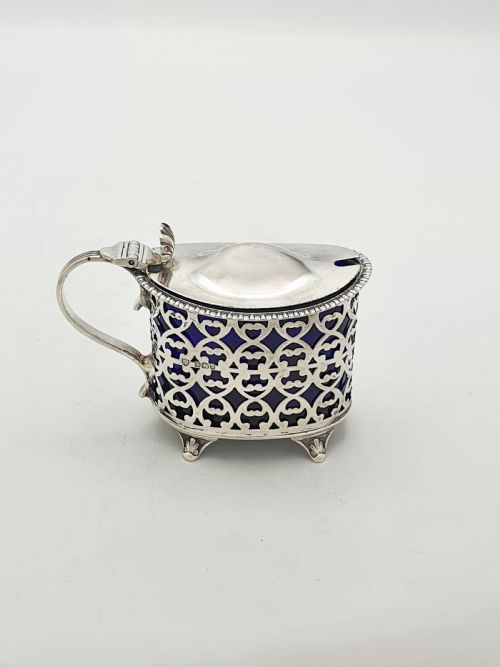
Silversmiths constructed the outer frames using sterling silver or silver plate, often employing piercing techniques to create openwork patterns. Some vessels incorporate velvet linings or delicate wirework to support the glass inserts securely.
The inner vessels consist of blown cobalt blue glass shaped to fit snugly within the metal housing. These liners protected the silver from corrosive condiments like salt and mustard while adding intense colour to the design.
Victorian silversmiths occasionally tucked tiny cherubs and birds into the pierced scrollwork of mustard pots.
Assessing quality
The weight and thickness of the silver frame separate standard utilitarian pieces from finer workshop productions. Heavier gauge metal resists bending and maintains crisp detail in pierced or embossed motifs.
The presence of matching original glass liners contributes significantly to the integrity of a set. Well-fitted cobalt glass that sits flush within the silver mount reflects superior manufacturing standards.
Nathan and Hayes·William Neale·William Neale and Son·Charles Stuart Harris·Omar Ramsden
The Blue Glass Silver Condiments Glossary
- Cobalt glass
- Deep blue glass produced by adding cobalt oxide to the molten batch. It provides a vivid contrast against polished silver mounts.
- Salt cellar
- An open dish or small tub used to hold salt at the dining table before the invention of the spring-loaded shaker.
- Mustard pot
- A small lidded jar designed to hold prepared mustard, frequently featuring a pierced silver body and a blue glass liner.
- Cruet set
- A matched group of condiment containers held in a frame or stand for the dining table.
- Pierced silver
- Metalwork decorated by cutting or piercing open patterns through the sheet silver, often revealing the coloured glass within.
Blue Glass Silver Condiments: Frequently Asked Questions
What are blue glass silver condiments?
These tablewares are small containers designed for salt, mustard, or sugar, pairing metal frames with coloured glass liners.
They combine functional dining accessories with decorative metalwork from various historical periods.
How were salt cellars used historically?
Open salt cellars sat on the dining table to hold coarse salt, which guests pinched or spooned onto their plates.
Unlike modern shakers, these open vessels required small spoons or direct access during meals.
How do I care for blue glass liners?
Wash the glass inserts gently in warm, soapy water and dry them thoroughly before placing them back into the silver frame.
Avoid abrasive cleaners that might scratch the cobalt surface or damage the metalwork.
Can I use these sets for dining today?
Many people continue to use these traditional mustard pots and salt cellars for everyday dining or special occasions.
Using them brings historical craftsmanship directly onto the modern table setting.
How can I tell the period of a piece?
Hallmarks stamped into the silver provide official assay marks, date letters, and maker symbols that pinpoint the year of manufacture.
Stylistic details like Art Deco geometry or Victorian pierced scrollwork also indicate the era of production.