


Pair of Salt Cellars
A pair of salt cellars brings formal dining history to the table, offering paired vessels for individual seasoning from the Georgian, Victorian, and Edwardian eras.
Pair of Salt Cellars
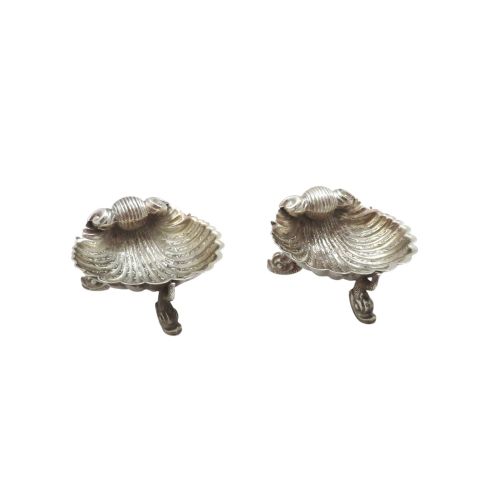
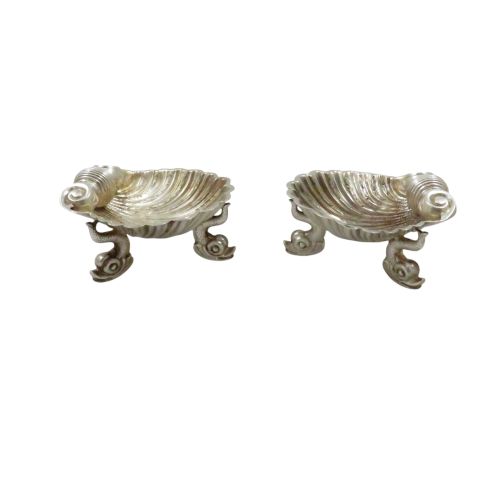
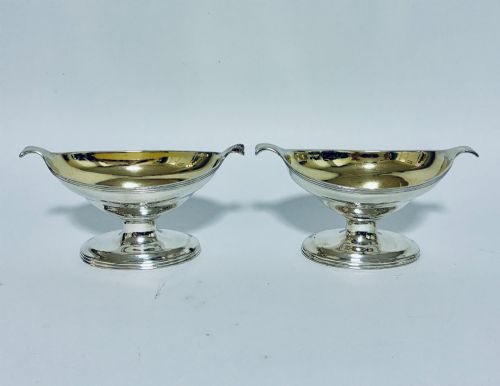
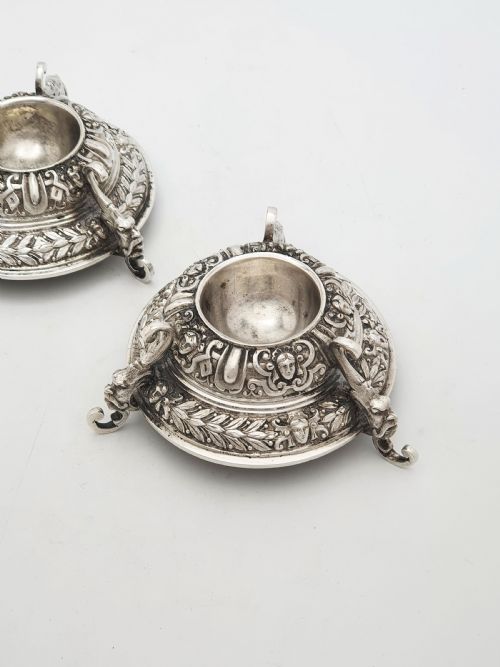
When searching for a pair of salt cellars, buyers encounter matching open vessels or small shakers designed for dining table use. These items span periods from the eighteenth century through the Edwardian era, encompassing Georgian boat shapes, Victorian shell designs, and twentieth-century novelties.
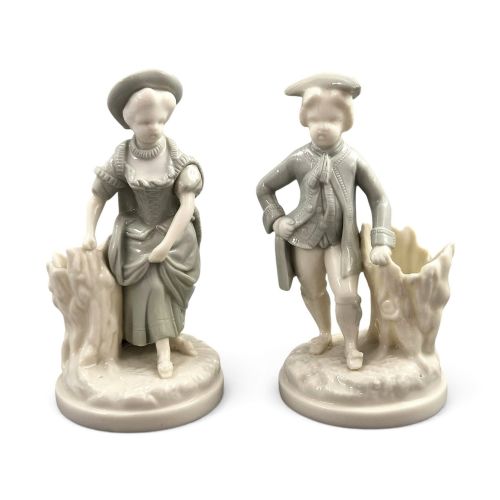
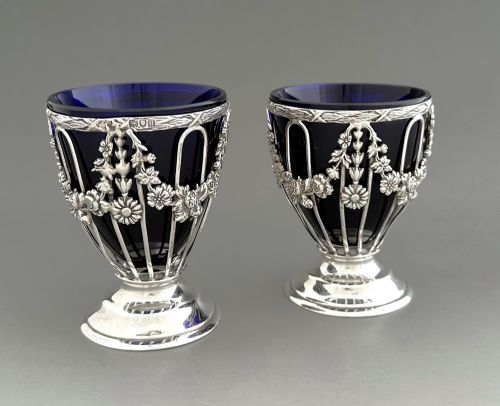
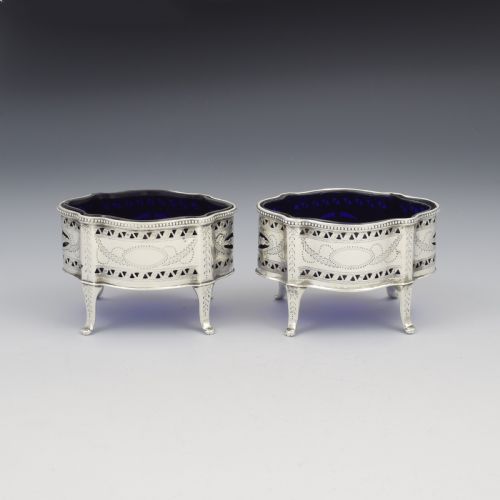
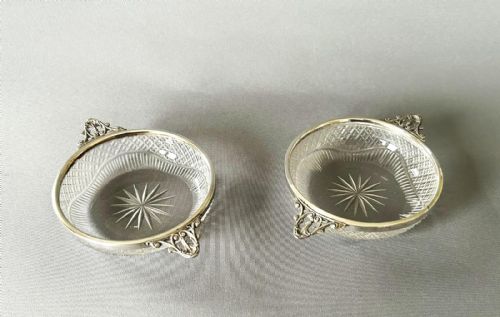
The selections on this page feature forms ranging from pedestal dishes and trencher salts to cauldron designs and figural models. Materials include sterling silver, silver plate, cut glass, and porcelain, often paired with contrasting coloured glass liners.
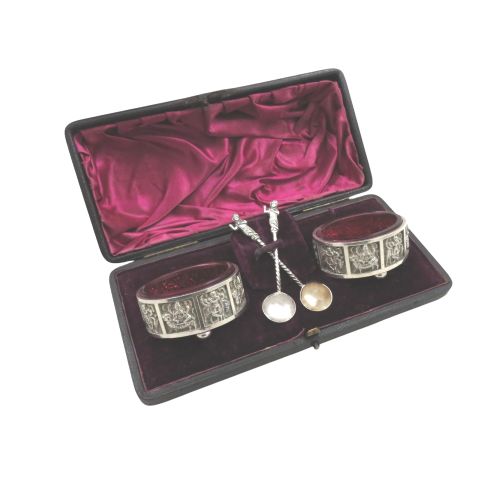
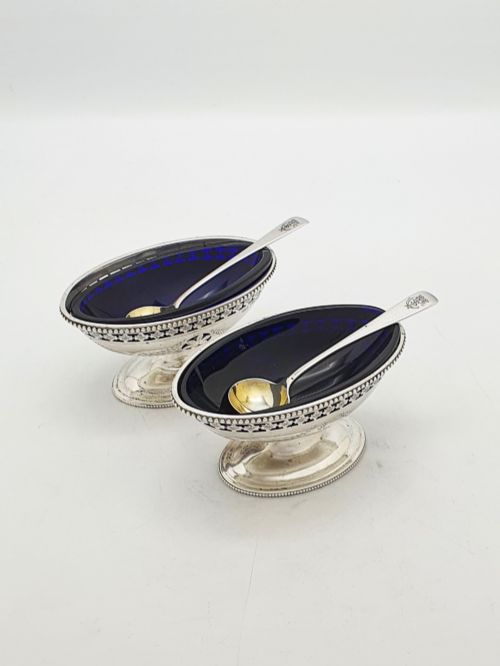
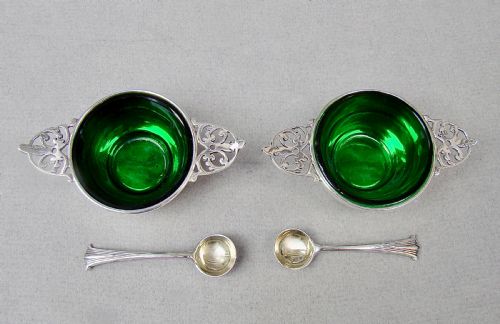
Many examples arrive complete with their original fitted cases and matching small spoons. Domestic dining traditions placed these duplicates symmetrically on the table to hold condiments for guests.
What varies in quality
Quality rests upon the crispness of the chasing, the weight of the metal, and the presence of clear hallmarks verifying maker and date. Superior examples maintain intact original glass liners and matching spoons without replacement parts.
Artistry differentiates standard domestic ware from masterworks, evident in sculptural forms like dolphins, birds, or human figures. The survival of an original fitted presentation case also elevates the standing of an item.
Chick-shaped silver shakers wait to dispense seasoning across the dining table.
Josiah Williams And Co·David Hennell·John Edmonstone·Sampson Mordan·Thomas Johnson·George Unite·Daniel And John Wellby·William Cripps·Joseph Felix Podio·Robert Harper
The Pair of Salt Cellars Glossary
- Trencher salt
- A heavy, low-profile salt cellar originating in the seventeenth and eighteenth centuries, placed directly on the dining surface before individual vessels became common.
- Cauldron salt
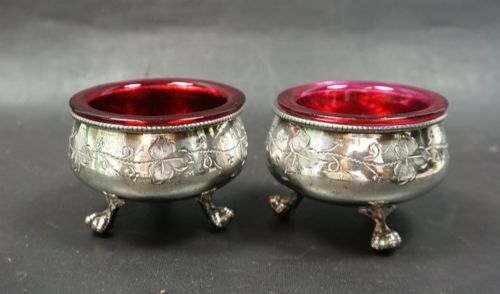
- A small, bowl-shaped salt cellar supported by three legs, mimicking the form of a traditional cooking pot. This style enjoyed widespread popularity during the Georgian period.
- Liner
- A removable glass insert, frequently coloured in cobalt blue or cranberry hues, fitted inside open silver salt cellars to prevent salt corrosion.
- Pierced work
- A decorative technique where metal is cut through to create openwork patterns, common in Victorian table salts.
- Novelty salt
- A salt cellar modelled into an unconventional shape, such as an animal, human figure, or boat, designed to amuse diners.
Pair of Salt Cellars: Frequently Asked Questions
How were salt cellars used on the table?
Dinners placed matching pairs symmetrically along the table so guests could pinch salt onto their plates.
They often accommodated tiny spoons or allowed diners to use the tip of a knife.
Why do some salt cellars have glass liners?
Cobalt or cranberry glass inserts protected the sterling silver or plate from the corrosive nature of salt.
Original liners remain a key feature for collectors evaluating a set.
How can I tell the age of salt cellars?
Makers' marks, town marks, and date letters stamped onto the silver provide precise manufacturing years.
Stylistic shifts from Georgian simplicity to Victorian ornamentation also indicate the period.