



Blue Glass Liner Pot
A blue glass liner pot is the colourful interior vessel tucked inside a silver salt, mustard pot or sugar basket.
Blue Glass Liner Pot
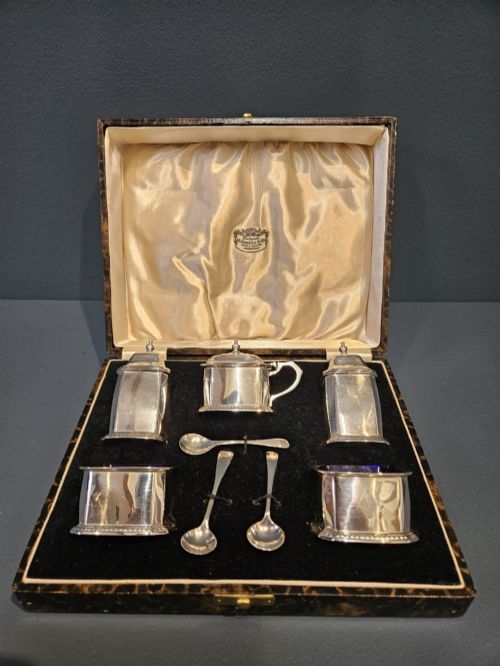
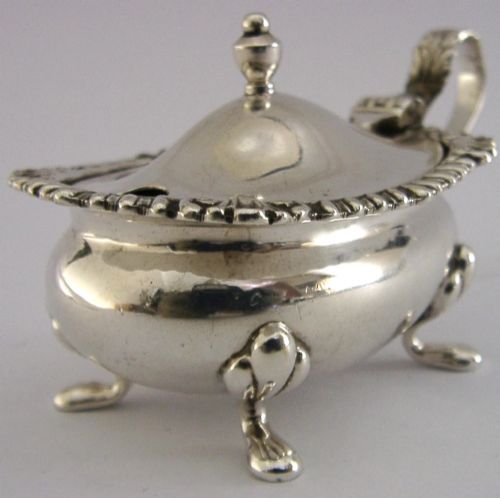
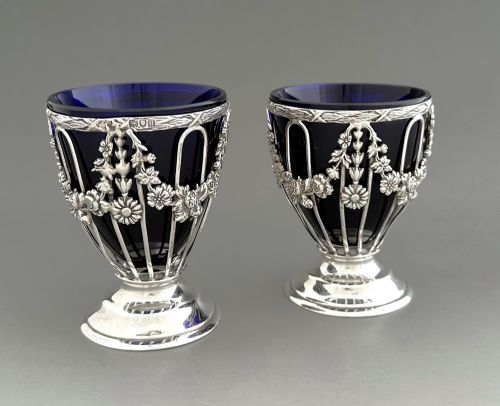
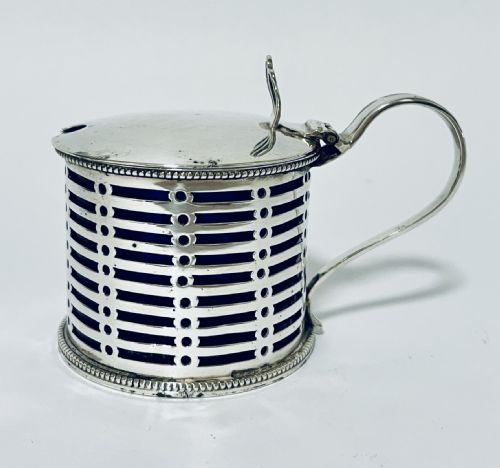
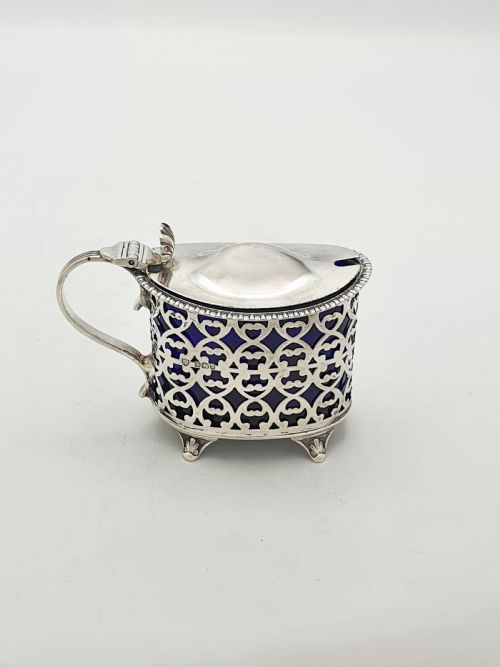
When you search for a blue glass liner pot, you are looking at the vibrant cobalt or blue glass inserts that sit inside pierced or solid silver tableware. These pieces span from the mid-nineteenth century through the Edwardian era and into the Art Deco period, taking forms such as mustard pots, condiment sets, and sugar bowls.
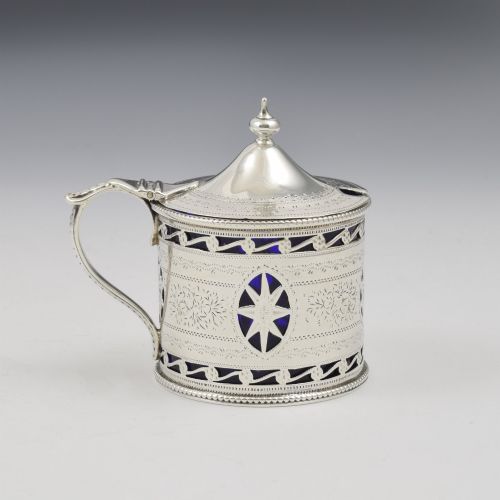
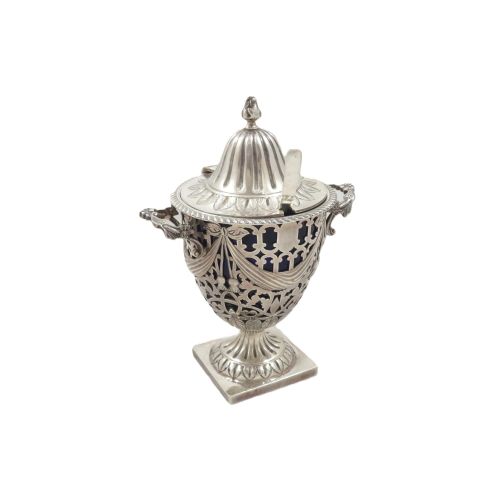
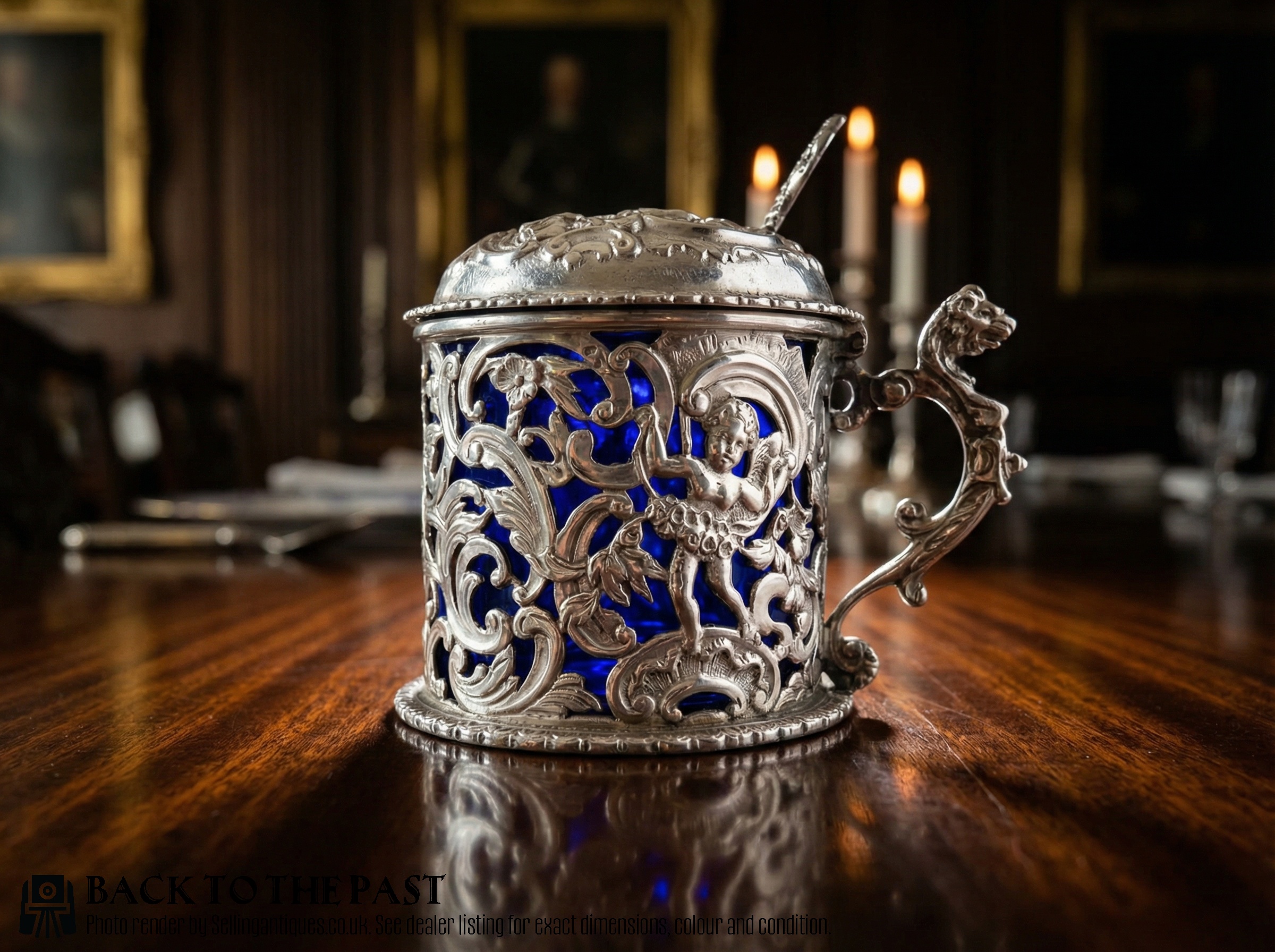
You will most commonly meet Victorian and Edwardian examples on this page, housed within sterling silver frames that range from plain oval drums to ornate wirework and pierced bodies decorated with cherubs and birds. The glass provides a striking visual contrast to the polished silver exterior while protecting the metal from corrosive condiments.
How they were made
The metal components are formed from sterling silver or silver plate, often shaped through piercing, wirework, or casting into traditional Georgian and Victorian silhouettes. Makers utilise techniques like piercing to create intricate galleries that showcase the bright blue glass hidden within.
The liners themselves consist of blown cobalt blue glass or Bristol blue glass, shaped carefully to fit the interior dimensions of each specific cruet or salt cellar. This combination of hot-worked glass and silversmithing required precise collaboration between glasshouses and metalworkers.
Listings feature silver mustard pots and cruet sets spanning from the mid-nineteenth century through the Edwardian era to the 1960s.
What varies in quality
The presence of an original, well-fitting blue glass liner that matches the contours of the silver mount significantly enhances the integrity of the piece. Quality is also judged by the depth and consistency of the blue glass colour, which ranges from rich cobalt tones to softer translucent hues.
Nathan & Hayes·William Neale·Charles Stuart Harris·Omar Ramsden·Thomas Bradbury & Son
The Blue Glass Liner Pot Glossary
- Cobalt glass
- A deep blue glass coloured by the addition of cobalt oxide during manufacture. This striking material is traditional for condiment liners and apothecary bottles.
- Cruet set
- A matched collection of small tableware vessels for holding condiments such as mustard, salt, and pepper. These sets typically feature fitted glass liners.
- Pierced silver
- Metalwork decorated by cutting small open patterns through the silver sheet. This technique reveals the coloured glass liner beneath the frame.
- Bristol blue glass
- A distinctively deep and vibrant dark blue glass historically associated with production in Bristol. It remains a sought-after material for antique scent bottles and liners.
Blue Glass Liner Pot: Frequently Asked Questions
What is a blue glass liner pot used for?
These vessels serve as protective and decorative inserts for silver mustard pots, salt cellars, and sugar baskets. They prevent acidic condiments like mustard from tarnishing or corroding the silver exterior.
The bright blue glass also provides an attractive aesthetic contrast when viewed through the pierced or open wirework frames of Victorian and Edwardian tableware.
How do I date a silver condiment pot?
Dating relies heavily on the hallmarks stamped onto the silver frame, which indicate the assay office, date letter, and maker's mark. Stylistic clues such as heavy Victorian piercing or geometric Art Deco lines also point to specific decades.
Comparing the form and decorative motifs to documented pieces helps narrow down whether a piece originates from the Georgian, Victorian, or Edwardian periods.
Are replacement glass liners available?
Finding an exact replacement glass liner for an antique silver pot can prove challenging due to variations in handmade dimensions. Many pieces were individually blown to fit a specific silver mount.
Collectors often search for period-appropriate replacements that match the exact diameter, height, and colour of the original component.
How should I clean my silver and glass pot?
Careful maintenance involves removing the blue glass liner from the silver frame before cleaning each part separately. The glass can be washed gently in warm soapy water without abrasive materials.
The silver mount requires a suitable silver polish applied sparingly to avoid touching the liner, preserving both components safely.