


Blue Glass Decanter
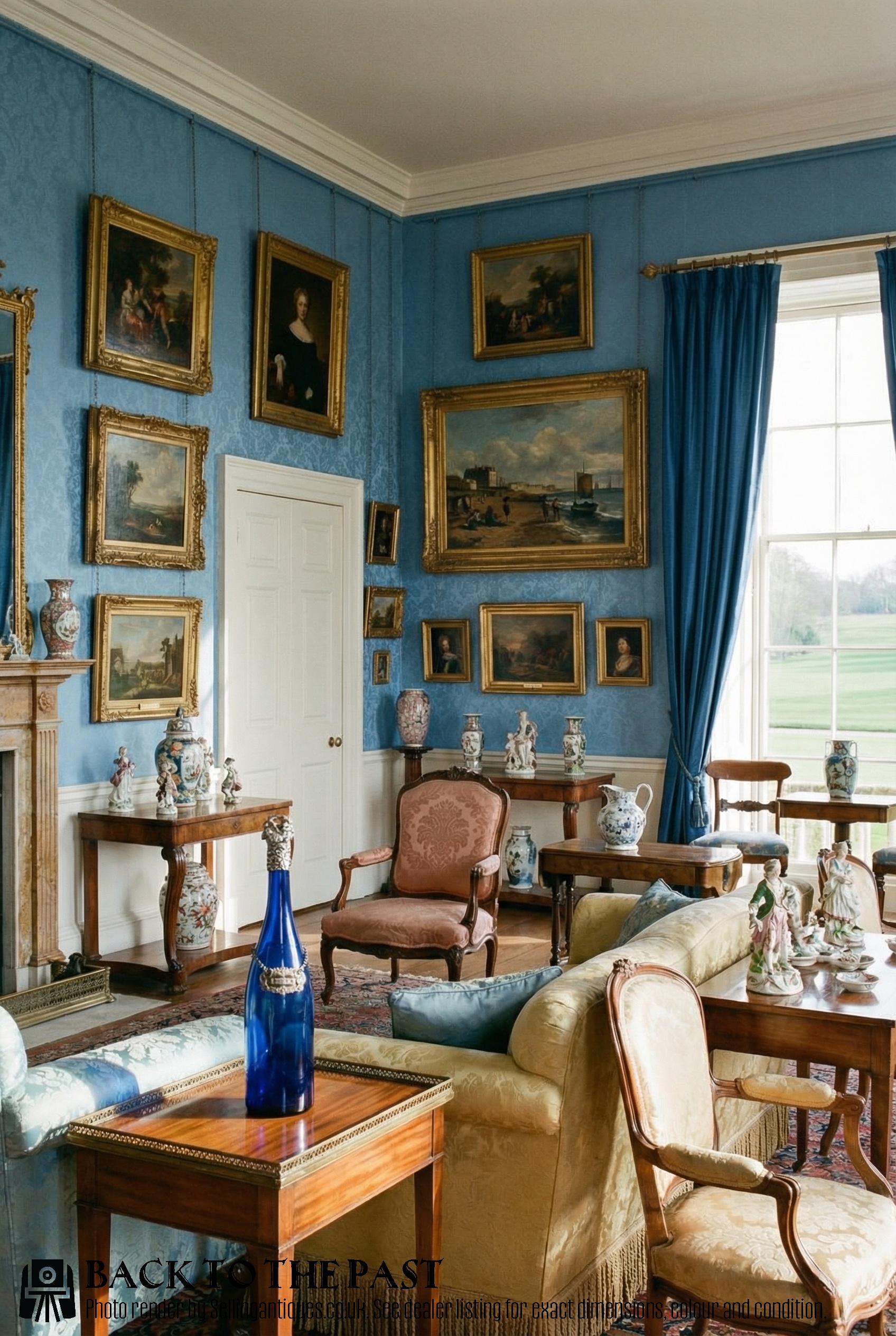
A blue glass decanter brings deep cobalt and sapphire tones to a side table, offering both vibrant colour and functional storage for spirits.
Blue Glass Decanter
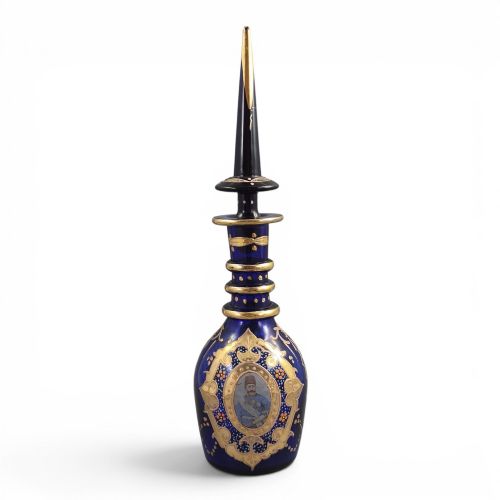
A blue glass decanter is a serving vessel designed for wine and spirits, most frequently encountered in rich Bristol blue or cobalt shades across this selection. Collectors typically discover Georgian and Victorian examples, alongside later Art Deco pieces and continental glassware.
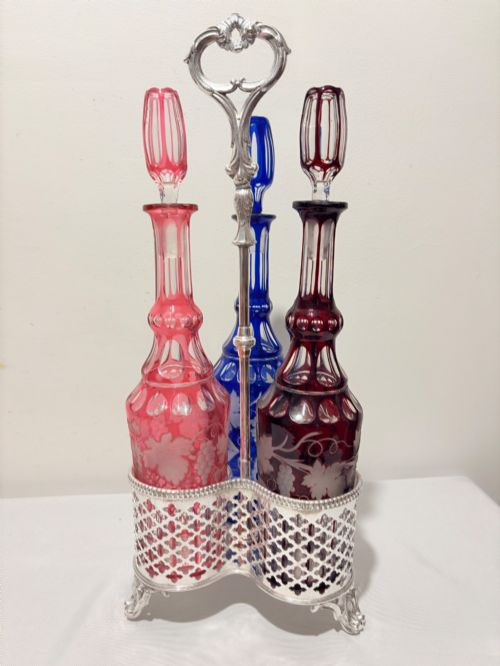
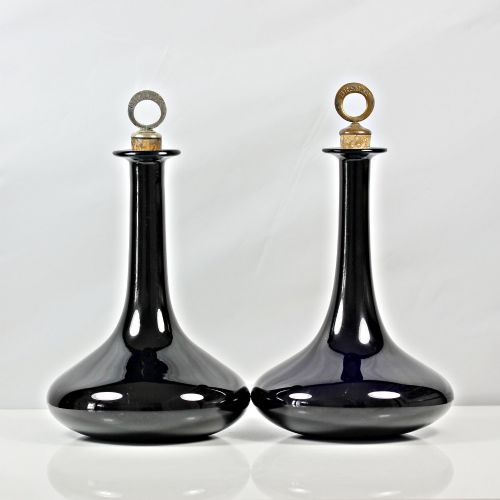
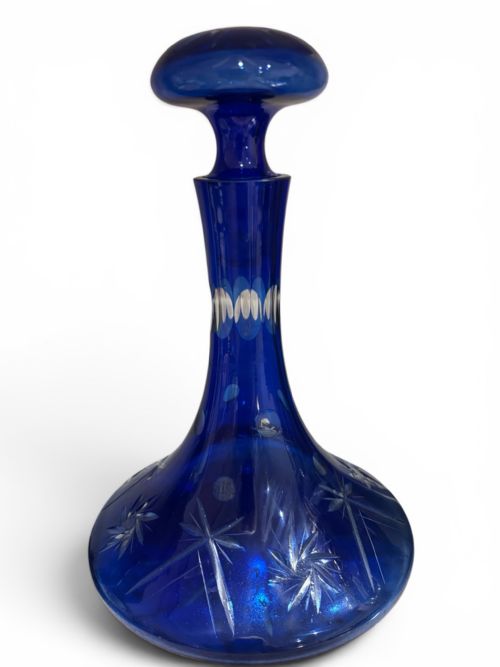
The forms range from traditional club and mell shapes to ring-necked spirit bottles, ships decanters, and tall hock jugs. Many retain their original stoppers, while others appear paired with silver-plated stands or matching glasses.
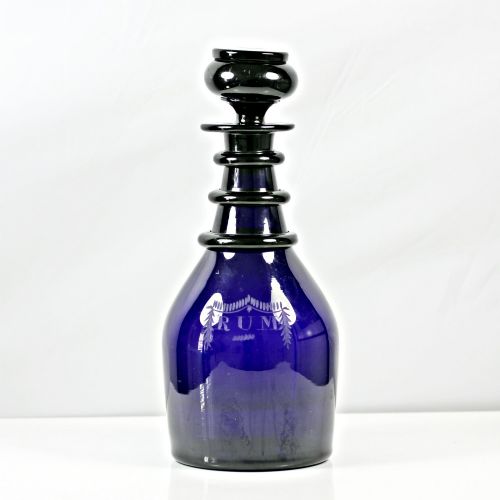
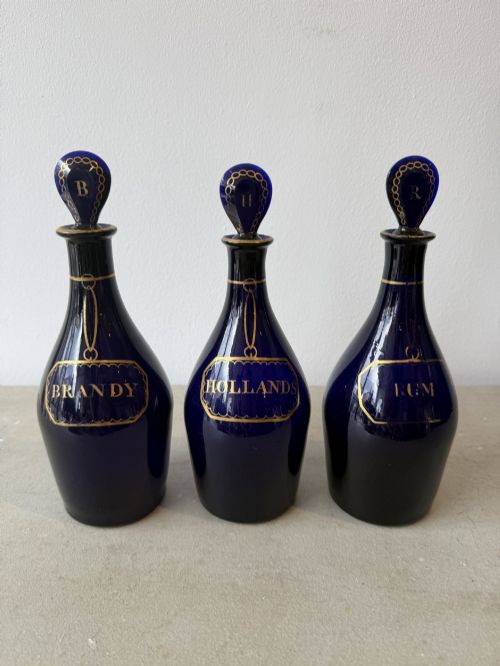
Origins span English production centres, Scottish workshops, and continental makers in Bohemia, France, and Venice. Pieces frequently display applied gilding, white enamel decoration, or etched labels designating specific contents such as rum or whiskey.
Materials and Techniques
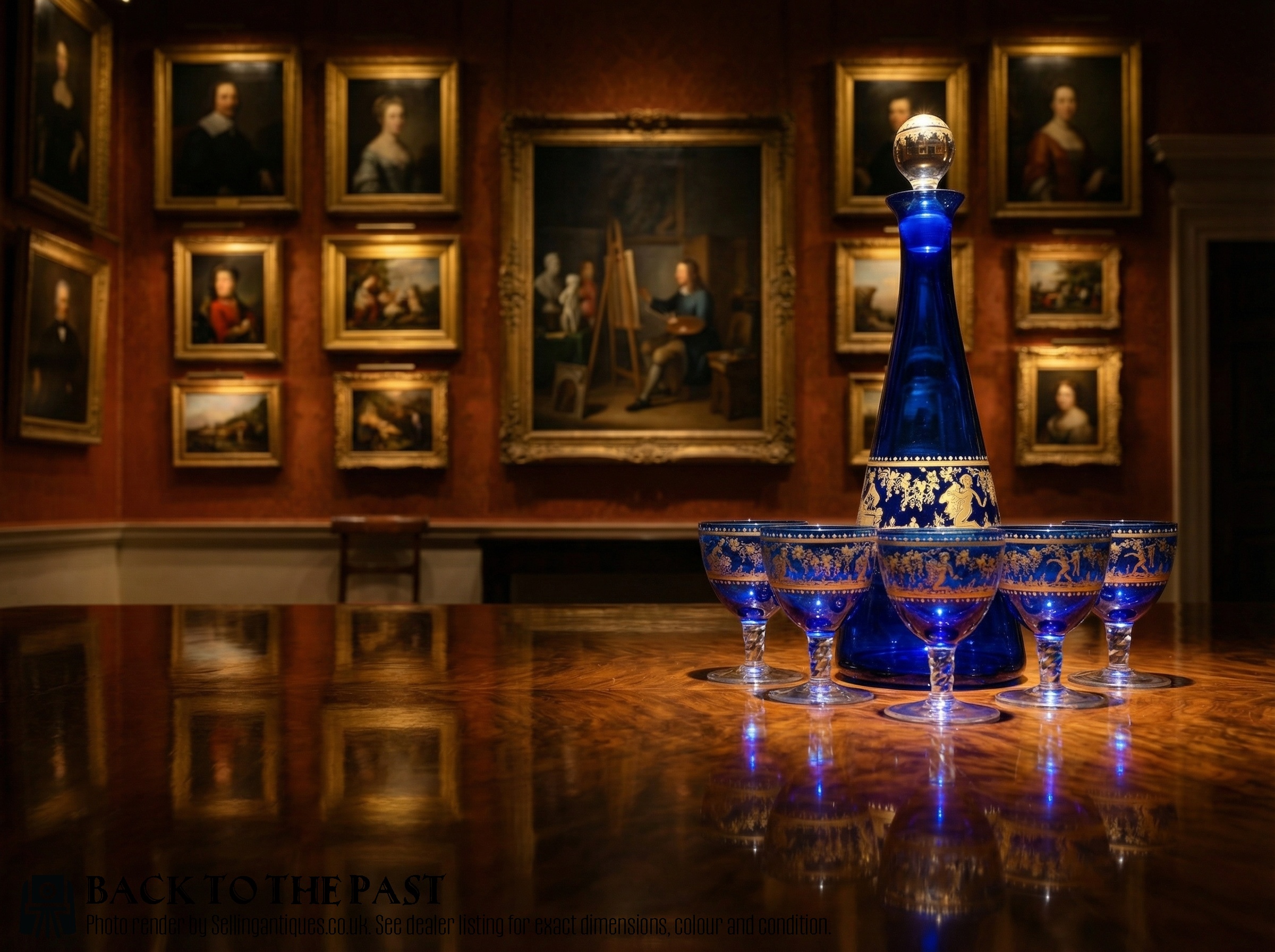
The foundational material is heavy blown glass, coloured deep blue through the introduction of cobalt oxide during the molten stage. Artisans shaped these vessels by hand, resulting in characteristic variations in wall thickness and pontil marks on the base.
Decoration relied on skilled hand-painting with gold leaf or white enamel, alongside wheel engraving to cut through surface layers in overlay crystal. Metal components, including bottle necks, collars, and stands, incorporate silver plate, old Sheffield plate, or cork stoppers.
Blue Glass Decanter Retail Price Guide 2026
Typical asking prices for blue glass decanter among the pieces listed under this phrase on Sellingantiques today, from the lower quarter to the upper quarter. They describe what is for sale here now, not the wider market.
Several Victorian examples spent their early days rolling across ship tables inside secure wooden stands.
Assessing Quality and Execution
Quality rests primarily upon the depth and saturation of the glass colour, the crispness of any hand-applied gilding or enamel work, and the structural balance of the vessel. Superior pieces exhibit precise wheel-cut ring necks and finely engraved labelling that remains sharp and legible.
The presence of matching stoppers, original silver-plated mounts, or associated serving stands elevates the standing of an individual piece. The overall clarity of the glass and the absence of heavy surface scratching distinguish finer examples from utilitarian ones.
Portieux Vallerysthal
The Blue Glass Decanter Glossary
- Bristol blue
- A deep, vibrant cobalt blue glass historically associated with production in the West Country of England during the Georgian and Victorian periods. This rich hue remains the defining characteristic of many traditional spirit containers.
- Mell decanter
- A mallet-shaped bottle with a broad base tapering towards the neck, designed for stability on shipboard or dining tables. This heavy form is frequently encountered in Georgian examples.
- Overlay glass
- A technique involving a layer of coloured glass fused over a clear or contrasting body, then partially cut away to reveal the underlayer. This method creates striking geometric or floral patterns.
- Nailsea glass
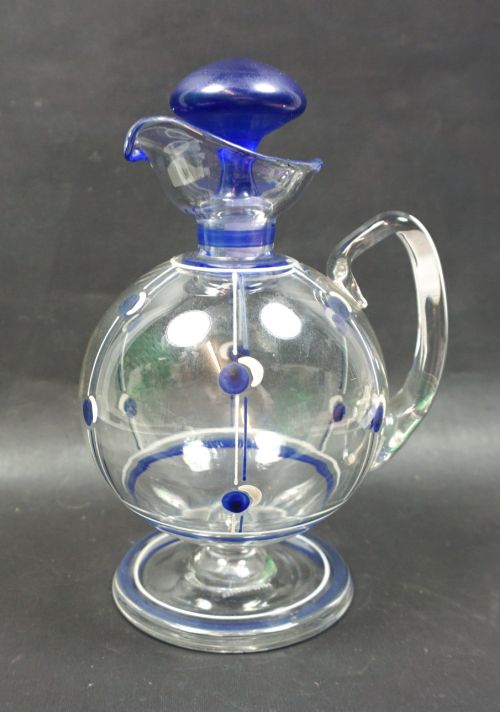
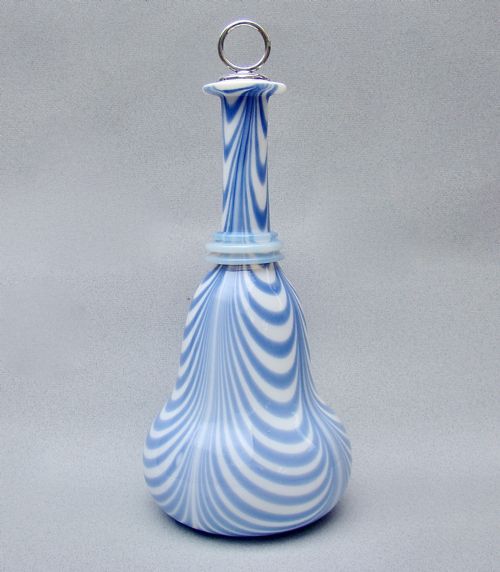
- Glassware characterised by looped or splashed white enamel trails within the body, originating from the Somerset village of Nailsea. It appears on nineteenth-century carafes and serving bottles.
- Pontil mark
- A rough scar on the base of a hand-blown vessel where the pontil rod was detached after forming. Its presence confirms traditional hand-blown manufacturing methods.
Blue Glass Decanter: Frequently Asked Questions
What spirits were kept in blue glass decanters?
These vessels typically held dark spirits and fortified wines, with rum, whiskey, port, and claret being the most common contents. Many pieces feature gilt or enamelled labels directly naming these specific liquors.
Smaller bottles also served an apothecary function, holding medicines or scented waters rather than dining table beverages.
How do I distinguish Georgian from Victorian pieces?
Georgian examples often feature heavier, deeper cobalt metal with simple wheel engraving and mallet or club silhouettes. Victorian items frequently introduce three-ring necks, brighter enamel decoration, or complex overlay techniques.
Additionally, Victorian production occasionally incorporates silver-plated mounts and frames that reflect nineteenth-century dining fashions.
Are original stoppers important?
Original matching stoppers significantly enhance the integrity and aesthetic balance of any serving bottle. Because stoppers were easily broken or separated over generations, finding a piece with its correct period stopper is a notable advantage.
Buyers should examine the ground-glass neck and stopper base to confirm they were made for each other.
How should I clean antique glass decanters?
Gentle washing with warm water and mild soap is recommended, avoiding harsh abrasives that might damage surface gilding or enamel. Wooden bead chains or specialised cleaning pellets can help dislodge internal residue without scratching the cobalt metal.
Extreme temperature changes must be avoided to protect old, hand-blown material from cracking.