




Blue Geometric Rug
A blue geometric rug brings structured patterns and deep indigo tones straight from traditional weaving traditions into modern spaces.
Blue Geometric Rug
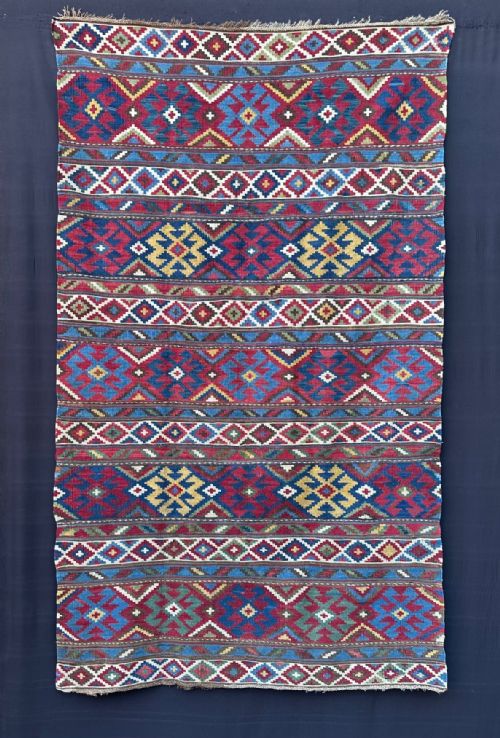
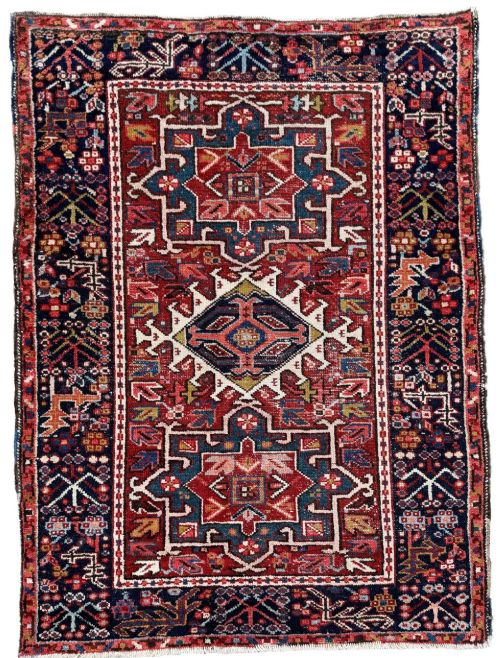
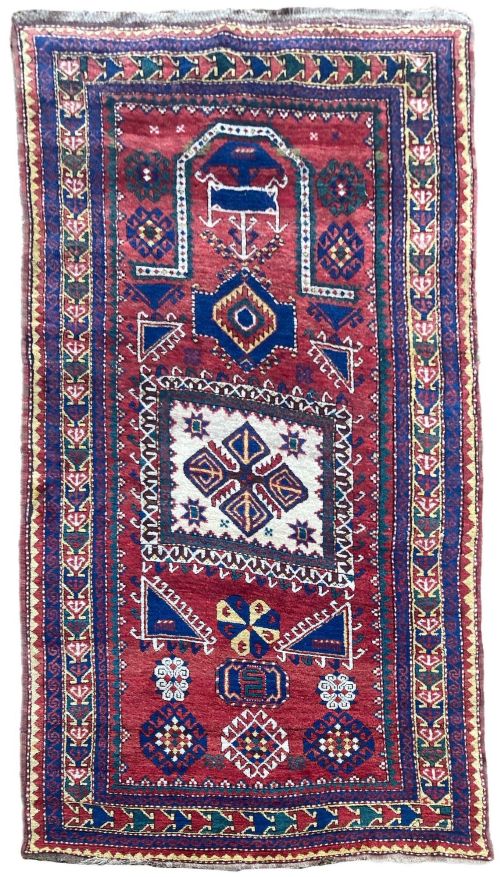
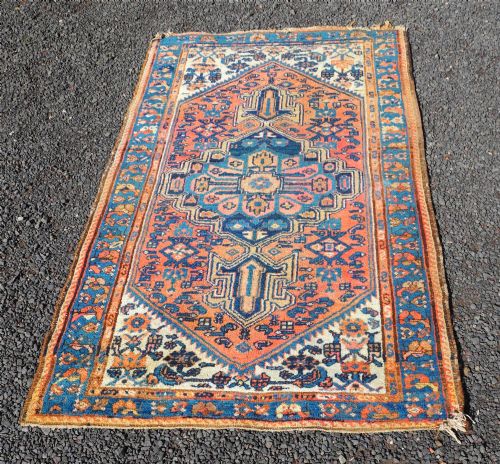
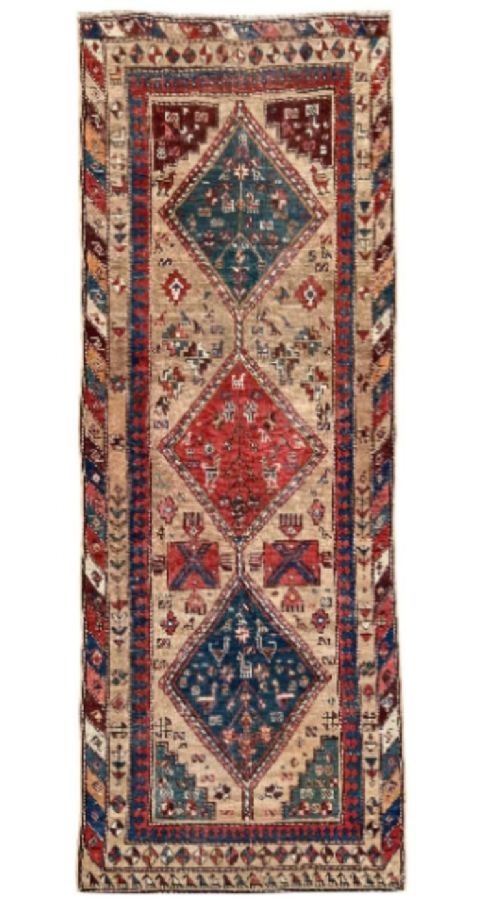
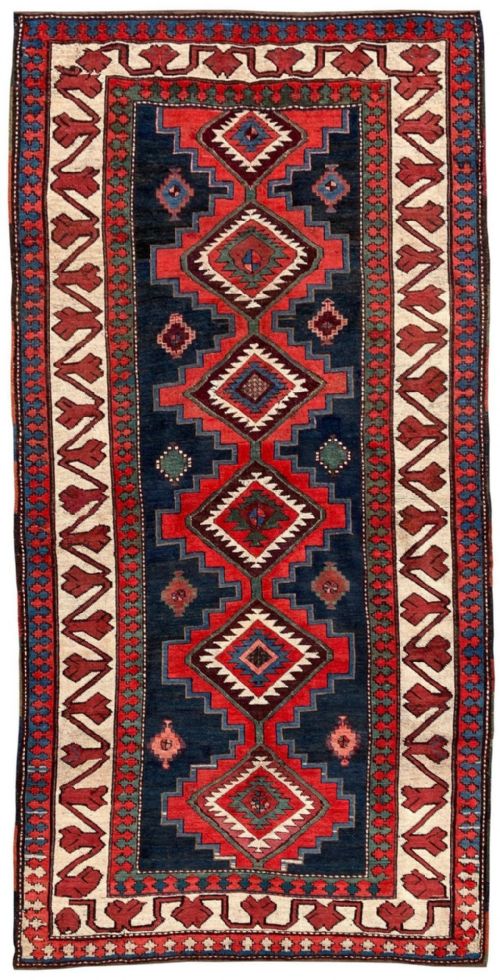
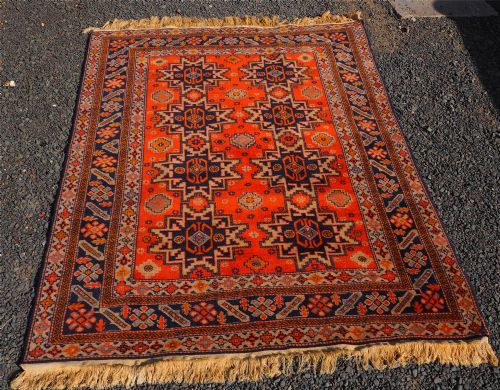
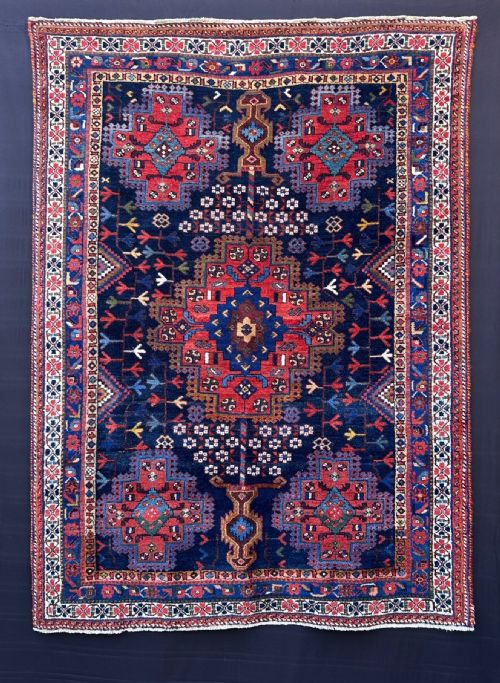
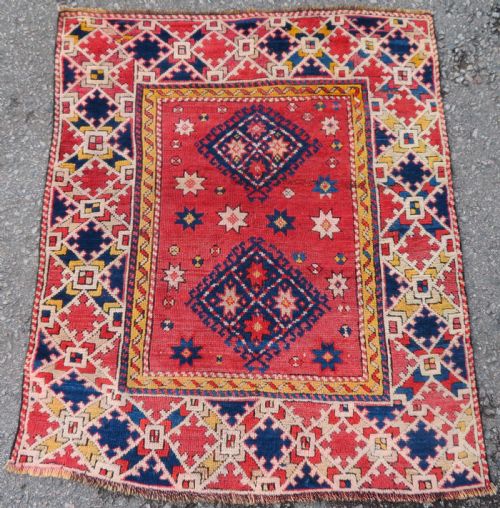
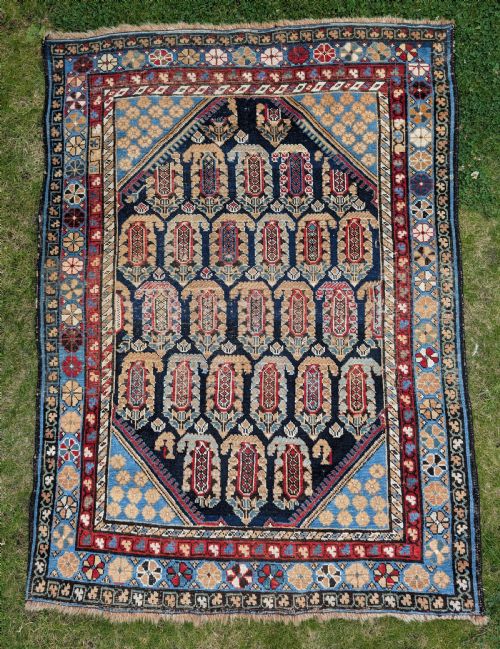
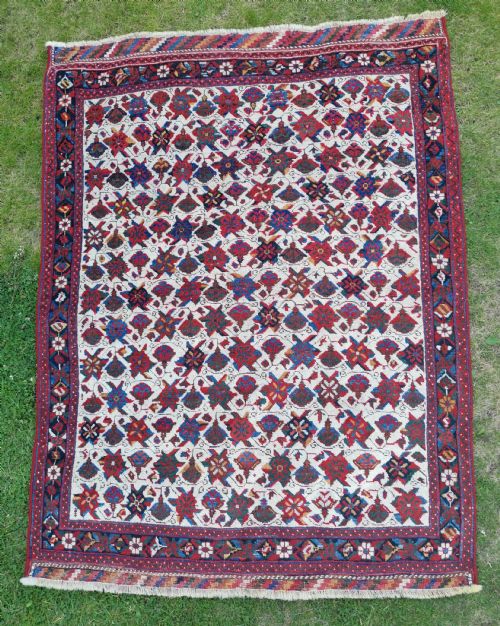
A blue geometric rug encompasses hand-knotted tribal and village floor coverings originating from Persia, the Caucasus, and Anatolia. These pieces display angular motifs, medallions, and lattice designs rendered in various shades of blue.
The selection ranges from room-sized Heriz carpets to long runners and smaller hearth rugs, spanning periods from the nineteenth century through the mid-twentieth century.
Buyers seeking a blue geometric rug will find examples utilising traditional regional patterns such as Kazak, Khamseh, and Heriz, each displaying distinct structural layouts.
Materials and construction
Makers constructed these floor coverings primarily from wool and cotton, employing hand-spun wool for durability and rich texture. Many older pieces incorporate natural dyes that produce subtle variations in tone across the surface.
Weavers knotted the yarn by hand onto cotton or wool foundations, creating dense piles designed to withstand generations of daily use. Regional workshops applied specific knotting techniques and colour palettes characteristic of their local origins.
Blue Geometric Rug Retail Price Guide 2026
Typical asking prices for blue geometric rug among the pieces listed under this phrase on Sellingantiques today, from the lower quarter to the upper quarter. They describe what is for sale here now, not the wider market.
Listings span periods from the nineteenth century through the mid-twentieth century, featuring wool, cotton, and natural dye materials.
Factors affecting quality
Quality depends heavily on the fineness of the knotting and the crispness of the geometric design execution. Tighter foundations and precise alignment of medallions separate master weaver output from standard village work.
The integrity of the wool and the vibrancy of the natural dyes also determine grade. Even wear across the pile and intact original edges indicate careful preservation and superior initial manufacture.
The Blue Geometric Rug Glossary
- Kazak
- A type of antique rug originating from the Caucasus, known for bold geometric medallions and saturated primary colours.
- Medallion
- A central ornamental motif set in the middle of the rug field, often framed by repeating borders.
- Runner
- A long, narrow carpet format traditionally used in hallways or corridors.
- Natural Dyes
- Colouring agents derived from plants, insects, and minerals, prized for their ability to age gracefully over time.
- Pile
- The upright yarn loops that form the usable surface of the rug.
Blue Geometric Rug: Frequently Asked Questions
Where should I place a runner rug?
Runners fit well in narrow spaces such as hallways, corridors, and kitchens where linear floor coverings soften hard surfaces.
They also work effectively along the side of a bed or in entryways to handle foot traffic while introducing colour and pattern.
How do I clean an antique wool rug?
Regular gentle vacuuming without a beater bar removes loose dirt from the wool pile without damaging the foundation.
Professional specialist cleaning remains necessary for deeper maintenance to protect natural dyes and fragile fibres.
What is a tribal rug?
Tribal rugs are floor coverings made by nomadic or village communities using traditional motifs passed down through generations.
These pieces often display memory-based designs and regional colour combinations rather than strict workshop cartoons.
How do I identify a Heriz carpet?
Heriz carpets typically feature large, bold geometric corner spandrels and a prominent central medallion with strong angular lines.
They are known for sturdy cotton foundations and heavy wool piles originating from the Azerbaijan region of Persia.