

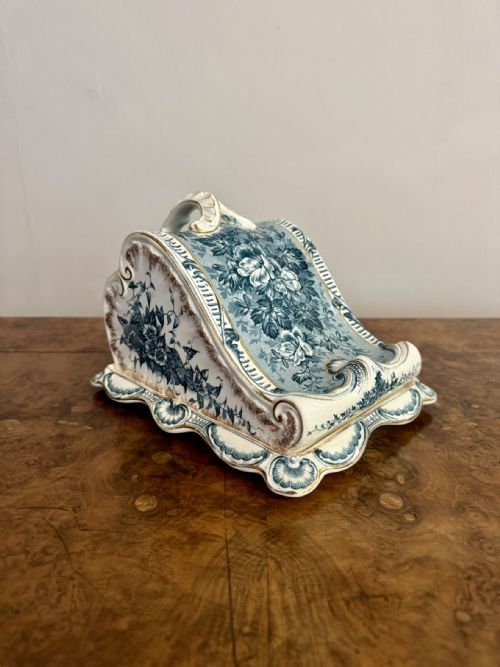


Blue Floral Transferware
Blue floral transferware brings together rich cobalt scenes and practical ceramic forms across the Georgian and Victorian periods.

Blue Floral Transferware
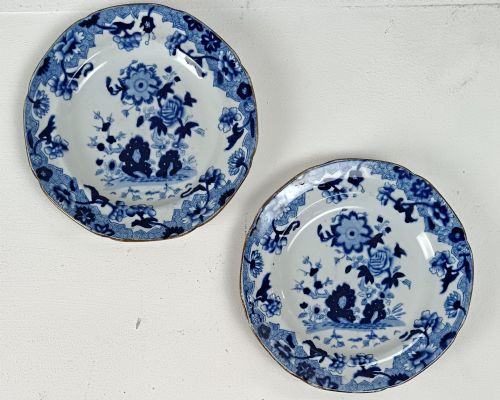
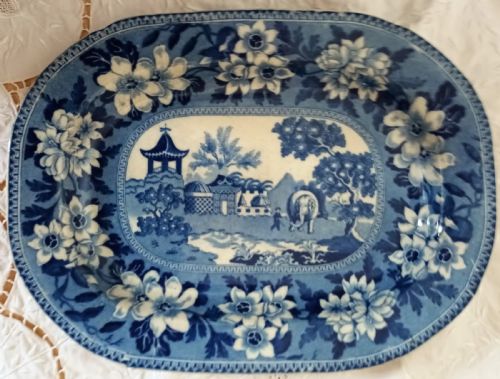
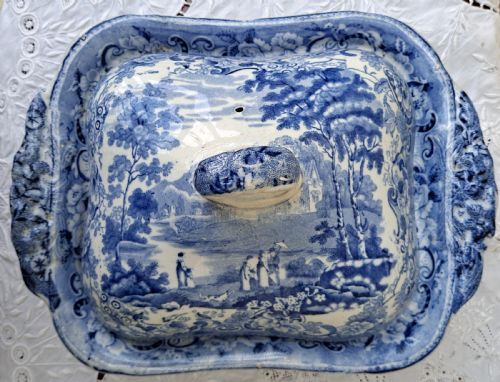
Blue floral transferware consists of ceramic items decorated with applied blue prints featuring botanical and scenic motifs. These pieces span utility and display, taking the form of plates, platters, large footbaths, and complete toilet sets from the nineteenth century.
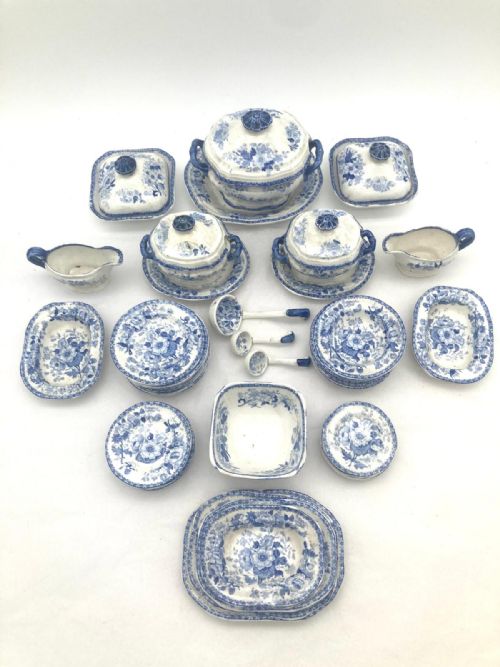
The selection ranges from early Georgian tea plates and child's services to substantial Victorian meat platters and wash sets. Earthenware and ironstone provide the substantial bodies for these blue printed designs, created across English potteries.
How they were made
Potters produced blue floral transferware by engraving a copper plate with the pattern, applying cobalt pigment, and transferring the inked design onto tissue paper. This printed paper was then rubbed onto the biscuit ceramic body before glazing and firing.
Makers utilised earthenwares, pearlware, and ironstone as the primary ceramic bodies, finishing pieces with a clear glaze to fix the blue print. Gold leaf or gilt accents occasionally highlight details on finer porcelain and ironstone editions.
Forms range from small tea plates and children's services to full wash sets and footbaths.
What varies in quality
Quality in blue floral transferware rests upon the crispness of the printed line and the depth of the cobalt pigment. Strong engraving registration prevents blurring and keeps the botanical details distinct across the surface.
The weight and refinement of the ceramic body also set pieces apart, moving from utilitarian earthenware to denser ironstone and pearlware. Well-balanced forms and intact glazes complete the standard of better examples.
John Rogers And Son·James Wallace And Co·John Ridgway·Doulton Burslem·Elkin And Newbon·William Adam
The Blue Floral Transferware Glossary
- Transferware
- Pottery decorated by printing a design from an engraved copper plate onto paper and then transferring it onto the ceramic body. This method allowed for intricate and repeatable patterns.
- Pearlware
- A refined earthenware developed in the late eighteenth century with a pale bluish glaze that pooled in recesses to mimic Chinese porcelain. It forms the base for many early nineteenth-century pieces.
- Ironstone
- A durable heavy ceramic patented in the early nineteenth century to imitate porcelain. It resists chipping and provides a sturdy canvas for large platters and jugs.
- Biscuit
- Unglazed ceramic fired once before the application of glaze and transfer prints. It absorbs the printed tissue paper during decoration.
Blue Floral Transferware: Frequently Asked Questions
How do I date blue floral transferware?
Dating relies on matching the ceramic body, style, and maker's marks to known production periods. Pearlware bodies and early Georgian shapes point to the opening decades of the nineteenth century.
Later Victorian pieces display heavier ironstone bodies and more complex sanitary or large serving forms. Registry marks on the underside can provide precise years of manufacture.
Can I use these plates for dining?
Many of these plates and platters remain robust enough for careful dining use, particularly ironstone editions. However, glaze crazing and historic wear require gentle hand washing rather than machine cleaning.
Displaying them on walls or plate racks protects the antique surfaces from cutlery marks and accidental chips.
What is the difference between earthenware and ironstone?
Earthenware provides a porous and lighter body typical of early nineteenth-century tea wares and plates. It accepts transfer prints readily but chips more easily.
Ironstone is a denser, vitrified ceramic introduced to withstand heavier daily service. It appears frequently on large Victorian platters and footbaths.
How should I clean my transferware?
Clean these items using warm water and mild soap with a soft cloth. Avoid abrasive pads that can scratch the aged glaze.
Dry pieces immediately to prevent moisture from entering fine craze lines in the ceramic body.