


Blue Floral Delftware
These pieces of blue floral delftware bring hand-painted earthenware into modern rooms through centuries of tin glaze and cobalt pigment.
Blue Floral Delftware
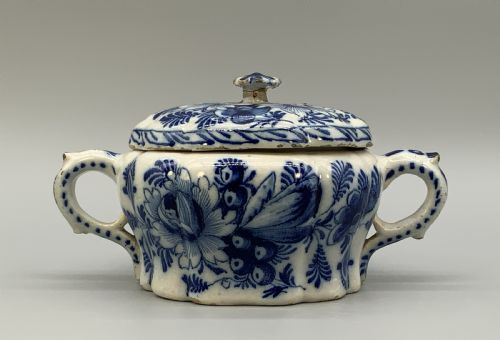
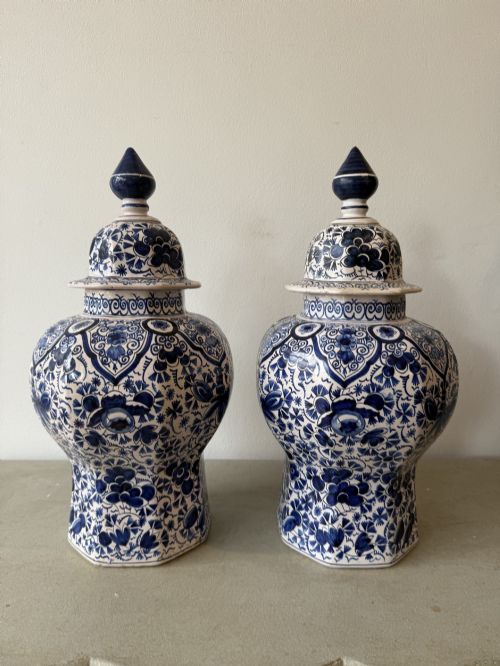
When you search for blue floral delftware, you encounter chargers, plates, bowls, vases, and posset pots originating primarily from English and Dutch workshops. These objects span from the seventeenth century through to the nineteenth century, reflecting enduring domestic utility and display.
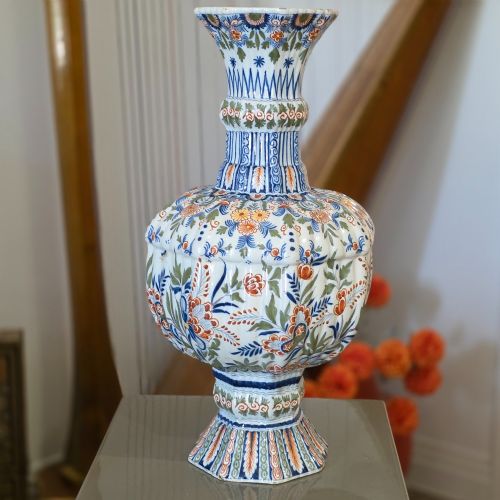
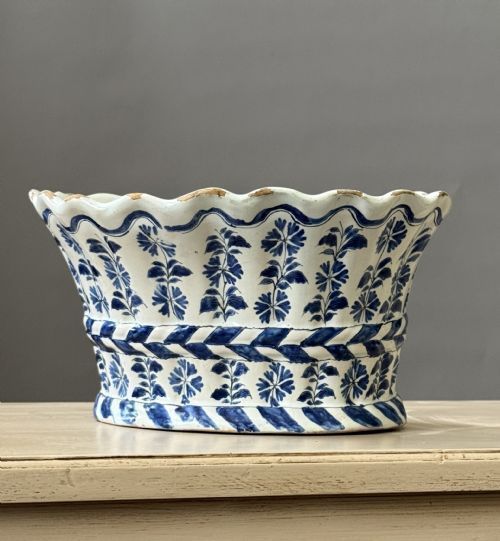
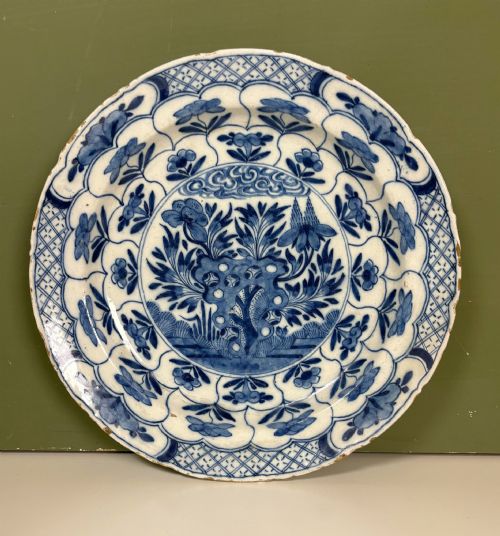
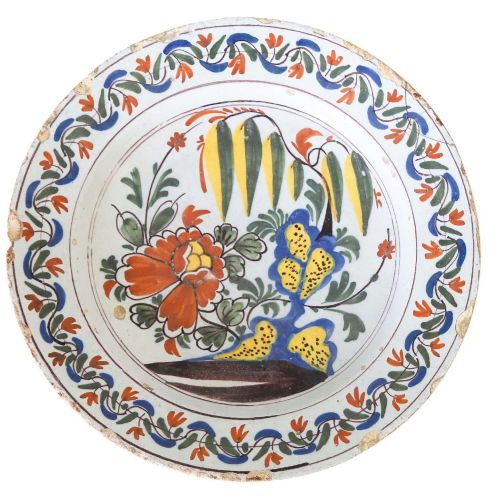
The version you are most likely to meet on this page is the eighteenth-century charger or plate featuring blue and white floral decoration. Such pieces display the characteristic tin-glazed earthenware surface associated with Dutch and English production.
Forms range from large chargers and baluster vases down to small jugs and bough pots. Each item preserves hand-painted motifs executed in cobalt pigment upon a white ground.
How they were made
Potters formed objects from earthenware before applying an opaque tin-glaze that provided a smooth white canvas for decoration. Artisans then painted floral motifs directly onto this porous surface using cobalt pigment before a final firing.
The combination of earthenware bodies and tin-glaze required careful kiln work to fix the cobalt pigment and achieve the characteristic glossy finish.
Listings feature tin-glazed earthenware and ceramic forms spanning the seventeenth, eighteenth, and nineteenth centuries.
What varies in quality
Quality rests upon the crispness of the hand-painted floral decoration and the smoothness of the tin-glaze. Superior examples display confident brushwork and balanced composition across chargers, plates, and vases.
The depth of the cobalt pigment and the stability of the glaze further distinguish standard production from finer output. Potters who exercised greater control during firing achieved a more brilliant white ground that enhances the painted motifs.
De Witte Ster
The Blue Floral Delftware Glossary
- Delftware
- Tin-glazed earthenware produced in England and the Netherlands, typically decorated in blue and white. It encompasses a range of domestic and decorative vessel forms.
- Tin-Glaze
- An opaque white ceramic glaze containing tin oxide, providing a bright ground for painting. This technique defined European earthenware production from the seventeenth century onward.
- Cobalt Pigment
- A metallic colourant used to achieve deep blue hues on ceramics. It reacts with the glaze during firing to produce distinct floral decoration.
- Charger
- A large decorative plate intended for display rather than dining. These pieces often feature prominent floral scenes across their broad surfaces.
- Faience
- European tin-glazed earthenware, historically associated with Dutch and English traditions. The term covers various vessels including bowls, jugs, and posset pots.
Blue Floral Delftware: Frequently Asked Questions
What is delftware?
Delftware is tin-glazed earthenware made in England and the Netherlands during the seventeenth, eighteenth, and nineteenth centuries. Artisans painted these vessels with cobalt pigment, creating distinctive blue and white designs.
The tradition includes functional items like posset pots and jugs alongside decorative plates, chargers, and vases intended for display in domestic interiors.
How do I clean delftware?
Clean these ceramic pieces gently using a soft cloth and lukewarm water without harsh detergents. Avoid soaking them, as historic earthenware bodies and tin-glazes remain sensitive to moisture.
Keep pieces away from modern dishwashers and abrasive scourers to preserve the delicate hand-painted cobalt decoration and glaze surface.
Where were they made?
These ceramic objects originated in workshops across England and the Netherlands during the seventeenth and eighteenth centuries. Regional potteries developed distinct styles within the broader tin-glazed earthenware tradition.
Dutch production centres like Delft alongside English kilns supplied domestic markets with blue and white chargers, plates, and vases.
How do I date a piece?
Dating relies on examining the ceramic body, glaze characteristics, and painting style relative to known historical periods. Seventeenth-century examples often feature different vessel forms compared to eighteenth-century plates and chargers.
Changes in tin-glaze composition and cobalt pigment shades help distinguish earlier earthenware production from later nineteenth-century pieces.