




Blue Floor Rug
A blue floor rug brings character to a room through woven wool, cotton, and silk coloured by natural dyes.
Blue Floor Rug
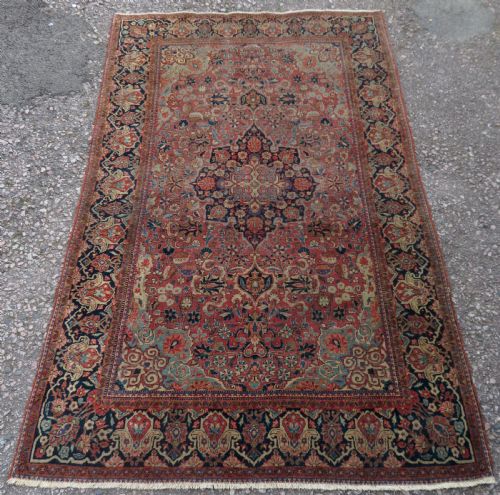
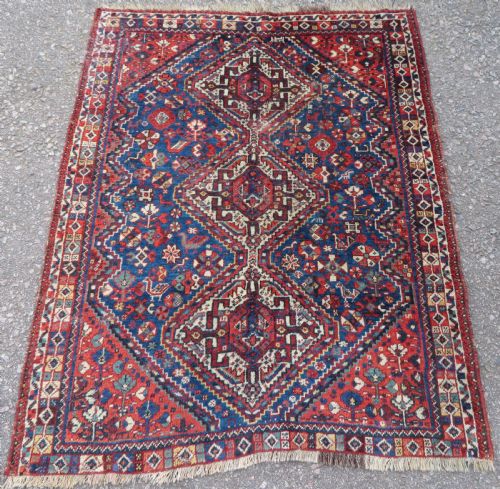
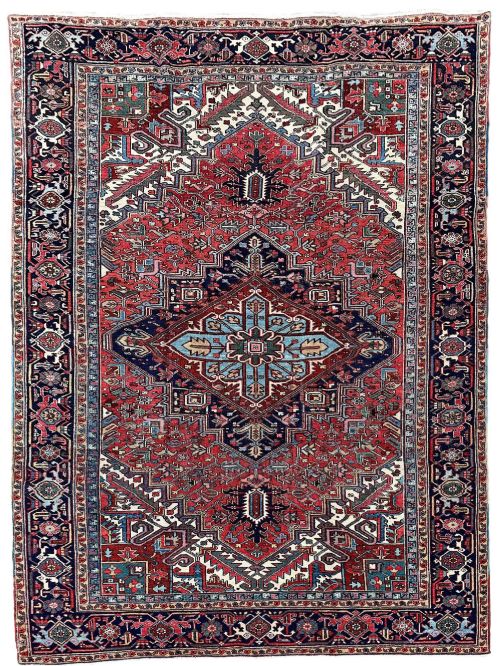
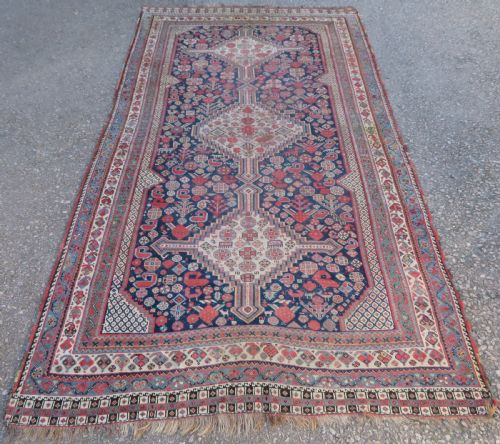
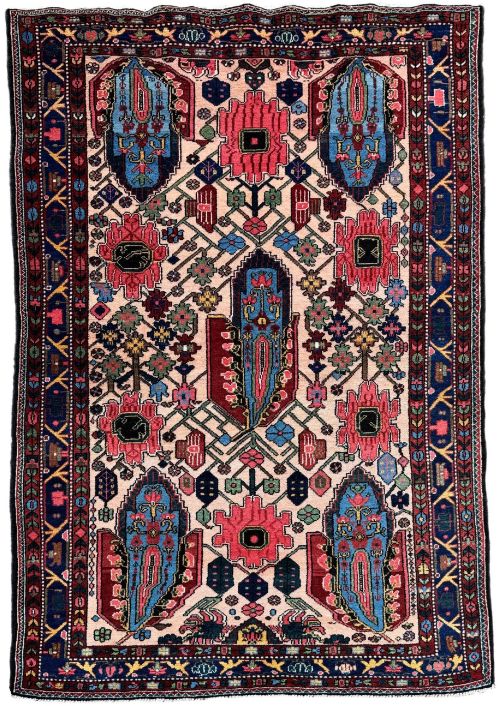
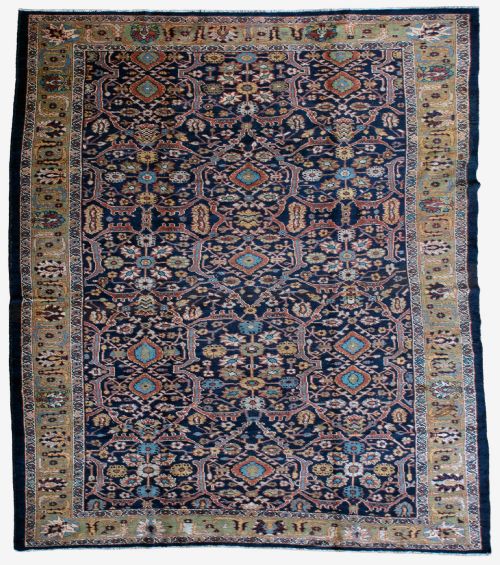
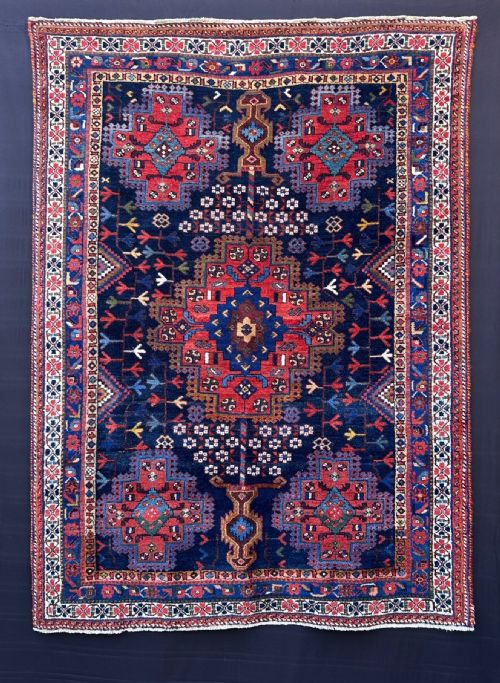
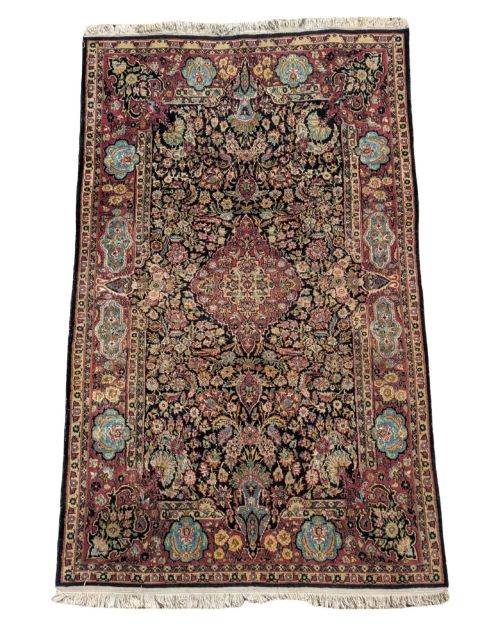
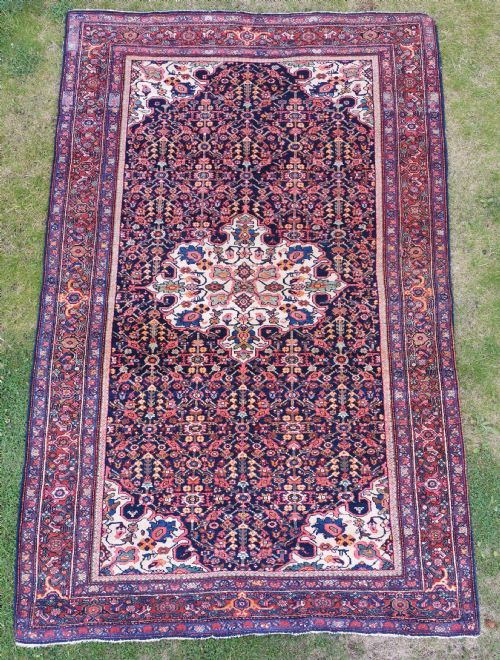
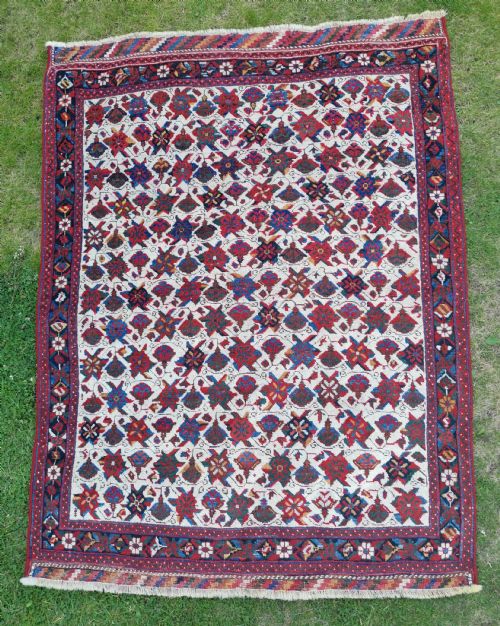
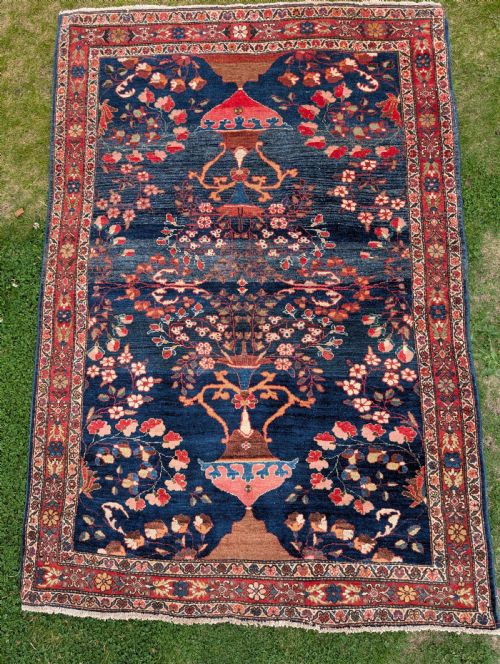
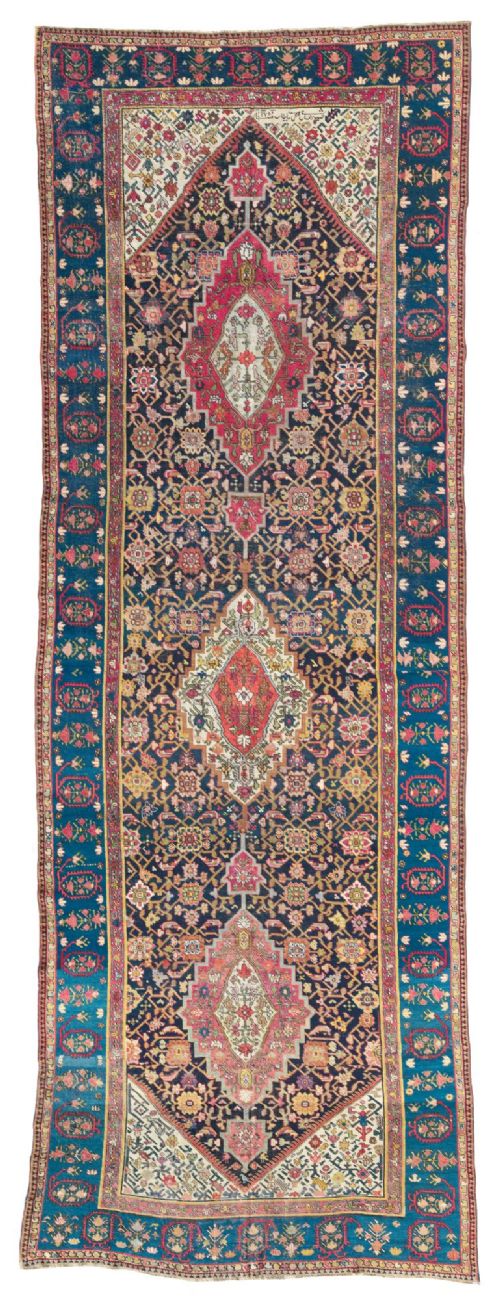
A blue floor rug encompasses hand-woven carpets and runners originating from Persian, Caucasian, and Ottoman or Turkish traditions. The selections span from the mid-nineteenth century through the middle decades of the twentieth century, capturing distinct regional weaving practices.
Buyers encounter formats ranging from small hearth rugs and area rugs to substantial room-sized carpets and elongated hallway runners. Many examples reflect specific tribal and village groups such as the Heriz, Bakhtiar, Afshar, and Kazak traditions.
The dominant visual element is indigo or sky blue coloration, often deployed as a field or background tone against which intricate geometric or floral motifs are set. These floor coverings bridge utility and textile art, designed originally for daily habitation.
Materials and construction methods
The primary structural foundation relies on spun wool and cotton, with occasional incorporation of silk highlights to accentuate particular design elements. Natural dyes provide the palette, yielding subtle tonal variations across the pile.
Weavers knotted wool yarn onto cotton or wool warps and wefts by hand, creating dense surfaces designed to withstand generations of foot traffic. Edge finishes and fringe treatments reflect the specific regional workshop or tribal method of origin.
The listings span wool, cotton, and silk materials across production dates from eighteen-fifty through nineteen-forty.
Distinctions in craftsmanship
Quality rests upon the fineness of the knot density and the precision with which intricate geometric or floral cartoons are translated into pile. Superior examples exhibit tightly packed foundations and balanced proportions that maintain structural integrity.
The depth and harmony of natural dye usage distinguish finer pieces, where abrash or subtle shifts in shade demonstrate organic dyeing processes rather than uniform synthetic application. The handling of silk highlights and secondary border details further separates standard village output from master-woven carpets.
Kerman Province·East Caucasus
The Blue Floor Rug Glossary
- Abrash
- A natural variation in colour shade within a rug caused by changes in dye batches or wool lots. This unevenness is a hallmark of traditional hand-dyeing with natural materials.
- Warp
- The vertical threads stretched lengthwise on the loom that form the structural foundation of the rug. Weft threads are woven across these warps to secure the knots.
- Pile
- The upright cut or looped ends of yarn that form the usable surface of the rug. Pile density and height vary according to regional weaving customs.
- Kelleh
- A large, elongated format of carpet traditionally used in Persian rooms. These pieces are noticeably longer than they are wide.
- Knot
- The individual loops of wool, cotton, or silk tied around warp threads by the weaver. The count and tightness of these knots define the intricacy of the design.
Blue Floor Rug: Frequently Asked Questions
How do I clean an antique rug?
Professional dusting and gentle hand washing by a specialist familiar with natural dyes and wool pile are essential for preservation. Avoid harsh chemical cleaners and modern mechanical scrubbing.
Regular light vacuuming without a beater bar removes surface grit before it settles into the lower foundation threads. Keeping the rug out of harsh direct sunlight prevents fading of the indigo and natural blue tones.
Can I place these rugs in hallways?
Many examples on this page are specifically formatted as runners, making them suited for corridors and transition spaces. Their durable wool pile was originally constructed for heavy household traffic.
Using an appropriate underlay prevents slipping and cushions the foundation against hard flooring surfaces. This extra layer reduces friction between the wool base and the floorboards.
How do I identify regional rug types?
Regional attribution relies on examining the specific border motifs, colour palettes, and structural knotting techniques unique to weaving centres like Heriz or Afshar. Tribal pieces often feature bolder geometric forms, whereas city workshops tended toward intricate floral curves.
Comparing the foundation materials, such as cotton versus wool warps, offers further clues to geographic origin. Reference literature and archive comparisons help confirm these stylistic traits.
What is a Kelleh format?
A Kelleh is a specific room-sized carpet proportion that is significantly longer than it is wide, designed for traditional domestic layouts. These pieces were traditionally positioned along the long walls of reception rooms.
Their elongated dimensions make them useful for contemporary spaces that require narrow, extended floor coverings rather than square proportions. They provide a distinct visual path through large open rooms.