




Blue Chinese Carpet
A blue chinese carpet anchors a room with deep indigo and sapphire tones, bringing centuries of regional weaving traditions straight to your floor.
Blue Chinese Carpet
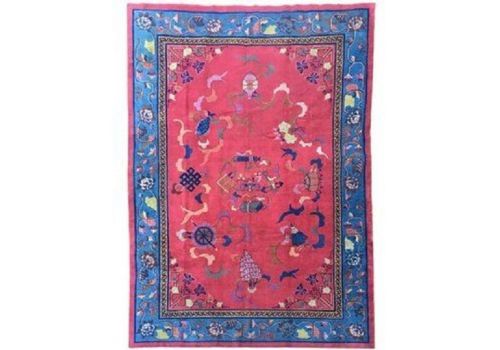
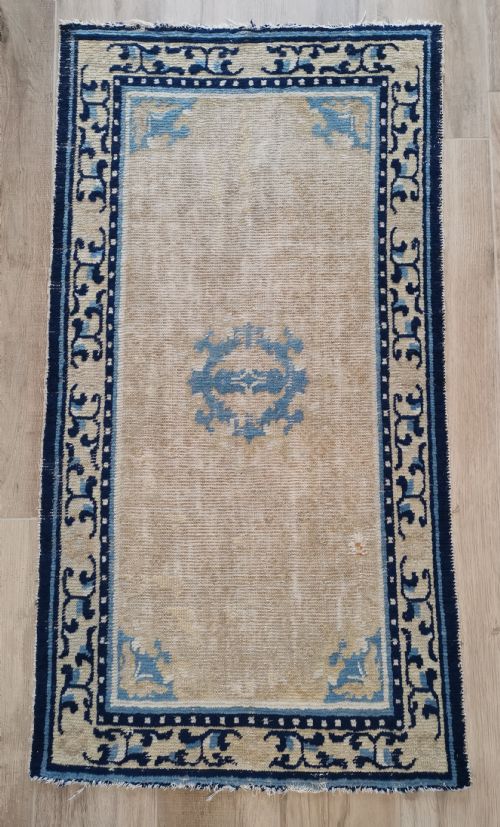
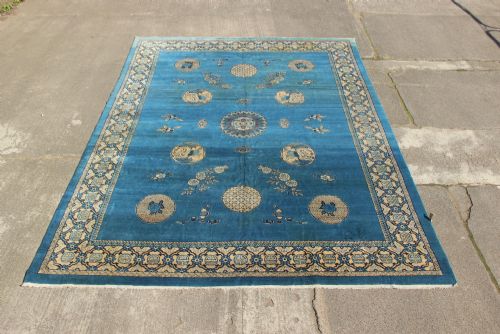
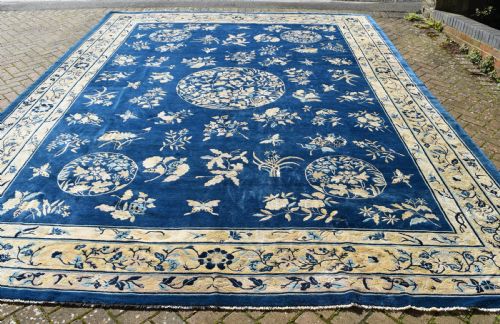
A blue chinese carpet covers a wide spectrum of floor coverings, ranging from early nineteenth-century roomsize rugs to smaller seating mats and pillar rugs. The examples gathered here span several distinct periods, including pieces from the Qing Dynasty alongside later Art Deco designs.
You will encounter regional variations like Ningxia, Peking, Pao Tao, and Khotan rugs, each bringing specific formats such as large roomsize dimensions or compact fragments. These floor coverings bridge formal court traditions and geometric modernist compositions from the early twentieth century.
The dominant palette centres on rich shades of blue, often paired with contrasting yellow in transitional Art Deco pieces or traditional motifs. These floor coverings serve both as functional textiles and as decorative focal points rooted in Asian textile history.
How they were made
These carpets rely on natural fibre foundations using wool for the pile and cotton for the underlying structure. Artisans knotted the pile by hand onto sturdy warps and wefts, creating dense surfaces designed for heavy daily use.
Weavers employed regional knotting techniques specific to centres like Peking, Ningxia, and Khotan, working within distinct aesthetic frameworks from Qing Dynasty aesthetics to early twentieth-century modernism.
Geographic origins represented on this page include Peking, Ningxia, Pao Tao, and East Turkestan.
What varies in quality
Knot density and structural integrity separate robust roomsize carpets from fragile fragments or heavily worn seating mats. Finer examples retain deep, even pile height across the field and borders.
The sophistication of the design execution and the preservation of the original botanical or geometric motifs distinguish exceptional pieces from simpler utilitarian outputs. Original dimensions and intact border guards also elevate a textile's standing.
The Blue Chinese Carpet Glossary
- Ningxia rug
- A textile originating from the Ningxia region in north-central China, known for classical religious and floral motifs. These pieces often feature subdued palettes and disciplined composition.
- Peking carpet
- A floor covering produced in and around Beijing, frequently characterised by open fields and minimalist floral arrangements. They gained international popularity during the early twentieth century.
- Art Deco carpet
- A textile influenced by twentieth-century modernist design movements, featuring streamlined geometry or stylised floral patterns. These pieces often juxtapose blue fields with contrasting yellow borders.
- Pillar rug
- A specialised vertical textile designed to wrap around architectural columns in traditional buildings. Their narrow proportions distinguish them from standard floor rugs.
- Khotan rug
- A textile originating from East Turkestan, blending Chinese and Central Asian design elements. These pieces frequently display distinctive medallion arrangements and abrash colour shifts.
Blue Chinese Carpet: Frequently Asked Questions
Where were these carpets originally placed?
Traditional blue chinese carpet examples served various architectural functions within palaces, temples, and elite residences. Large roomsize variations anchored formal reception halls, while pillar rugs wrapped structural columns.
Smaller formats like seating mats provided comfort on raised platforms or wooden chairs. Khotan and Ningxia pieces adapted regional motifs to suit both domestic interiors and commercial export markets.
How do I care for an antique carpet?
Gentle vacuuming without a rotating brush roll prevents dust accumulation in the wool pile. Professional conservation cleaning ensures the natural fibres remain supple over decades of use.
Keeping the textile away from direct sunlight preserves the saturated blue dyes. Using a breathable underlay prevents slipping and reduces friction against the floor surface.
What distinguishes Qing Dynasty pieces?
Qing Dynasty floor coverings rely on traditional symbolism, incorporating classical floral arrangements, dragons, or auspicious Buddhist emblems. The wool is typically handled with an emphasis on organic dye variations.
These older textiles predate the geometric abstraction seen in later twentieth-century styles. Their construction reflects imperial workshop standards and centuries-old regional weaving traditions.
Why do some carpets feature yellow elements?
Yellow highlights frequently appear alongside blue fields in Art Deco and transitional twentieth-century pieces. This pairing creates a striking visual contrast rooted in modernist colour theory.
Imperial Chinese textiles also utilised yellow symbolically, though later commercial workshops adopted the combination for Western decorative tastes. The resulting palette defines an era of cross-cultural design exchange.