


Blue Earthenware Planter
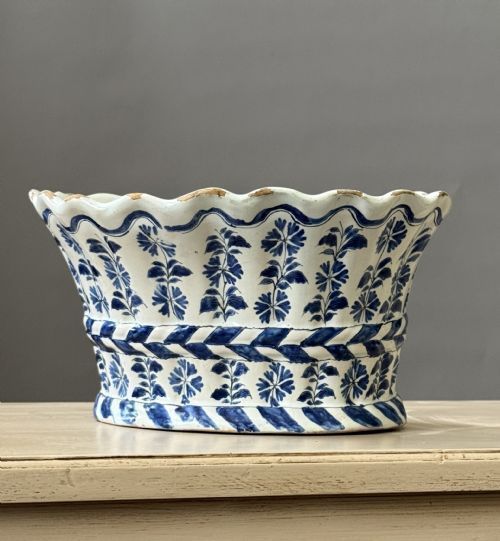
A blue earthenware planter brings rich cobalt tones and botanical display together, offering instant historic character for indoor or garden greenery.
Blue Earthenware Planter
When you search for a blue earthenware planter, you encounter a diverse selection of historic vessels designed to hold plants and flowers, ranging from substantial footbaths repurposed for display to traditional jardinieres on stands.
The objects span several centuries, with early examples originating in the eighteenth century through Delftware and faience production, while later nineteenth-century pieces embrace Victorian tastes and Arts and Crafts movements.
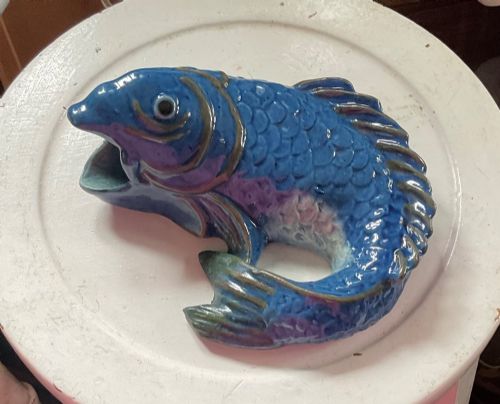
Form varies widely across the listings, taking shape as garden urns, wall pockets, bough pots, and classical jardiniere vessels that demonstrate distinct regional and period styles.
Materials and production methods
Potters built these vessels using earthenware and stoneware bodies, applying specialised tin glazes, lustre finishes, or transfer-printed decoration to achieve the characteristic blue coloration.
Major potteries employed skilled decorators such as Ethel Beard, alongside manufacturing techniques ranging from hand-thrown tin-glazed earthenware to moulded majolica and jasperware.
Listings feature earthenware vessels spanning the eighteenth century through the 1920s, including Victorian majolica and Delftware.
Assessing quality in earthenware planters
Quality rests upon the crispness of the transfer printing, the depth and consistency of the blue glaze, and the sophistication of moulded relief or painted detail.
Superior pieces often bear clear factory marks or artist signatures, and maintain structural integrity across complex forms such as three-handled bodies and matched stands.
Lauder Pottery Barnstaple·Doulton Burslem·Doulton Lambeth·Clement Massier·Royal Doulton·Minton·Royal Worcester·George Jones·William Adams and Sons
The Blue Earthenware Planter Glossary
- Earthenware
- Porous pottery fired at lower temperatures, requiring a glaze to hold water effectively. It forms the structural base for most traditional blue planters.
- Jardiniere
- An ornamental pot or stand designed to hold a plant or flower arrangement. These pieces often feature decorative handles or matching pedestals.
- Majolica
- A type of earthenware coated with an opaque tin glaze and painted with metallic oxide colours. It gained immense popularity during the Victorian period for vibrant floral containers.
- Tin-Glaze
- A ceramic glaze containing tin oxide that turns white and opaque upon firing. It provides a smooth white background for blue painted decoration.
- Footbath
- A deep, wide vessel originally used for personal hygiene in past centuries. Their generous proportions make them highly sought after as large planters.
Blue Earthenware Planter: Frequently Asked Questions
Can I use these antique planters outdoors?
Many earthenware vessels are porous and susceptible to frost damage during freezing winter conditions. It is safest to keep them indoors or use them as cachepots with inner plastic pots.
Protecting historic ceramics from extreme temperature shifts preserves the glaze and prevents cracking in the body over time.
How do I clean a glazed earthenware planter?
Wash the surface gently with warm water and a soft cloth to remove dust and mineral deposits from watering. Avoid harsh chemical cleaners that might damage historic glazes.
Dry the vessel thoroughly after cleaning to prevent moisture from seeping into any unglazed areas at the base.
What is the difference between a jardiniere and a footbath?
A jardiniere is specifically shaped as a decorative pot for displaying plants, often sitting on a matching pedestal or flat surface. Footbaths were originally utilitarian bathing vessels with handles.
Footbaths offer much greater length and capacity than standard jardinieres, making them ideal for holding multiple potted plants together on a table or floor.
How do I date a blue and white ceramic piece?
Dating relies on identifying maker marks, factory ciphers, and stylistic clues such as glaze characteristics and manufacturing techniques. Eighteenth-century pieces often show tin glazes, while Victorian items frequently feature rich majolica or transfer printing.
Comparing the decorative motifs against known period designs helps narrow down the decade of manufacture.