
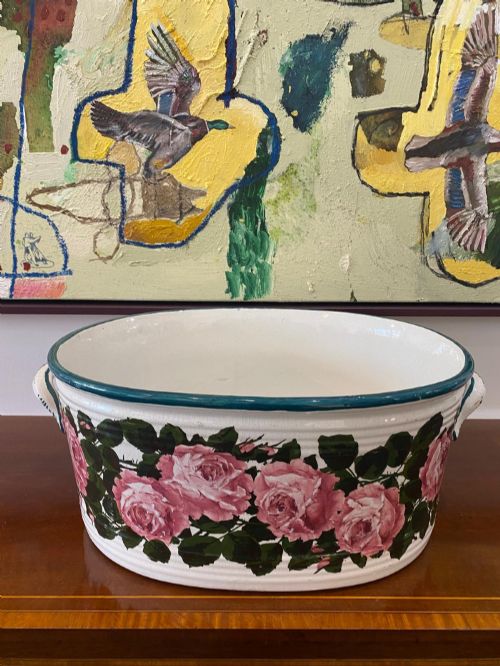


Antique Ceramic Planter Basin
These antique ceramic planter basin examples span grand Victorian footbaths and intricate Japanese Imari jardinieres designed to hold large plants or water.
Antique Ceramic Planter Basin
An antique ceramic planter basin takes various forms, most commonly appearing here as large jardinieres, footbaths, sanitaryware basins, and fish bowls used for decorative planting or washing.
The pieces cross multiple periods and origins, ranging from nineteenth-century English transferware and creamware footbaths to eighteenth-century Chinese export porcelain and Japanese Meiji period vessels.
Buyers seeking this phrase encounter heavy earthenware, porcelain, and glazed ceramic vessels, often styled with traditional blue and white decoration or vibrant export palettes.
How they were made
Potters shaped earthenware and porcelain bodies on wheels or in moulds before applying glazes, cold paint, or gold leaf to the surfaces.
Decoration relied on transfer printing or hand-painted pigments, particularly for the blue and white patterns and famille rose enamels found on English and Asian pieces.
Kiln firing fused the glazes to the ceramic bodies, creating durable waterproof surfaces suitable for holding water, soil, and heavy plants.
Listings feature vessels from the eighteenth, nineteenth, and early twentieth centuries, spanning English earthenware, Chinese export porcelain, and Japanese stoneware.
What varies in quality
Quality separates through the crispness of the hand-painting or transfer printing, where finer pieces display precise brushwork and well-defined motifs rather than blurred lines.
The weight and purity of the ceramic body also differ, with superior examples showing thinner, more refined walls while retaining structural integrity for heavy use.
Signatures from established potteries or makers add distinction, as do well-preserved polychrome enamels and intact original gilding.
Royal Doulton·Royal Worcester·Wemyss·Spode·Copeland
The Antique Ceramic Planter Basin Glossary
- Jardiniere
- A large ornamental pot or stand for holding a plant or flower arrangement. These pieces often sit directly on the floor or on dedicated wooden stands.
- Footbath
- A deep, wide vessel originally designed for bathing feet in domestic settings. Many examples find a second life as large planters or decorative bowls.
- Imari
- A style of Japanese export porcelain characterised by underglaze blue, iron red, and gold highlights. This palette travelled widely to European markets during the eighteenth and nineteenth centuries.
- Creamware
- A type of refined earthenware with a pale yellowish glaze developed in eighteenth-century England. It offered a lighter, more delicate alternative to heavier stonewares.
- Transferware
- Pottery decorated by pressing a design from an engraved copper plate onto tissue paper, which was then transferred onto the clay body. This technique allowed for consistent, detailed patterns on utilitarian items.
Antique Ceramic Planter Basin: Frequently Asked Questions
How do I use a footbath as a planter?
Large ceramic footbaths provide wide, shallow depths that suit ferns, orchids, or multiple smaller potted plants arranged together.
Because most antique basins lack drainage holes, place smaller pots inside with saucers to catch excess water and protect the historic ceramic interior.
How do I date a blue and white ceramic basin?
Dating relies on examining the potting style, the tone of the blue pigment, and any maker's marks stamped or painted on the base. English pieces often use registry diamonds or specific transfer patterns tied to nineteenth-century archives.
Asian export pieces require looking at the clay body texture and the characteristics of the underglaze cobalt used during the Qing Dynasty or Meiji period.
Can these planters stay outdoors in winter?
Most antique earthenware and creamware basins are porous and prone to cracking if exposed to freezing temperatures with wet soil inside. Bringing them indoors or storing them in a frost-free shelter during winter protects the glaze and ceramic body from damage.