


Blue Delft Pottery
Blue delft pottery delivers tin-glazed earthenware painted in cobalt pigment, prized for centuries for its striking blue and white maritime and floral scenes.
Blue Delft Pottery
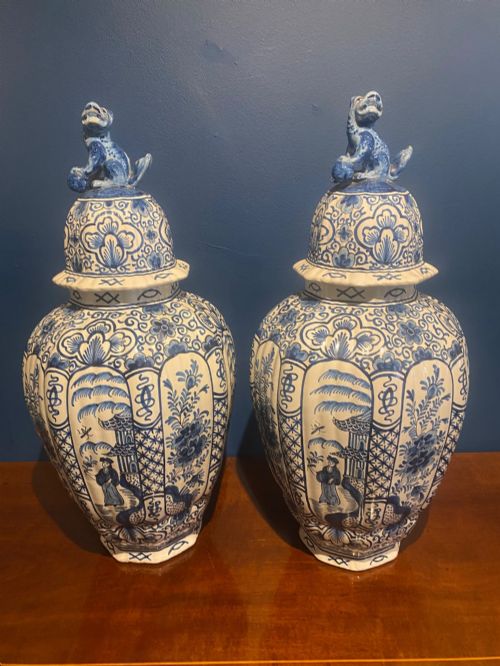
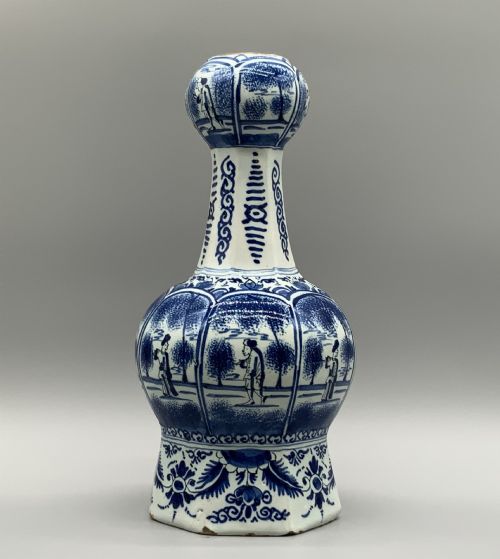
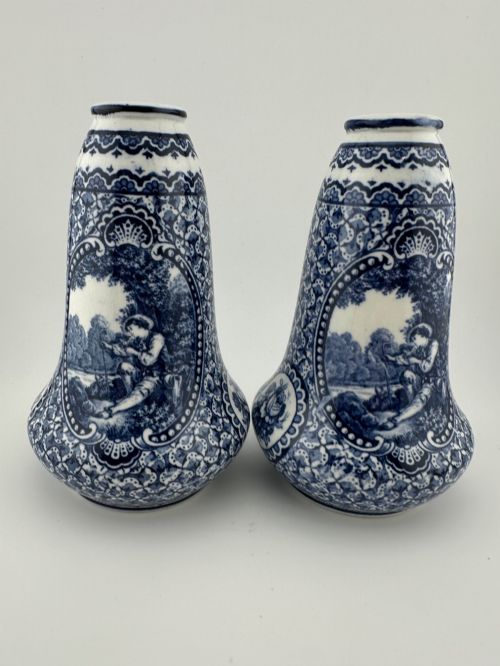
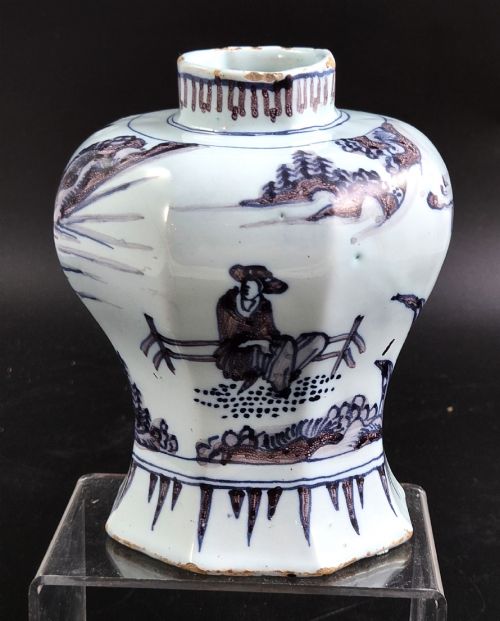
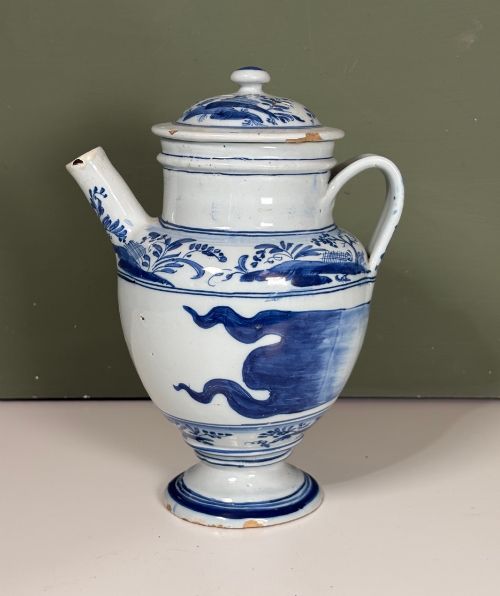
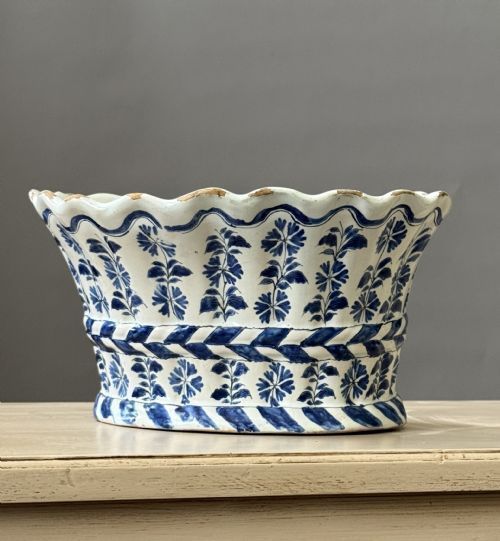
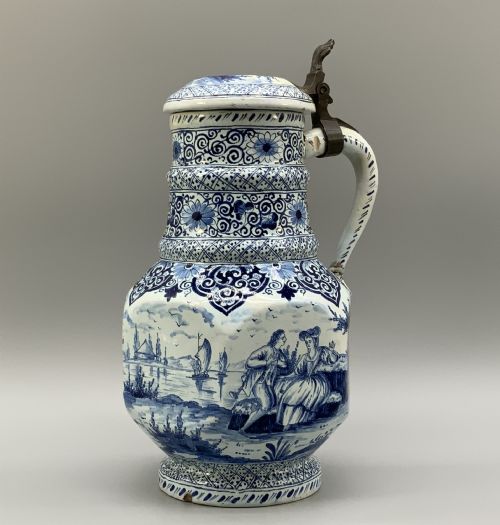
When searching for blue delft pottery, collectors encounter tin-glazed earthenware objects originating primarily from Dutch workshops, alongside English and continental European equivalents. The selections on this page span several centuries, reaching from the seventeenth century through the nineteenth century and into later revival periods.
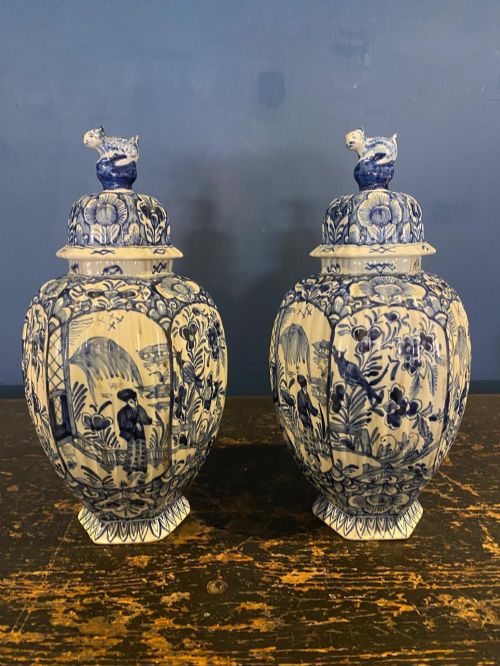
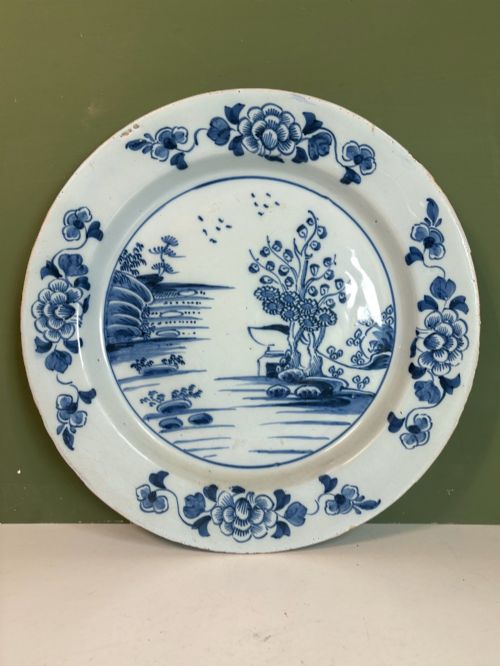
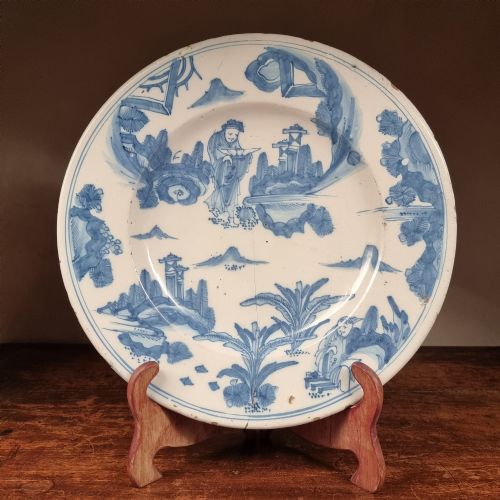
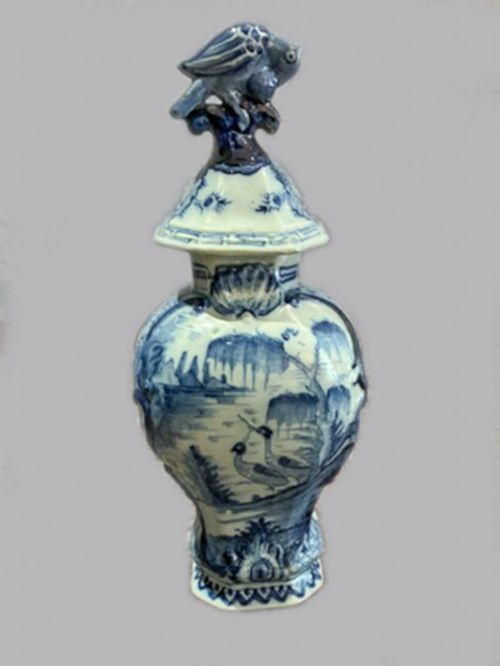
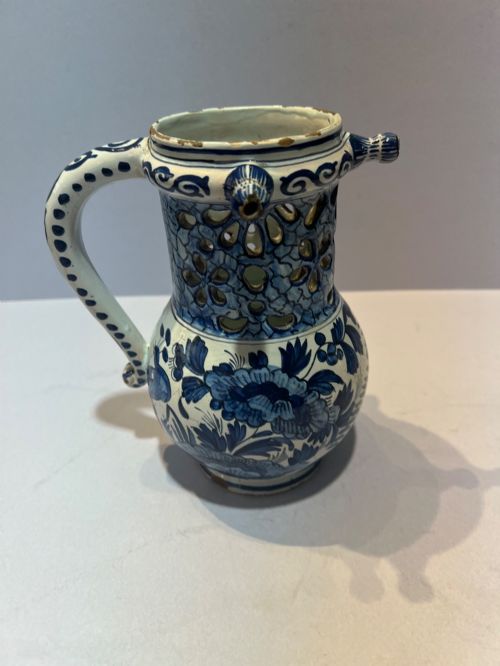
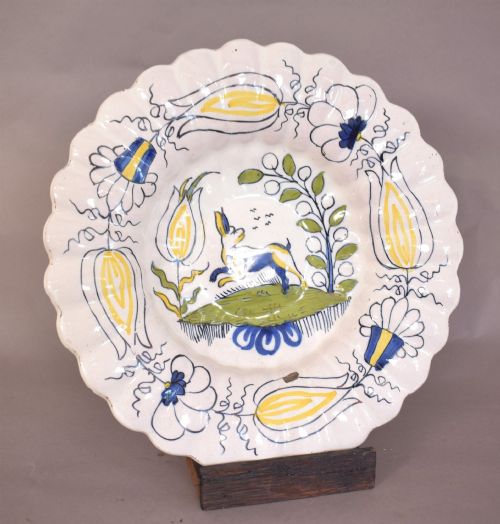
The most frequent forms met here include chargers, lidded vases, posset pots, apothecary jars, and decorative plates. These vessels served both practical household functions and purely decorative roles in domestic interiors.
Originating as European attempts to replicate imported Chinese porcelain, these ceramic pieces developed distinct regional styles. Examples range from Dutch Baroque compositions to Chinoiserie motifs and Moorish influenced charger plates.
Materials and Techniques
Potters formed these pieces using local earthenware clays, which were shaped on the wheel or pressed into moulds to create baluster vases, jugs, and bowls. Once shaped, the dried clay body received an opaque white tin glaze that provided a smooth surface for painting.
Cobalt oxide and pigment were applied directly to the porous unfired tin glaze by hand, absorbing into the surface before a final clear lead glaze was applied for protection. Firing in kilns set the cobalt pigment, transforming grey brushstrokes into the characteristic deep blue tones.
Listings feature pieces spanning the seventeenth, eighteenth, and nineteenth centuries, executed in tin-glazed earthenware with cobalt pigment.
Assessing Quality and Execution
Quality in these ceramics rests upon the precision of the hand-painted brushwork and the clarity of the cobalt pigment against the opaque white tin glaze. Master painters achieved fine linework and detailed shading, whereas lesser examples show hurried execution and blurred pigments.
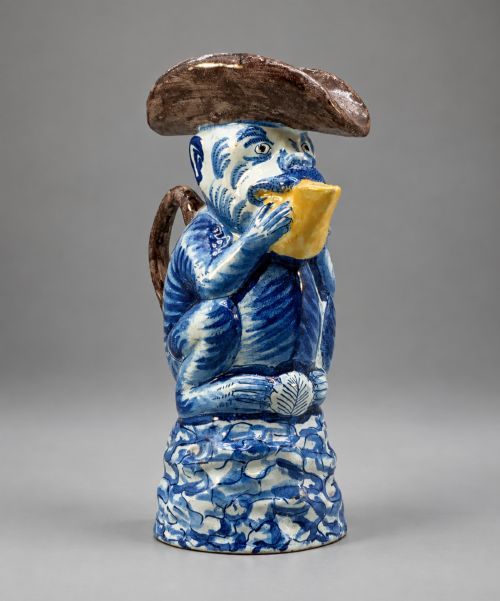
The purity and consistency of the tin glaze itself dictate visual success, with superior pieces displaying an even, glossy surface free from extensive pitting or pooling. Additionally, the complexity of the object form, such as lobbed dishes or figural toby jugs, demonstrates the skill of the potter.
Pieter Verburg·Franz Anton Mehlem
The Blue Delft Pottery Glossary
- Tin-Glaze
- A ceramic glaze containing tin oxide that fires to an opaque white finish. This material provides the traditional pale background required for painting blue and white designs.
- Charger
- A large ornamental plate designed to be displayed on walls or sideboards rather than used at the dining table. These substantial pieces often feature the most ambitious painted scenes.
- Faience
- A European term for tin-glazed earthenware, closely related to delftware and majolica. It describes pottery produced across various continental centres using similar glazing methods.
- Baluster Vase
- A vessel characterised by a rounded lower body that tapers towards a narrow neck and flared rim. This classic seventeenth and eighteenth-century form suits the vertical display of floral and figural motifs.
- Polychrome
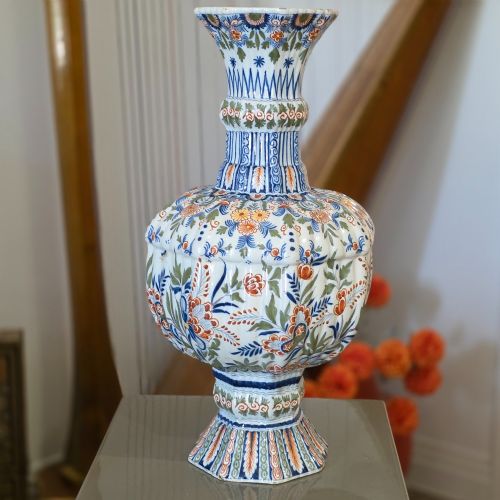
- A colour palette utilising multiple pigments beyond standard blue, including manganese purple, yellow, and green. These multi-coloured variants appear alongside traditional blue and white schemes.
Blue Delft Pottery: Frequently Asked Questions
How were posset pots used?
Posset pots held a traditional hot drink made from curdled milk infused with wine, ale, and spices, consumed during social gatherings and celebrations.
Servants passed the multi-handled vessel among guests so each person could drink from a different section of the rim.
Are these pieces waterproof?
Historic tin-glazed earthenware remains porous beneath the glaze, meaning water can slowly seep through tiny microscopic fissures over time.
Display vases dry or utilise a hidden inner container if holding fresh flowers to protect the antique body.
How can I date blue delft pottery?
Dating relies on analysing the clay body weight, glaze thickness, base construction, and painting style relative to known historical periods.
Earlier seventeenth-century items often show thinner potting and distinct tin compositions compared to nineteenth-century revival pieces.