
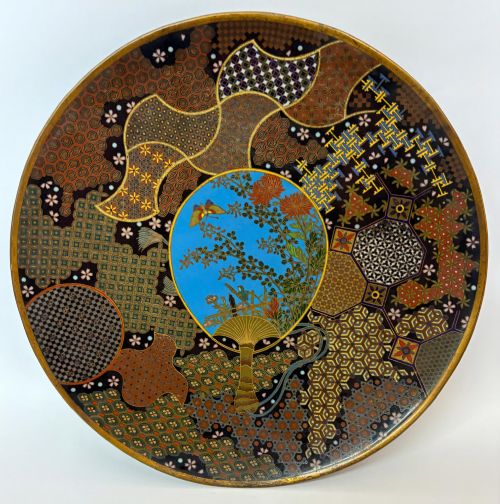


Blue Cloisonne Enamel Plate
These pieces of blue cloisonne enamel plate bring rich metallic wirework and deep cobalt fields into a room, offering a tactile focal point for collectors of nineteenth-century decorative arts.
Blue Cloisonne Enamel Plate
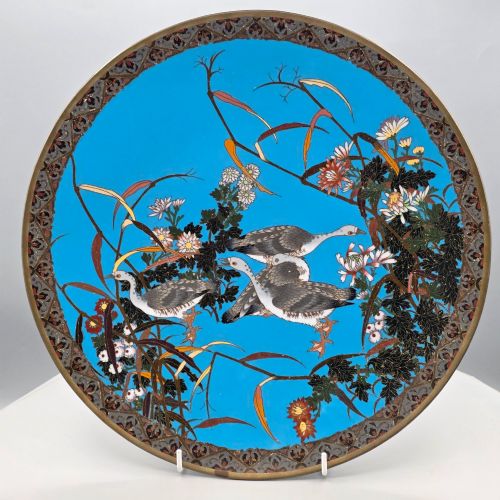
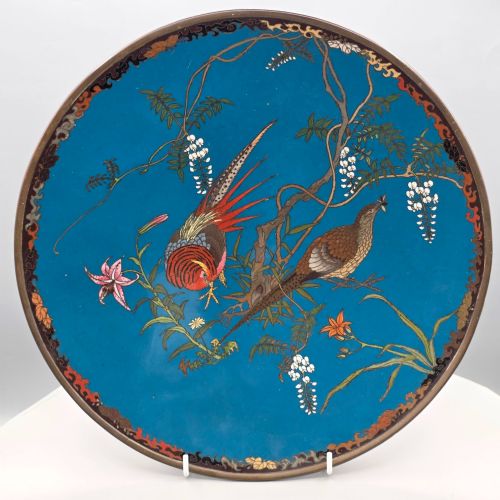
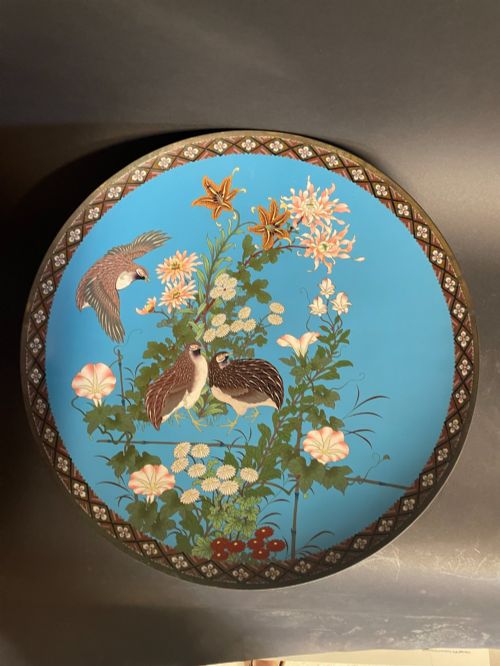
When searching for a blue cloisonne enamel plate, a buyer encounters substantial chargers, medium plates, and decorative dishes originating primarily from the Japanese Meiji and Edo periods, alongside Chinese Qing Dynasty pieces. These items serve as display pieces, often measuring notable diameters and depicting natural subjects such as birds, fish, and dragons.
The version most commonly met on this page is the Japanese charger from the late nineteenth century, created during a period of high technical achievement in metalwork and vitreous enamelling. Such plates utilise dense blue grounds to frame intricate scenes involving geese, chrysanthemums, or leaping koi executed in fine wire.
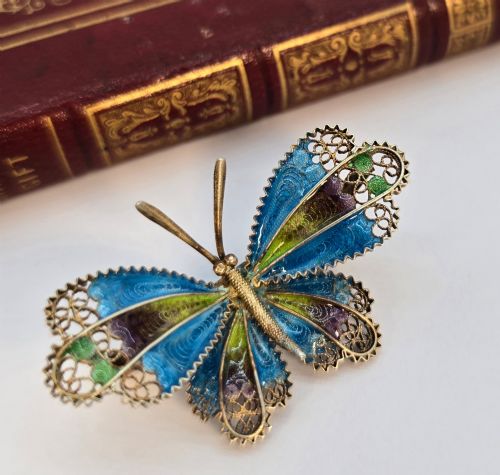
Alongside large wall chargers, the selection includes smaller trays and occasional brooches and pins utilising similar wire-inlaid enamel techniques. These smaller formats apply the same ornamental vocabulary to personal accessories and desktop pieces.
How they were made
The construction relies on a metal body of copper, brass, or bronze onto which thin ribbons of brass or silver wire are soldered to form cellular compartments known as cloisons. These wires outline the motifs, defining feathers, scales, and floral petals with geometric precision before the coloured enamels are applied.
Vitreous enamel pastes are packed into the individual wire cells and fired multiple times in a kiln to fuse the glass to the metal base. Once filled and fired, the entire surface is ground down and polished until the metal wire edges are flush with the smooth, vitrified coloured fields.
Listings span copper, brass, bronze, and silver wire materials across items dated from the mid-nineteenth century through to the Art Deco era.
What varies in quality
Quality rests upon the fineness of the wirework and the density of the cellular design, where tighter grids and thinner metallic partitions demand greater technical mastery from the artisan. The complexity of the subject matter, such as multi-layered dragons or nuanced landscapes, distinguishes standard production from ambitious workshop pieces.
The depth and uniformity of the enamel ground contribute significantly to the visual weight of a plate, separating pieces with smooth, unblemished cobalt fields from those with surface pitting or uneven firing. Signature placement and clear maker attribution further elevate the standing of individual chargers within the broader tradition.
Kinkozan
The Blue Cloisonne Enamel Plate Glossary
- Cloisonne
- A decorative metalwork technique where fine wires form raised barriers on a metallic base to hold coloured enamel pastes. These wire boundaries remain visible on the finished surface.
- Charger
- A large decorative plate intended primarily for display on a wall or sideboard rather than for table service. These substantial vessels often showcase the most elaborate pictorial designs.
- Silver Gilt
- Silver that has been coated with a thin layer of gold to give a rich, warm metallic finish. This material appears in smaller decorative accessories and pins.
- Qing Dynasty
- The final imperial dynasty of China, lasting from 1644 to 1912, known for sophisticated jade, porcelain, and metalwork production. Pieces from this era employ distinct palette choices compared to later Japanese work.
Blue Cloisonne Enamel Plate: Frequently Asked Questions
How were these plates displayed originally?
Large chargers and decorative plates were typically exhibited on substantial wooden stands or mounted directly onto walls within formal reception rooms. Their scale and rich pictorial subjects made them central decorative elements in nineteenth-century interiors.
Smaller dishes and trays served domestic functions for holding small items or simply as tabletop ornaments. Their durable enamel surfaces allowed them to be handled frequently during social gatherings.
What subjects appear on these plates?
Motifs drawn from nature dominate the designs, including wading birds, perched eagles, butterflies, frogs, and leaping koi fish. Floral arrangements featuring chrysanthemums and blossoming branches are also widespread across nineteenth-century examples.
Mythological creatures such as dragons and ho-o birds appear frequently on larger chargers, symbolising power and auspicious grace. Landscapes and samurai figures occasionally provide narrative context within specific workshop pieces.
How do I distinguish Japanese from Chinese pieces?
Japanese plates from the Meiji and Edo periods often utilise finer, thinner wires and favour naturalistic pictorial compositions with vast cobalt blue negative spaces. The colour palettes tend towards subtle gradations and meticulous detail in subjects like feathers and foliage.
Chinese pieces from the Qing Dynasty generally employ thicker wire outlines and more stylised, symmetrical auspicious symbols or archaic dragon motifs. The enamel colours often present a heavier, more saturated appearance across the surface.
How do I care for a cloisonne plate?
Maintenance requires gentle dusting with a soft, dry cloth to prevent the accumulation of particles within the wire crevices. Avoid using abrasive cleaning agents or liquid polishes that might scratch the vitreous enamel or tarnish the exposed metal wires.
Display the plate away from direct sunlight and sudden temperature fluctuations to protect the integrity of the historical materials. Using a stable, padded stand ensures the heavy copper or brass body remains secure.