

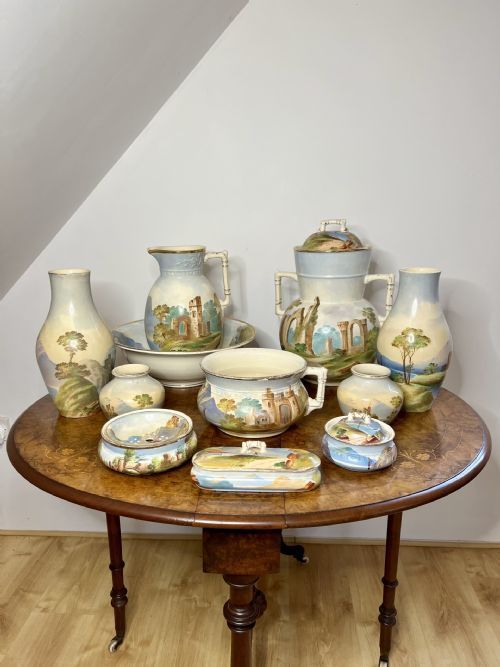


Blue Ceramic Wash Bowl
A blue ceramic wash bowl brings genuine 19th-century utility into a modern home, offering deep cobalt glazes and sturdy earthenware forms that anchor any bathroom or bedroom scheme.
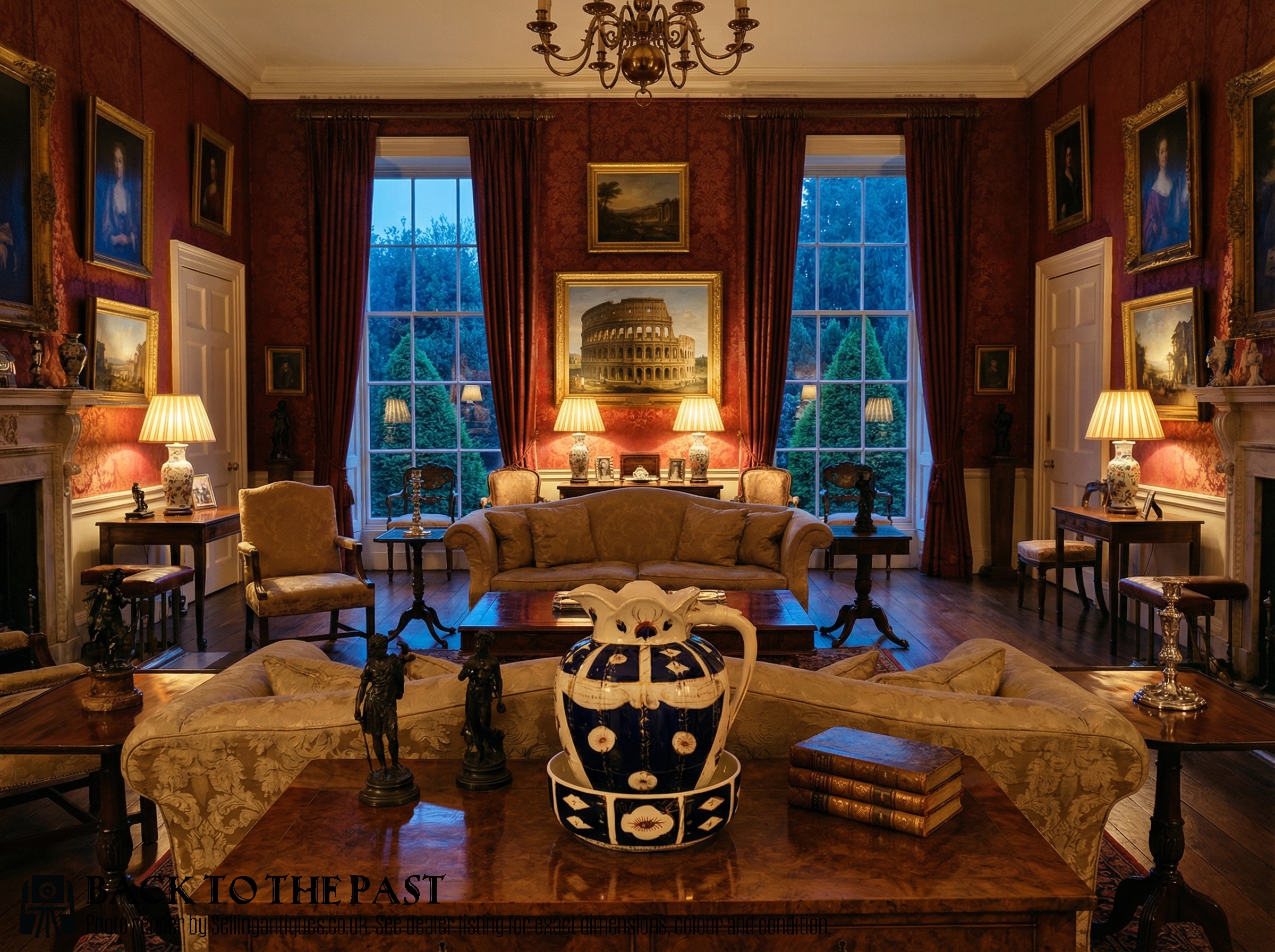
Blue Ceramic Wash Bowl
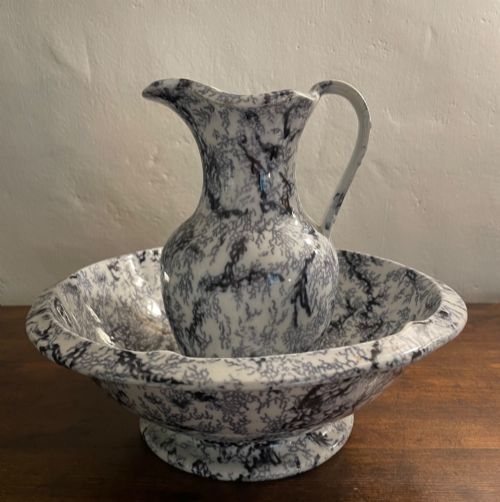
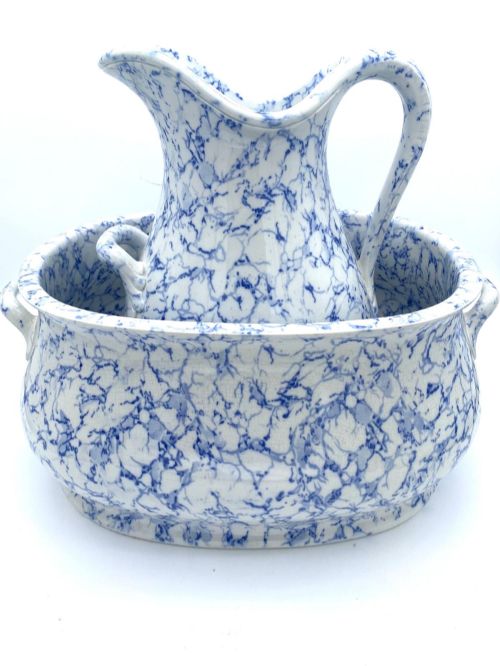
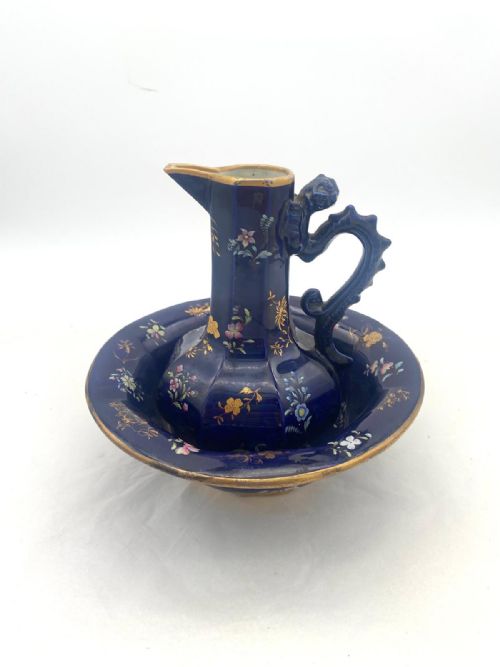
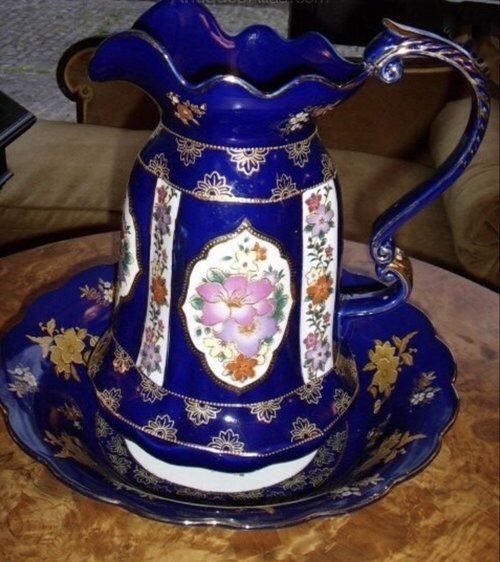
When you search for a blue ceramic wash bowl, you are looking at practical pieces designed for personal hygiene before modern plumbing, primarily taking the form of large basins often matched with a jug as part of a washstand set. These items span periods from the early 19th century through the Edwardian era, incorporating styles such as Victorian Chinoiserie and Gaudy Welsh patterns.
The versions you are most likely to meet on this page date from the Victorian and Edwardian periods, frequently executed in ironstone or earthenware with transfer-printed blue decoration. They range from single basins to complete multi-piece bathroom sets that include matching pitchers and slop pails.
Materials and construction
Potters of the 19th and early 20th centuries formed these vessels from dense earthenware and ironstone, materials chosen for their weight and durability in daily use. Cobalt blue pigments were applied either through hand-painting or transfer printing before the application of a clear glossy glaze that protected the porous clay beneath.
Some finer examples incorporate additional decorative elements such as gold leaf accents or gilt detailing over the glaze, adding a layer of refinement to utilitarian ware. Firing techniques varied from standard earthenware kilns to specialised ironstone firings that produced a harder, more vitrified body.
Object types recorded across the inventory include washstand sets, footbaths, octagonal jugs, and standalone toilet basins.
Distinctions in quality
Quality in these pieces is dictated by the crispness of the blue transfer print and the complexity of the underlying ceramic body, with heavy ironstone vessels generally representing a higher standard of manufacture than standard porous earthenware. The depth and evenness of the cobalt glaze also separate standard utilitarian basins from exhibition-grade examples.
The presence of named maker marks, particularly from prominent potteries, elevates a piece alongside the survival of a complete, matching jug and basin set rather than an isolated bowl. Hand-finished details, such as gilt highlights or intricate floral motifs, further distinguish superior studio output from mass-produced domestic ware.
Minton·Masons Ironstone·Doulton Burslem
The Blue Ceramic Wash Bowl Glossary
- Ironstone
- A heavy, durable type of earthenware patented in the 19th century to imitate Chinese porcelain. It provides a robust body ideal for large daily-use vessels.
- Flow blue
- A 19th-century transfer printing technique where the cobalt blue pigment intentionally bled into the surrounding white glaze during firing. This created a soft, misty appearance popular in Victorian ceramics.
- Gaudy Welsh
- A distinctive style of brightly coloured pottery featuring cobalt blue alongside copper lustre, red, and green highlights. It was produced largely for domestic use in the 19th century.
- Washstand set
- A matching group of ceramic vessels, typically comprising a large basin, a matching jug, and sometimes smaller accessories, designed to sit on a wooden washstand for bedroom hygiene.
- Transfer printing
- A method of applying intricate patterns to ceramic ware by engraving a design on a copper plate, printing it on tissue paper, and pressing it onto the biscuit fired clay.
Blue Ceramic Wash Bowl: Frequently Asked Questions
How were these wash bowls originally used?
These bowls sat atop wooden washstands in bedrooms before plumbed bathrooms became common, paired with a matching pitcher of water for washing hands and face.
Servants filled the jugs each morning, and the water was emptied into a slop bucket kept beneath the stand after use.
How do I date a blue ceramic bowl?
Dating relies heavily on the style of the blue transfer print, the weight of the ceramic body, and any maker stamps impressed into the base.
Early 19th-century pieces tend to feature heavier ironstone bodies and deep flow blue patterns, while Edwardian examples often show lighter earthenware forms with crisper floral designs.
What is the difference between earthenware and ironstone?
Ironstone is a denser, heavier ceramic body fired at higher temperatures to resist chipping, making it noticeably more robust than standard porous earthenware.
Potters developed ironstone in the 19th century specifically to create durable domestic ware that could withstand heavy daily use.