




Antique Ceramic Ewer Set
An antique ceramic ewer set brings utility and artistry together, offering a washstand centrepiece crafted to serve daily ablutions in style.

Antique Ceramic Ewer Set
An antique ceramic ewer set comprises matched washing vessels, typically pairing a large basin with a matching jug or pitcher designed for the bedroom washstand. These sets appear most frequently from the nineteenth century through the Edwardian era, spanning periods such as the Victorian age, 1800, and 1900.
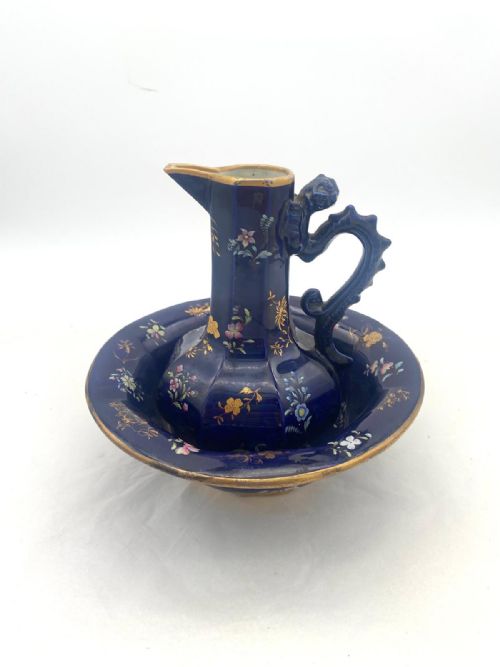
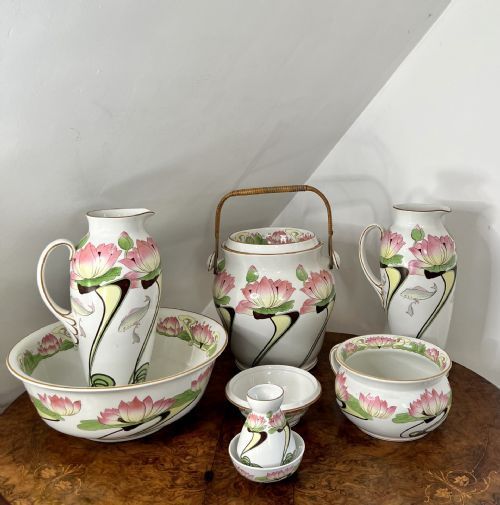
Makers produced these functional ensembles in various configurations, ranging from octagonal ironstone jugs to expansive porcelain wash basin sets. Buyers encounter forms decorated in styles like Victorian Chinoiserie, Aesthetic Movement, and Art Nouveau.
The assortment on this page reflects traditional English potteries and commercial manufacturers of household sanitary ware. They survive as decorative items or functional centrepieces for period interiors.
Materials and construction
Potteries shaped these vessels using durable earthenware, ironstone, and fine English porcelain, fired to withstand daily handling on the washstand. Ironstone provided a robust body suitable for heavy jugs and basins.
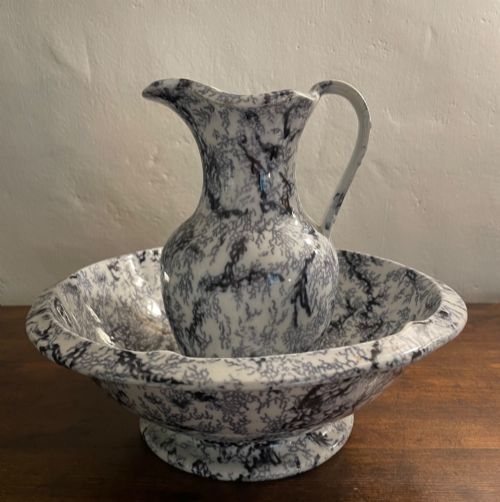
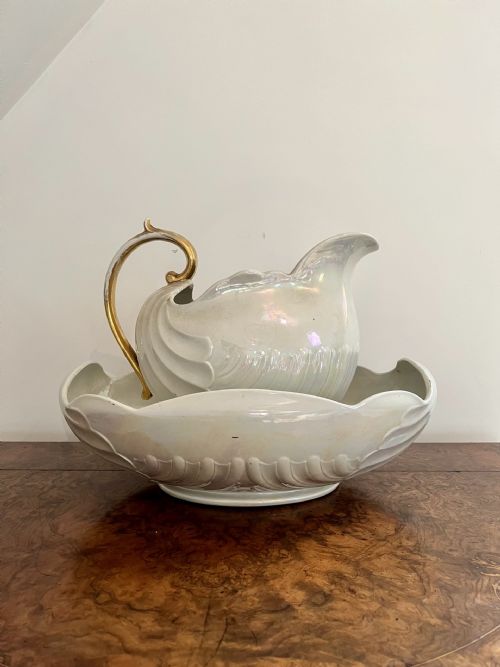
Surface decoration frequently incorporated hand-applied enamel, glaze, and intricate transfer printing such as flow blue. Artisans often finished rims and handles with gold leaf and gilt accents.
Decorative styles on these pages include Victorian Chinoiserie, Aesthetic Movement, and Art Nouveau.
Distinctions in quality
Quality in an antique ceramic ewer set rests upon the crispness of the moulding, particularly in octagonal shapes, and the precision of the transfer printing or enamel work. Finer examples display even glaze coverage and carefully applied gilding without blurring.
The reputation of the pottery significantly influences the standing of a piece, with established factories producing heavier ironstone and more refined porcelain bodies. Completeness as an original matched pair or set also elevates the standard.
Masons Ironstone·Doulton Burslem·Davenport·Shelley
The Antique Ceramic Ewer Set Glossary
- Earthenware
- Porous pottery fired at lower temperatures, commonly utilised for nineteenth-century domestic wares. It requires a vitreous glaze to hold liquids.
- Ironstone
- A dense, durable type of feldspathic stoneware patented in the nineteenth century. It resists chipping better than standard earthenware.
- Flow Blue
- A cobalt blue transfer-printing technique where the colour intentionally bled slightly into the white glaze during firing. This created a soft, hazy aesthetic popular in the nineteenth century.
- Ewer
- A large jug with a flared spout and curved handle designed specifically for holding and pouring water. It forms the primary vessel in a washing set.
- Gilt
- A thin layer of gold applied to the ceramic surface for decoration. It often highlights handles, rims, and panels.
Antique Ceramic Ewer Set: Frequently Asked Questions
What is an antique ceramic ewer set?
An antique ceramic ewer set is a matching combination of a large bowl and a pitcher, historically used for washing before indoor plumbing became common.
Today, collectors appreciate these sets for their decorative presence, vibrant glazes, and intricate period patterns.
How were these washing sets used?
In Victorian and Edwardian bedrooms, the set sat upon a washstand to hold water for morning and evening hygiene.
Servants filled the pitcher from a larger supply, and the user poured water into the basin for washing hands and face.
How do I date a ceramic wash set?
Dating relies on stylistic clues, pottery marks stamped on the base, and the specific ceramic body used.
Earlier nineteenth-century pieces often feature ironstone with flow blue printing, while Edwardian examples display lighter porcelain and Art Nouveau motifs.
Can I use these sets for fresh flowers?
Many people utilise the large jugs and basins as striking floral containers or decorative displays in modern homes.
Care should be taken with older glazes and any gilt decoration when holding water or stems.