

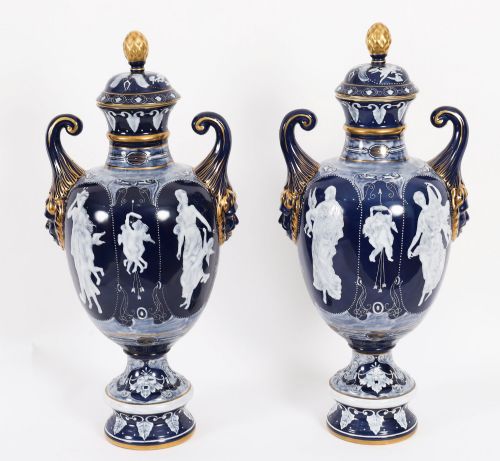

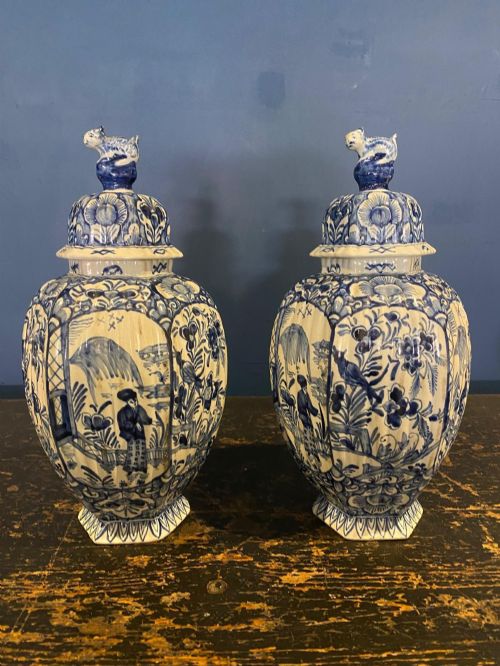

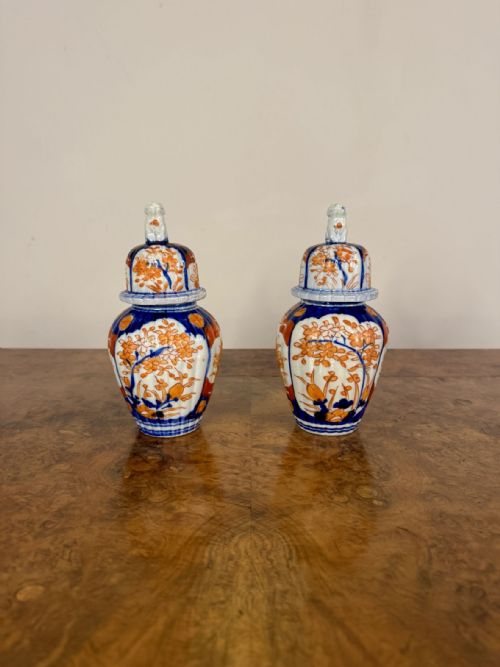


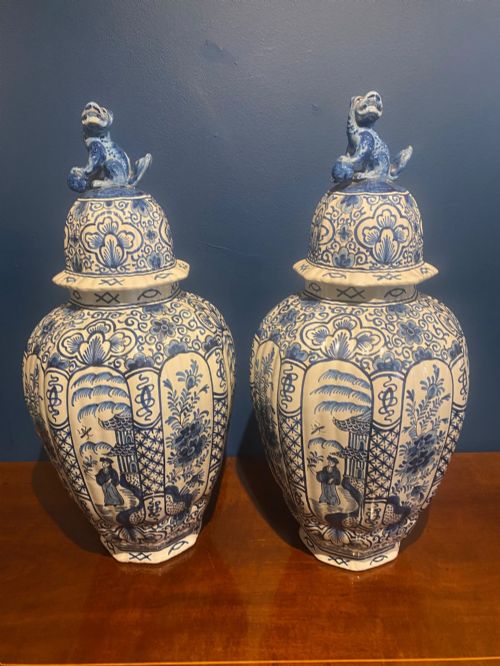

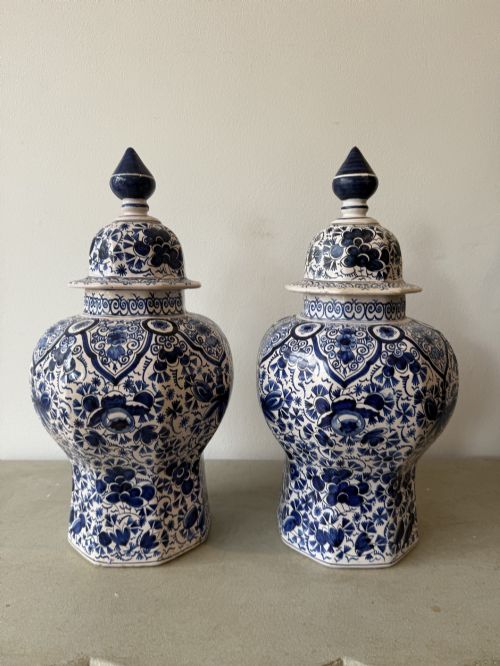
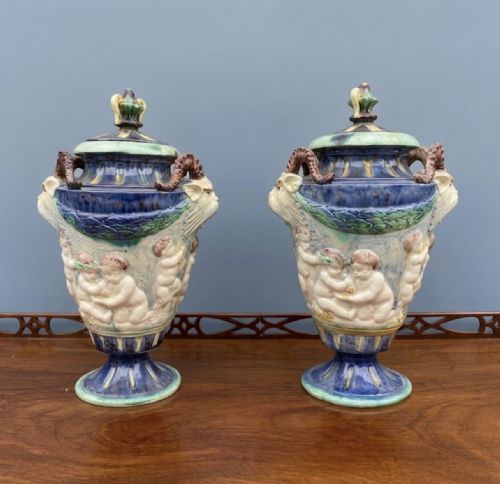

Blue Ceramic Lidded Vase
A blue ceramic lidded vase combines practical containment with decorative presence, offering a structural silhouette that anchors a mantelpiece or side table.
Blue Ceramic Lidded Vase
When searching for a blue ceramic lidded vase, a buyer encounters a diverse group of lidded vessels spanning the seventeenth through the twentieth centuries. The selection encompasses forms described variously as jars, urns, and pot pourri, originating from European factories and Asian kilns alike.
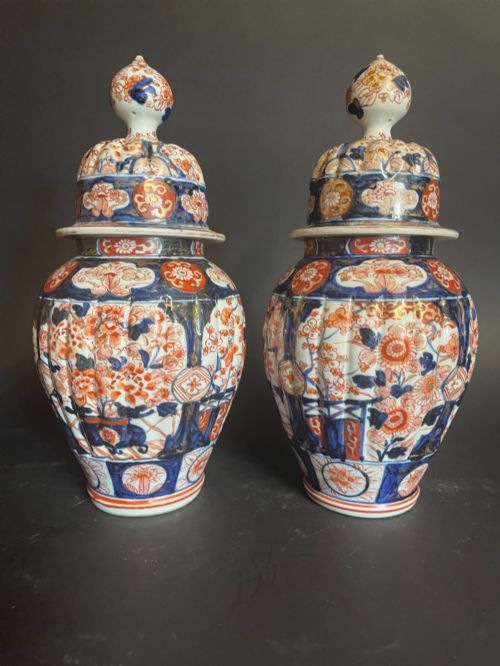
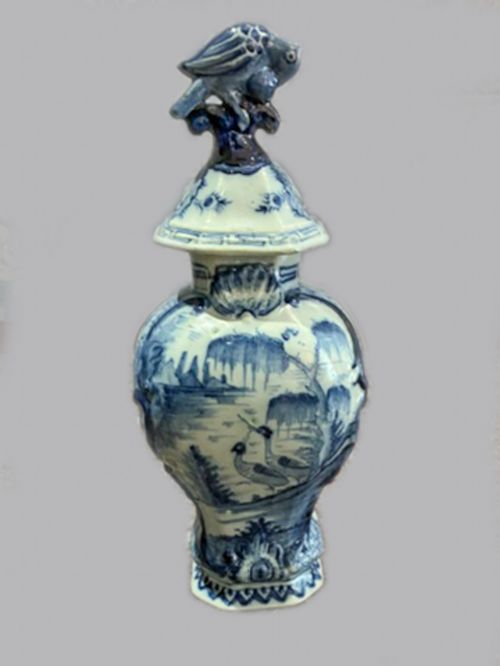
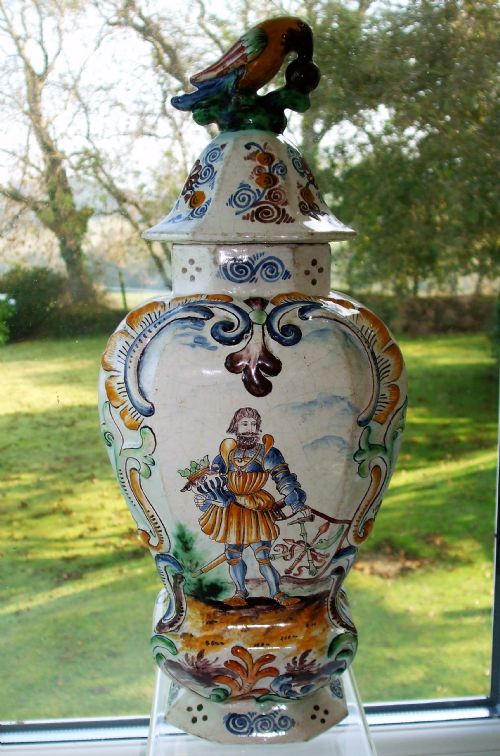
The most frequent examples on this page are Japanese Imari covered ginger jars and nineteenth-century Dutch or English delftware vessels. These pieces range from compact decorative jars to substantial pairs designed for symmetrical display.
Origins stretch from Arita and Qing Dynasty workshops to English manufactories like Masons and Chamberlain Worcester, alongside French faience and Sèvres style productions. Each region brought distinct painting traditions and ceramic body compositions to the basic lidded vessel form.
How they were made
Potters shaped these vessels using earthenware, ironstone, or porcelain bodies, often building them on the wheel or pressing them into moulds. Tin-glazed earthenware provided an opaque white surface for hand-painted cobalt decoration before firing, while porcelain bodies achieved vitrification at higher temperatures.
Glazes served both protective and aesthetic functions, sealing porous clay bodies and carrying colours like cobalt blue, gold leaf, and enamel pigments. Multiple firings were frequently required to set underglaze blue painting alongside subsequent overglaze gilding and enamelling.
Blue Ceramic Lidded Vase Retail Price Guide 2026
Typical asking prices for blue ceramic lidded vase among the pieces listed under this phrase on Sellingantiques today, from the lower quarter to the upper quarter. They describe what is for sale here now, not the wider market.
What varies in quality
Quality rests in the crispness of the cobalt painting, the symmetry of the ceramic body, and the harmony between the vase and its original matching cover. Superior examples display confident brushwork and precise control over the glaze during high-temperature firings.
The distinction between standard commercial output and exhibition-grade work lies in the depth of the palette and the complexity of the secondary details, such as gilding or moulded relief work. Intact original lids that fit the collar snugly without excessive wobble elevate the overall integrity of the piece.
Chamberlain Worcester·Coalport·Masons Ironstone·Royal Crown Derby·Samson of Paris·Sev philanthropic·William Moorcroft·Wolfsohn Dresden
The Blue Ceramic Lidded Vase Glossary
- Imari palette
- A decorative scheme employing underglaze blue, iron red, and gold, originating in Japan and widely copied in Europe. This combination creates a rich, contrasting visual texture across the ceramic surface.
- Tin-glazed earthenware
- Pottery covered with a glaze containing tin oxide, which fires to an opaque white finish. This surface acts as a ground for painting in blue pigments before a final glaze firing.
- Ginger jar
- A ceramic vessel with a wide belly and a short, straight neck designed to receive a flat or domed lid. Originally utilised for spices, these forms later became purely decorative staples.
- Garniture
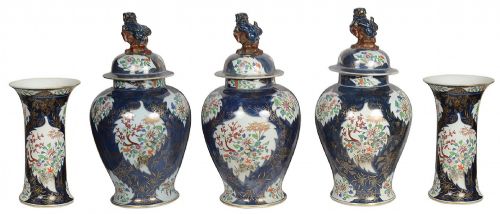
- A set of three or more matching vases and jars designed to be displayed together on a mantelpiece or shelf. These matched groupings create a balanced focal point in a room.
- Baluster
- A vertical ceramic form with a rounded lower body that tapers towards a narrow neck. This classic silhouette provides stability and a generous surface area for painted decoration.
Blue Ceramic Lidded Vase: Frequently Asked Questions
How were lidded ceramic vases used originally?
Many of these vessels served practical roles in domestic interiors as storage containers for dried herbs, spices, or pot pourri. Their snug lids kept aromatic contents fresh while adding a decorative element to a room.
Over time, larger jars and urns transitioned into purely ornamental objects designed to anchor mantelpieces, sideboards, and architectural ledges in formal reception rooms.
Are the covers on antique vases usually original?
Matching the lid to the base requires careful attention to the clay body, glaze colour, and wear patterns around the collar. Many pieces retain their original factory covers, which were potted and fired together as a single unit.
Replacements do occur due to accidental breakage over centuries of use, making a harmonised fit an important consideration for collectors.
How do I care for antique ceramic vases?
These delicate pieces require gentle handling and placement away from direct sunlight to preserve the stability of the glaze and any overglaze enamel colours. Dusting with a soft, dry cloth is usually sufficient for routine maintenance.
Water should generally not be placed inside antique earthenware or porous ceramic vessels unless they are specifically glazed and tested to hold moisture safely.