

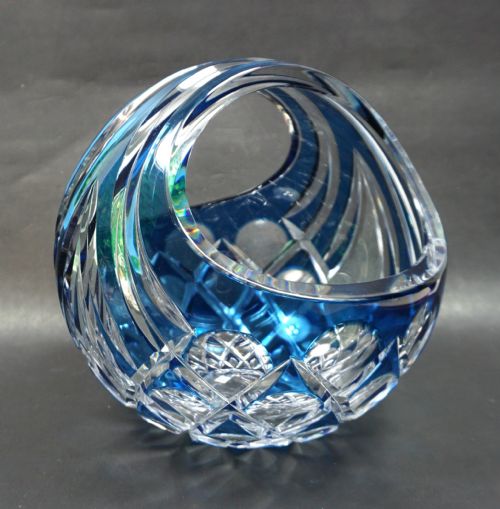


Blue Art Glass Bowl
A blue art glass bowl brings saturated colour and tactile form to a room, spanning the stylistic shifts of the early twentieth century.
Blue Art Glass Bowl
A blue art glass bowl embodies the decorative ambitions of the nineteenth and twentieth centuries, taking shapes from shallow open coupes to heavy chargers and footed vessels. Buyers searching for a blue art glass bowl encounter significant variation in design, moving from floral motifs to geometric lines across diverse production methods.
The pieces appearing most frequently belong to the Art Deco and Art Nouveau periods, heavily represented by French output alongside British and Belgian workshops. These items function as centrepieces or display dishes, merging utility with expressive moulding and colouration.
Materials and Techniques
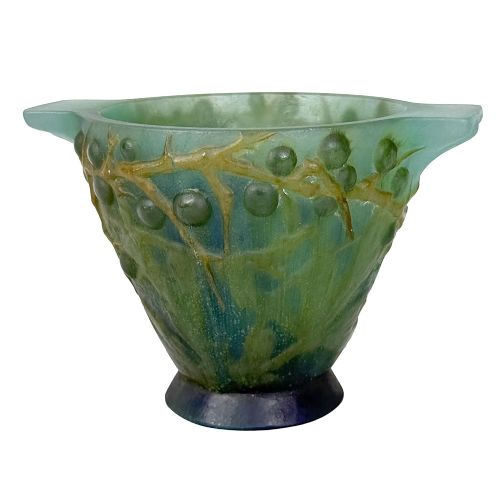
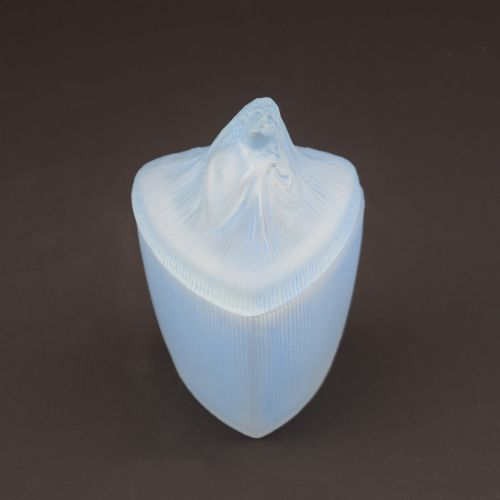
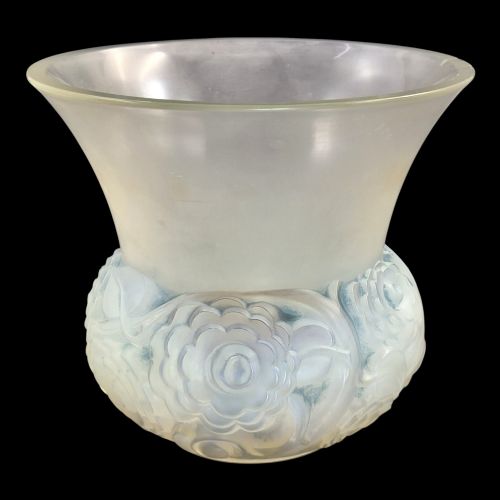
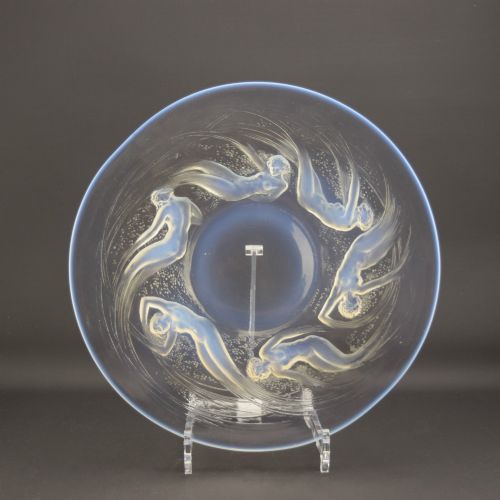
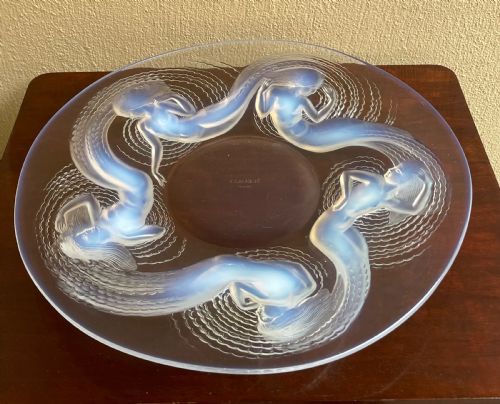
Makers utilised moulded glass, lead crystal and frosted glass, often applying opalescent treatments to scatter light across relief surfaces. Techniques such as pate de verre and enamel decoration allowed artisans to build dense colour and tactile texture directly into the vessel wall.
Overlay methods and copper additions introduced metallic contrast, while internal cane work like latticinio created complex linear patterns within the body of the glass.
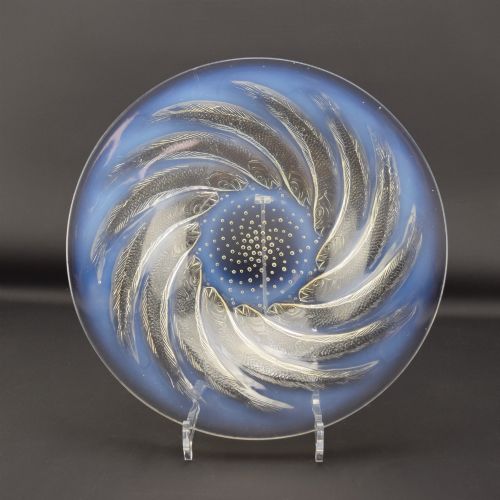
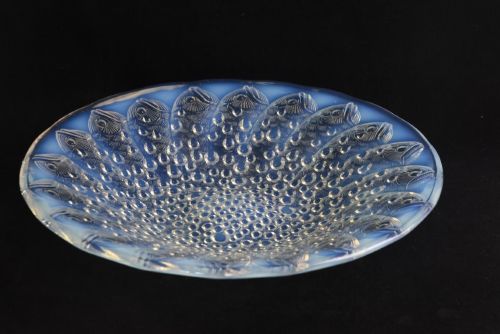
Several bowls feature stylised fish and parakeets frozen forever in swirling opalescent waves.
Judging Quality
The success of a piece rests on the crispness of the moulded relief and the depth of the opalescent fire within the glass body. Superior examples demonstrate precise control over colour saturation, ensuring the tone remains rich and even without muddying the translucency.
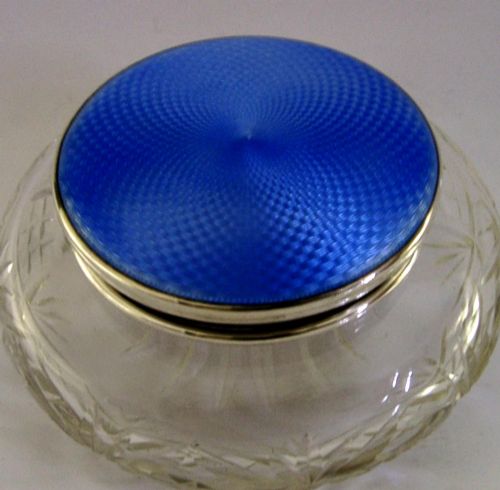
Artisanal execution separates standard production from exceptional work, visible in the hand-finishing of rims, the subtlety of enamel application, and the integration of metal mounts such as sterling silver.
Rene Lalique·Amalric Walter·Val St Lambert·Loetz·Sabino·Baccarat·Jobling
The Blue Art Glass Bowl Glossary
- Opalescent Glass
- Glass that diffuses light to display a milky blue or amber glow when lit from certain angles. This effect was heavily utilised in French decorative pieces from the interwar period.
- Pate de verre
- A kiln-casting method where finely crushed glass is mixed with a binder and fused inside a mould. This technique yields dense colour and a granular texture.
- Coupe ouverte
- An open bowl or shallow dish form frequently used for display. These pieces often feature moulded floral or aquatic motifs across the interior.
- Latticinio
- Opaque white or coloured glass threads embedded within clear or tinted glass vessels. This traditional technique creates intricate netted or spiral patterns.
- Plafonnier
- A ceiling light fitting made from moulded glass bowls or plates suspended against the architecture. They often share decorative vocabularies with table bowls of the same era.
Blue Art Glass Bowl: Frequently Asked Questions
How are opalescent bowls cleaned safely?
Wash the glass gently in lukewarm water using a mild, non-abrasive detergent and a soft cloth.
Avoid harsh scrubbing or soaking silver mounts to protect the integrity of the surface.
Were these bowls meant for daily use?
Most surviving examples functioned as decorative table pieces, flower holders, or powder containers rather than heavy tableware.
Their delicate moulded surfaces and delicate enamel work require careful placement away from high-traffic areas.
How do I identify an Art Deco piece?
Look for stylised geometric patterns, symmetrical floral reliefs, and strong mould lines characteristic of the interwar period.
Many of these vessels utilise opalescent or frosted finishes to accentuate clean architectural forms.
What is the difference between pressed and moulded glass?
Pressed glass relies on machine or mechanical plungers forcing molten material into a metal die, leaving sharp interior seams.
Art glass moulding often involves careful hand-pressing and fire-polishing to achieve softer transitions in relief.