
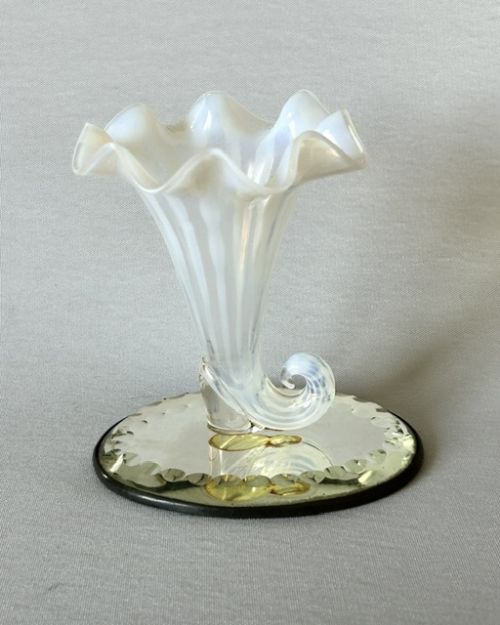


Victorian Opalescent Glass
Victorian opalescent glass combines shifting milky hues with practical domestic forms, offering both decorative charm and utility to the discerning collector.
Victorian Opalescent Glass
Victorian opalescent glass encompasses a diverse array of domestic objects, ranging from decorative vases and scent bottles to functional oil lamps and ceiling lights. These pieces date principally from the nineteenth century, with specific examples spanning from the 1860s through to the early decades of the twentieth century. Buyers seeking authentic period items will encounter both British and French manufactories, representing styles from Gothic Revival to Arts and Crafts.
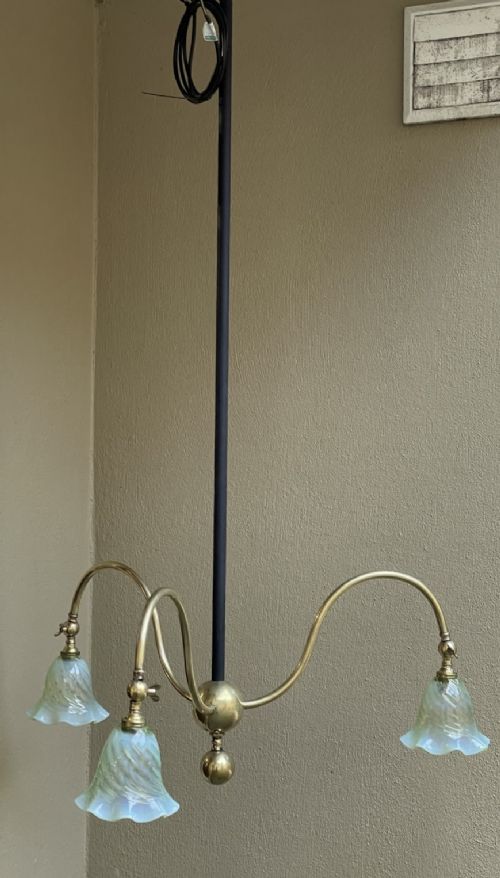
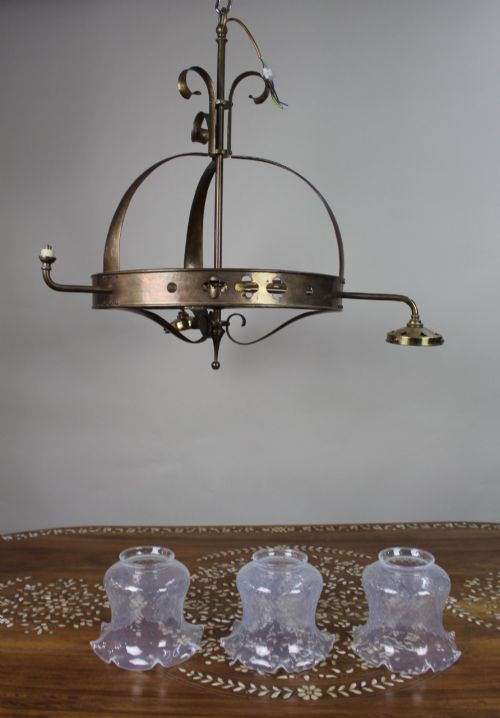
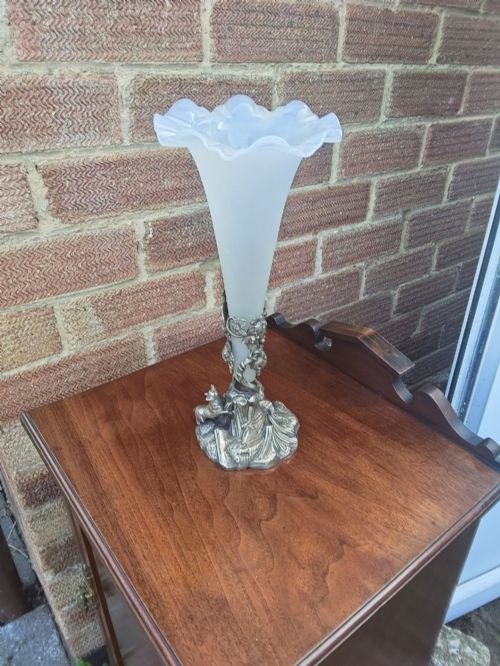
The most prevalent forms on this page include lighting fixtures such as ceiling pendants, gasoliers, and wall lamps, alongside table glassware like epergnes, cake stands, and vases. Many items integrate opalescent or vaseline glass shades with metal mounts of brass, copper, or silver plate. These domestic wares demonstrate how nineteenth-century households embraced decorative coloured glass for both illumination and display.
Materials and manufacture
Makers produced these pieces using specialised glass-blowing and moulding techniques, often incorporating minerals to achieve the characteristic milky or fire-polished opalescence. Hand-blown and uranium-reactive vaseline glass appear frequently, alongside opaque white and blue pearline variations. Gilding and enamel decoration provide surface detail on specific French and English items.
Metal components such as brass, white metal, and silver plate frequently complement the glass bodies, particularly in lighting assemblies and epergnes. These mixed-media pieces rely on secure fitting methods to join fragile glass shades or fonts to sturdy metal brackets and stands.
Listings feature items spanning the 1860s to 1910, encompassing Victorian, Gothic Revival, and Arts and Crafts styles.
Assessing quality and craftsmanship
Quality in these items is determined by the depth and evenness of the opalescent fire, the crispness of moulded or blown detail, and the integrity of any associated metalwork. Superior examples display a vibrant, smooth graduation of colour within the glass rather than flat opacity.
The sophistication of the design and the harmony between glass and metal mountings distinguish finer items. Original hardware, such as marked metal bases or maker-stamped fittings, elevates the historical interest of lighting and tableware.
Davidson·Hinks·James Dixon·Messenger
The Victorian Opalescent Glass Glossary
- Opalescent glass
- Glass containing agents that create a milky, translucent quality with characteristic fire highlights, often appearing blue or white at the edges. This effect was highly popular during the nineteenth century for decorative tableware and lighting.
- Vaseline glass
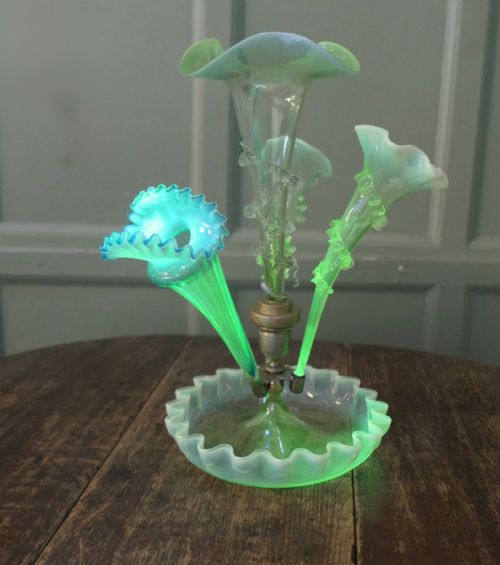
- Transparent or translucent glass containing uranium dioxide, which gives the material a distinct yellow-green tint and causes it to glow under ultraviolet light. It is frequently found in Victorian decorative objects and vases.
- Epergne
- A multi-tiered centrepiece table ornament featuring a central trumpet vase surrounded by smaller hanging baskets or arms, typically utilised for holding fruit or flowers. Victorian examples often showcase coloured opalescent or Nailsea glass.
- Pearline
- A specific type of moulded opalescent glass patented in the late nineteenth century, known for its raised optic patterns and shaded colourways. Collectors prize these pieces for their registered design details.
- Gasolier
- A multi-branched ceiling light fixture designed specifically for gas lighting before the widespread adoption of electricity. Surviving period examples frequently retain their original opalescent glass shades.
Victorian Opalescent Glass: Frequently Asked Questions
How do I clean antique opalescent glass?
Wash these pieces gently in warm, soapy water using a soft cloth, avoiding harsh abrasives or soaking metal-mounted items.
Dry them immediately with a lint-free towel to preserve any delicate enamel or gilded surface details.
Is vaseline glass safe to use?
Vaseline glass contains trace amounts of uranium dioxide to achieve its characteristic colour, emitting very low levels of radiation.
Most collectors display these items safely, though they are generally reserved for decorative use rather than daily dining.
How can I date my opalescent glass?
Examine the object for pontil marks, registration numbers, or maker's marks stamped onto the glass or metal mounts.
Stylistic cues such as Gothic Revival framing or Arts and Crafts copper work also help narrow the production period.
Can antique oil lamps be converted?
Many period oil lamps and gasoliers have been safely adapted for modern electrical wiring by running cords through existing channels.
Retaining original burners and brackets helps maintain the historical integrity of the lighting fixture.