




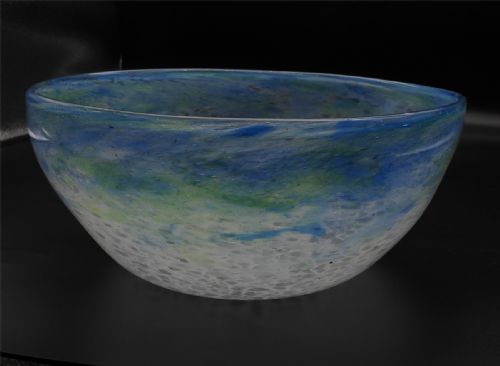


Vintage Glass Serving Bowl
These vintage glass serving bowls span the Victorian era to the mid-twentieth century, offering practical elegance and heavy decorative presence for any table.
Vintage Glass Serving Bowl
When you search for vintage glass serving bowl, you encounter a range of tableware designed for presentation and service, including large centrepiece bowls, punch sets, and lidded dishes. The selection on this page leans heavily towards Edwardian cut glass dishes and pieces from the 1930s, alongside Victorian and late nineteenth-century examples.
Forms vary from straightforward fruit bowls to elaborate footed punch sets and French opalescent vessels. Many pieces incorporate mounts in sterling silver, ormolu, or bronze, shifting the object from simple glassware to a mixed-media decorative item.
How they were made
Makers utilised heavy lead crystal and standard glass, often employing deep hand-cutting to create faceted surfaces that catch the light. Bohemian, British, and Scottish production relied on traditional blowing and cutting techniques, visible in pieces such as the Monart glass bowl and various Edwardian fruit dishes.
Moulded opalescent glass emerged strongly by the 1930s, championed by French makers who used pressing and chemical treatments to achieve milky, translucent effects with relief designs. Metal mounts in ormolu and sterling silver were cast and fitted to glass bodies, sometimes incorporating hallmarks or silver rims.
Vintage Glass Serving Bowl Retail Price Guide 2026
Typical asking prices for vintage glass serving bowl among the pieces listed under this phrase on Sellingantiques today, from the lower quarter to the upper quarter. They describe what is for sale here now, not the wider market.
Listings feature periods ranging from the Victorian era through the 1960s, incorporating materials such as cobalt glass, sterling silver, and ormolu.
What varies in quality
Quality in these bowls rests upon the crispness of the glass cutting, the weight of the metal mounts, and the presence of signatures or distinct stylistic attribution. Heavy lead crystal with deep, sharp facets sits at the upper end of the scale compared to lighter, plain moulded glass.
The integration of precious metals, such as solid sterling silver rims or French ormolu bases, elevates a piece significantly. Clarity of the glass, absence of cloudiness, and the artistic merit of relief designs, particularly in opalescent French pieces, dictate the standing of individual bowls.
G Vallon·Rene Lalique·Monart
The Vintage Glass Serving Bowl Glossary
- Cut Glass
- Glass shaped and decorated by grinding and polishing facets into the surface using wheels. This technique creates sharp geometric patterns that refract light.
- Opalescent Glass
- Glass containing agents that cause it to milky-blue or white appearance in reflected light, while appearing amber or warm when lit from behind. It became popular in the twentieth century for decorative vessels.
- Ormolu
- Gilded bronze used for mounts, feet, and decorative trims on nineteenth-century and earlier decorative objects. It provides a rich gold-coloured metallic contrast to clear or coloured glass.
- Lead Crystal
- Glass containing substantial lead oxide, which increases the weight, refractive index, and clarity of the material. It allows for deeper and sharper cutting than standard soda-lime glass.
Vintage Glass Serving Bowl: Frequently Asked Questions
How do I date a glass bowl?
Dating relies on stylistic markers, cutting styles, and metal mounts. Victorian and Edwardian pieces often feature deep hand-cutting and heavy lead crystal, while 1930s examples lean towards opalescent moulded glass and specific designer signatures.
Examining the wear on the base and the composition of any attached silver or ormolu mounts also provides clear chronological indicators.
Can I use these bowls for food?
Most vintage glass serving bowls function perfectly for serving fruit, salads, or punch, provided they lack structural damage. Pieces featuring sterling silver rims or delicate opalescent surfaces require gentle hand washing rather than dishwasher use.
Items with bronze or ormolu mounts need care to avoid getting moisture trapped in the metal joints.
What is the difference between cut glass and crystal?
Lead crystal contains a high proportion of lead oxide, which gives the material greater weight and a higher refractive index than standard glass. Cut glass refers to the decorative technique of grinding facets into either crystal or standard glass.
Many high-quality Edwardian and Victorian pieces utilise heavy lead crystal specifically to achieve sharper, more brilliant cut patterns.
Are opalescent bowls always French?
While French glassmakers produced notable opalescent pieces during the 1930s, opalescent glass was also made in Britain and Bohemia. Maker signatures or distinctive moulding techniques help distinguish French studio output from other regional manufacture.
Checking for registry marks or etched signatures on the base clarifies the origin of the piece.