




Blue and Orange Plates
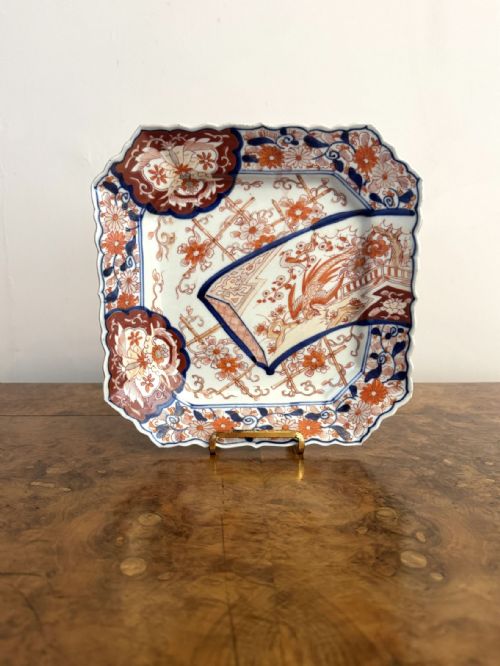
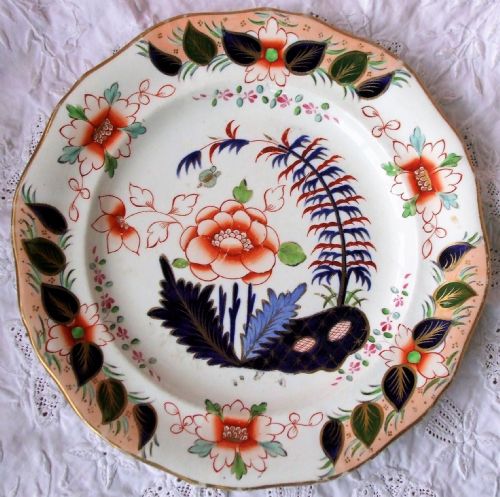
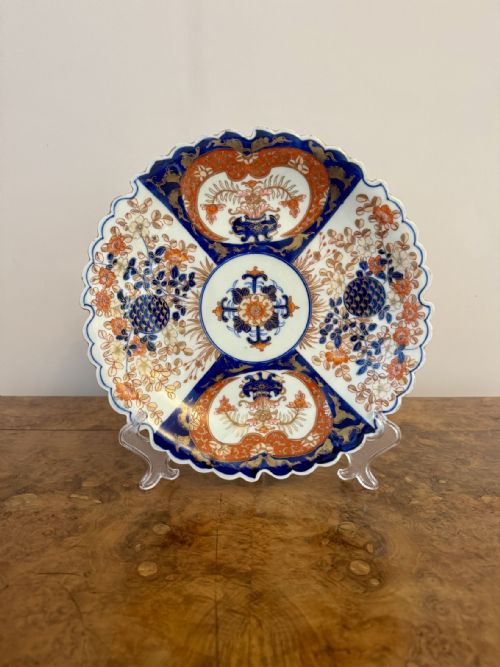
These blue and orange plates bring together vibrant contrasting hues from Japanese Imari workshops, English factories, and Chinese export kilns.
Blue and Orange Plates
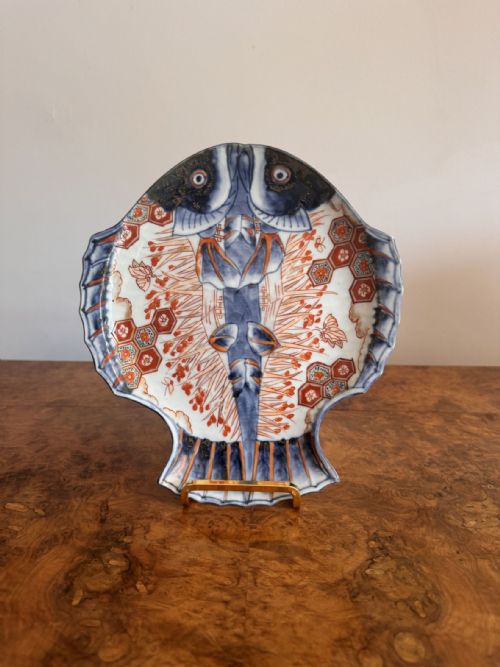
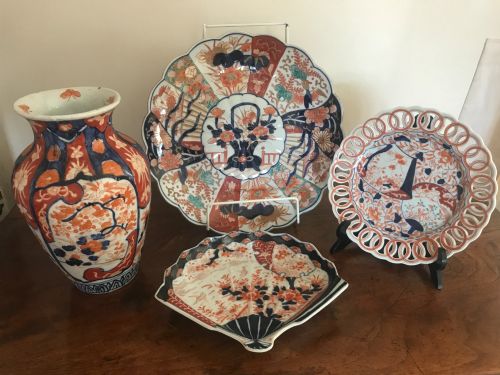
When you search for blue and orange plates, you encounter colourful ceramics spanning several centuries of global trade and domestic production. The selection here ranges from large display chargers to standard dining forms shaped as circles, squares, fish, shells, fans, and ribbons.
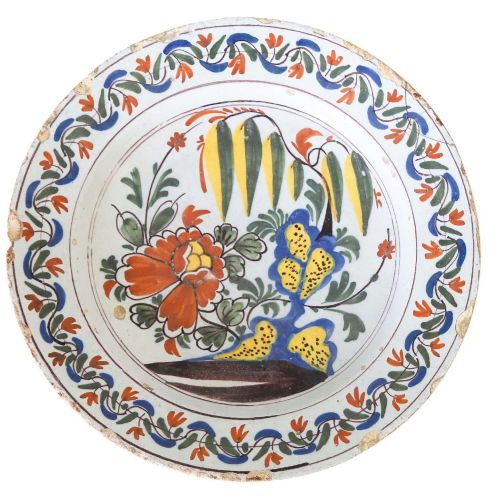
Japanese Imari porcelain dominates the selection, dating from the Edo and Meiji periods alongside Victorian and later interpretations. Alongside these wares sit English ironstone china, earthenware delftware chargers, and Chinese export porcelain from the eighteenth century.
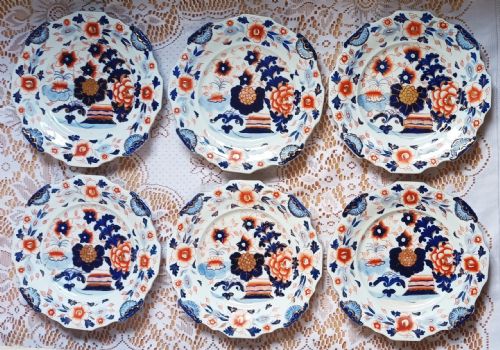
Buyers find items intended for both decorative display and utilitarian service. The forms include single plates, pairs, and matched sets of varying diameters designed to catch the eye in a room.
Materials and production methods
Potters shaped these ceramics using porcelain, ironstone, and earthenware bodies before applying glazes and underglaze or overglaze colours. Artisans added hand-painted floral or figurative motifs using cobalt blue and iron-red orange, frequently accented with gilding or gold leaf.
Firing techniques varied from traditional East Asian kilns reaching high temperatures for porcelain to English industrial methods producing durable ironstone china. Enamel pigments were often fused to the glazed surface during subsequent lower-temperature kiln runs to secure the vibrant palette.
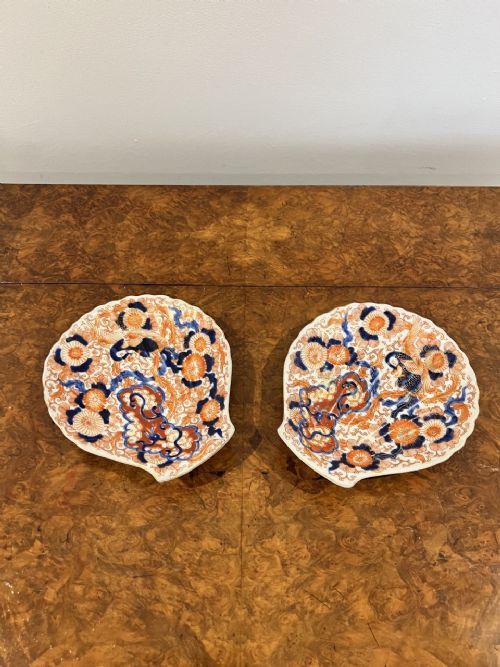
Moulded silhouettes in the collection extend beyond standard rounds to include fans, ribbons, shells, squares, and fish.
Assessing quality and craftsmanship
The distinction between ordinary and superior pieces rests on the crispness of the hand-painted brushwork and the complexity of the composition. Plates depicting intricate figures, such as the Seven Lucky Gods, or uncommon moulded profiles like fish and fan shapes demonstrate higher artisanal skill than standard round wares.
The clarity of the glaze and the richness of the cobalt blue and orange enamel pigments dictate visual depth. Well-preserved gilding and original firing stability further distinguish the finer examples in the range.
John Davenport of Longport·Masons
The Blue and Orange Plates Glossary
- Imari
- A style of Japanese export porcelain originating from the town of Arita, traditionally decorated in underglaze blue, iron red, and gold. It gained immense popularity in Europe during the seventeenth and eighteenth centuries.
- Charger
- A large decorative plate, typically exceeding twelve inches in diameter, used historically for ceremonial service or displayed upright on sideboards and walls.
- Ironstone
- A type of durable heavy earthenware patented in England during the nineteenth century, designed to resist chipping while mimicking the qualities of true porcelain.
- Delftware
- Tin-glazed earthenware produced in England and the Netherlands, characterised by an opaque white surface painted with polychrome or blue pigments.
- Meiji Period
- A phase in Japanese history spanning from 1868 to 1912, noted for opening trade relations and producing highly detailed decorative arts for Western markets.
Blue and Orange Plates: Frequently Asked Questions
How do I display blue and orange plates safely?
Large chargers and decorative plates are best supported by stable wall mounting brackets or dedicated plate stands designed for heavy ceramics. Ensure the weight is evenly distributed to prevent tipping.
Keep pieces away from direct sunlight to protect the enamel pigments and gilding from fading over extended periods.
Were these plates used for dining or display?
While many items functioned as tableware in period homes, larger chargers and uniquely shaped dishes served primarily as decorative objects for display on walls or sideboards. The presence of mounting holes on older pieces indicates wall hanging was common.
Everyday dining wares experienced more wear, whereas display pieces retained their original painted surfaces remarkably well.
How do I distinguish Edo period from Meiji period Imari?
Edo period pieces date from 1603 to 1868 and typically exhibit softer paste characteristics and restrained brushwork. Meiji pieces, produced between 1868 and 1912, often feature denser decorations and brighter enamels intended for Western export markets.
Examining the foot ring and the tone of the blue underglaze helps clarify the manufacturing era.
What is the difference between Imari and Japan pattern ironstone?
Imari refers to Japanese porcelain decorated in the traditional blue, orange, and gold palette. Japan pattern ironstone describes English nineteenth-century interpretations made by potteries replicating those East Asian colour schemes on durable domestic bodies.
English versions combine local manufacturing techniques with imported aesthetic influences.