
Blue and Gilt Porcelain
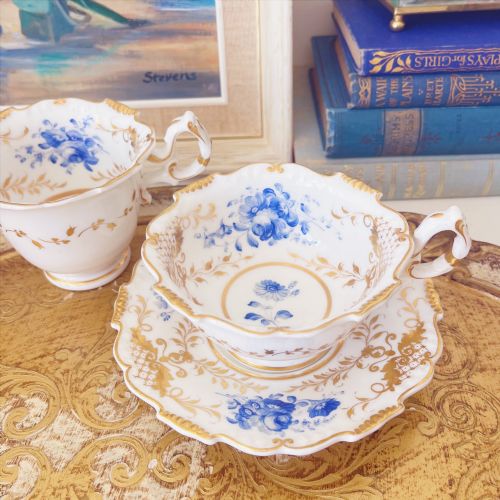
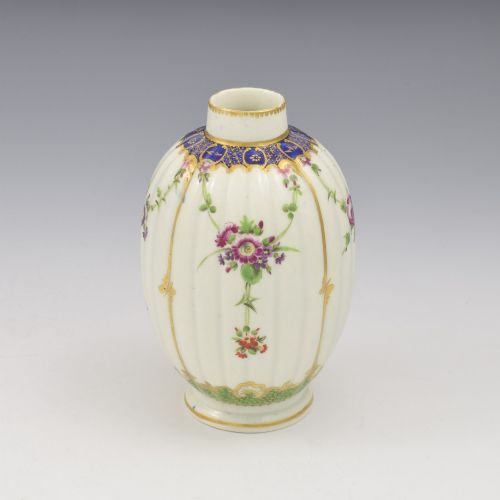
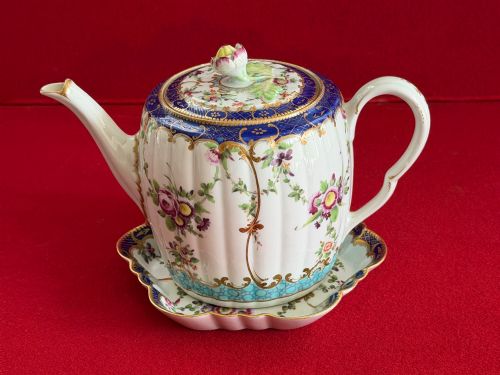
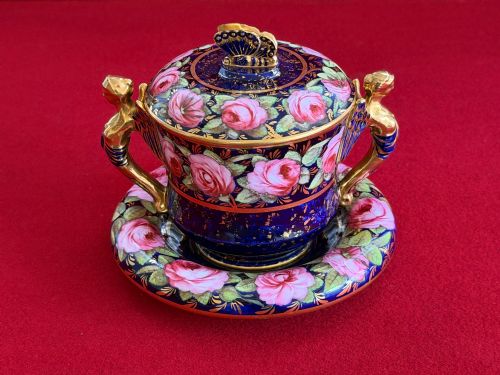
Blue and gilt porcelain brings together deep cobalt grounds and gleaming metallic leaf on cabinet pieces, teawares, and mantel clocks.
Blue and Gilt Porcelain
Blue and gilt porcelain comprises decorative and functional ceramics finished with rich cobalt underglazes or enamel grounds paired with metallic gilding. This search phrase encompasses items produced across the eighteenth and nineteenth centuries, spanning Georgian, Regency, and Victorian periods.
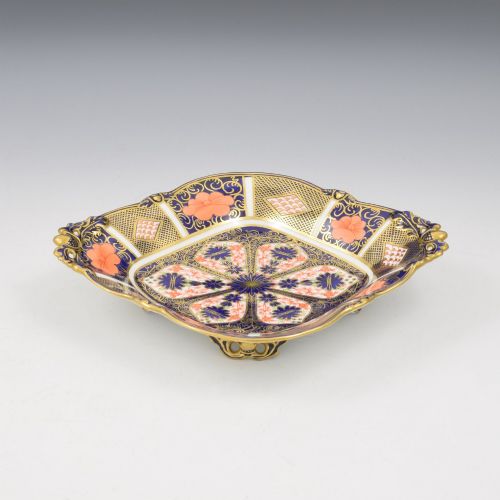
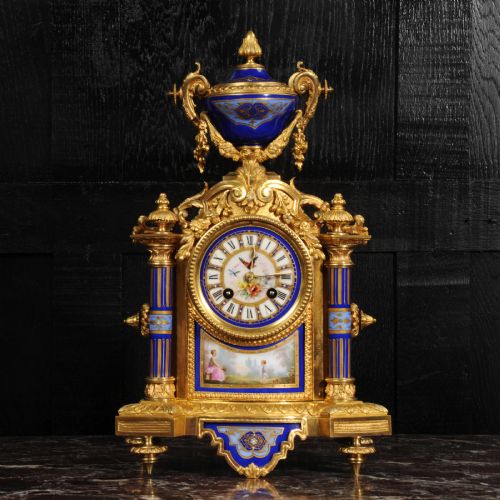
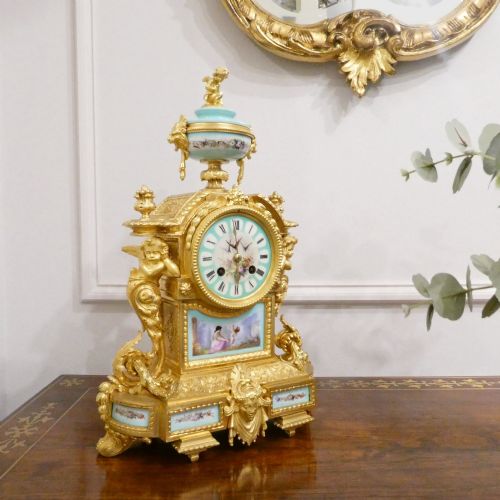
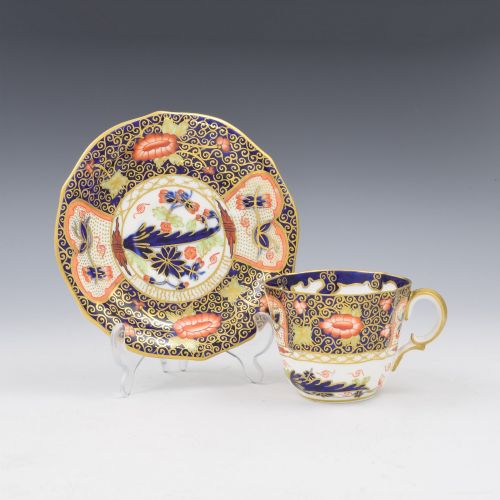
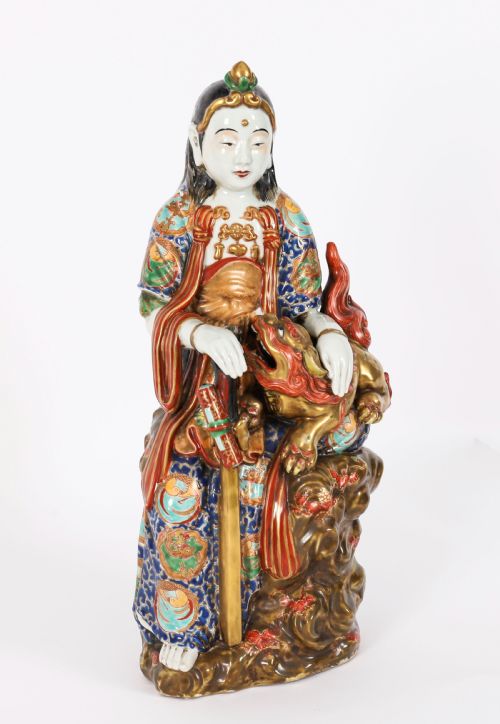
Buyers encounter diverse forms ranging from cabinet plates and tea cup trios to monumental mantel clocks mounted in ormolu. English factories such as Worcester, Derby, Spode, and Coalport sit alongside continental French Sèvres-style works and export pieces.
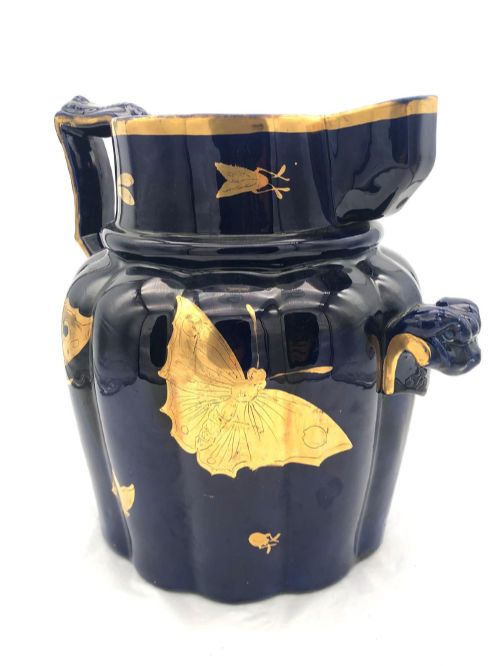
Domestic vessels like teapots, jugs, and inkstands appear alongside ornamental vases, urns, and portrait plates. These objects reflect both utilitarian dining traditions and high decorative arts from the Regency and Victorian eras.
How blue and gilt porcelain was made
Potters shaped hard-paste and soft-paste porcelain, bone china, or ironstone bodies before applying cobalt oxide grounds to achieve deep blue saturation. Hand-painting often incorporated polychrome enamels, botanical studies, or bird motifs set against the dark field.
Gilding was applied using gold leaf, gold paint, or mercury-gilded ormolu mounts that framed the ceramic body. Artisans fired the pieces multiple times to fuse the metallic leaf and enamel pigments permanently to the glaze.
Some Victorian walking canes concealed Sèvres porcelain vials within their shafts, blending clandestine utility with cabinet-level luxury.
What varies in quality
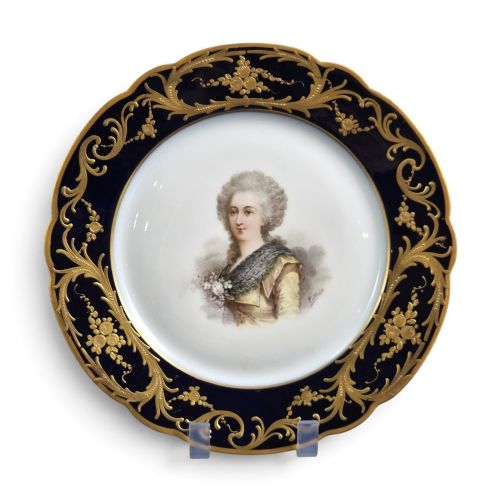
Quality rests on the crispness of the hand-painting, the depth of the cobalt ground, and the weight and burnishing of the gold leaf. Superior examples display finely rendered portraits, botanical studies, or intricate gilded scrollwork rather than heavy transfer-printed outlines.
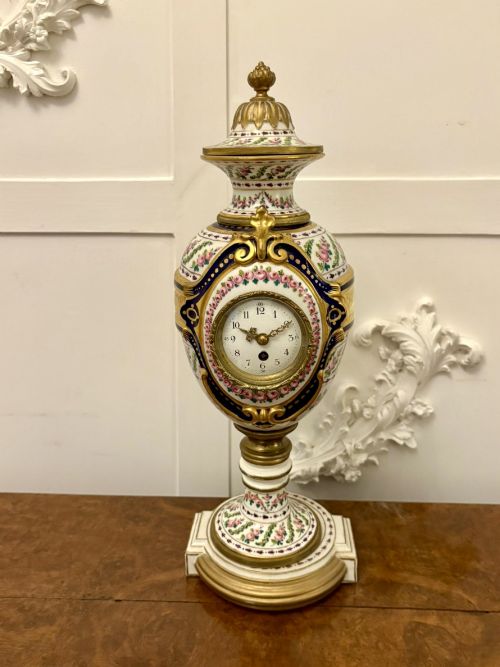
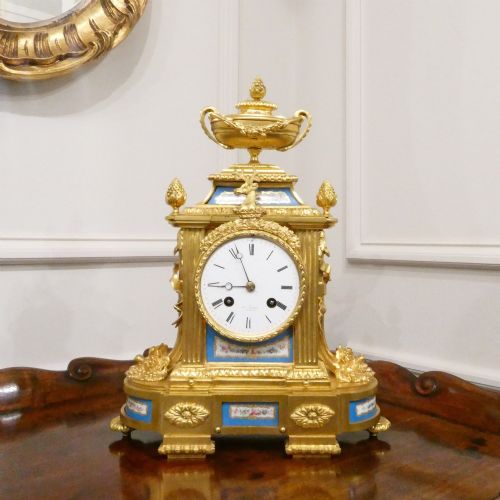
The integration of metal mounts also separates tiers of production, as heavy cast ormolu and gilt bronze frames demonstrate greater ambition than simple ceramic handles. Maker attributions, factory marks, and recorded pattern numbers elevate the standing of individual vessels.
Royal Crown Derby·H & R Daniel·Spode·Coalport·Henry Marc·Mason's Ironstone·Royal Worcester
The Blue and Gilt Porcelain Glossary
- Ormolu
- Gilded bronze mounts applied to clocks, vases, and decorative vessels. This French technique involves mercury amalgamation to create a rich metallic finish.
- Cobalt blue
- A deep blue metallic oxide pigment used under the glaze to create intense background colours on ceramics. It withstands high kiln temperatures without losing hue.
- Bone china
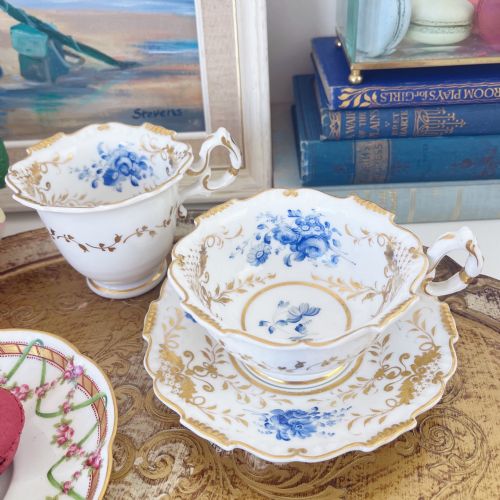
- A type of soft-paste porcelain containing animal bone ash, developed in England to improve durability and translucency. It forms the base of many nineteenth-century tea services.
- Imari
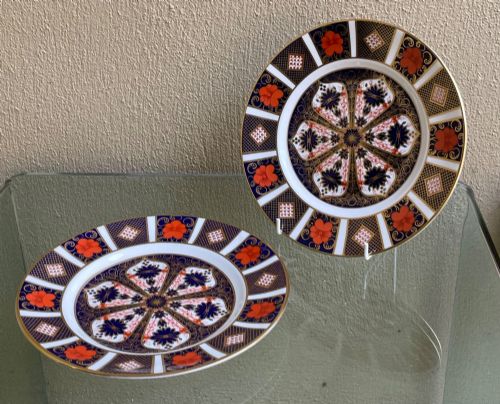
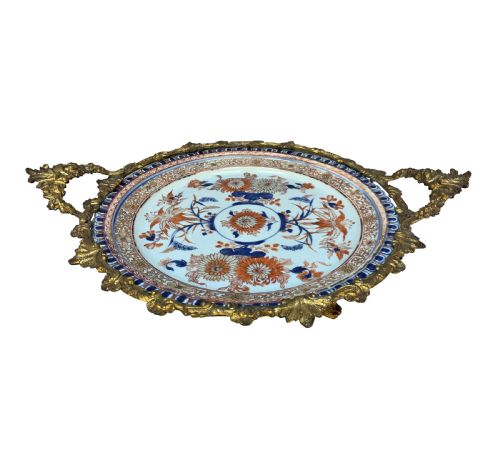
- A decorative style inspired by Japanese export wares, featuring cobalt blue, iron red, and abundant gilding. English factories frequently adopted this palette.
- Cabinet plate
- A decorative ceramic plate intended for display in a cabinet or on a wall rather than dining use. These pieces often feature hand-painted scenes by named artists.
Blue and Gilt Porcelain: Frequently Asked Questions
What is blue and gilt porcelain?
Blue and gilt porcelain refers to ceramic items decorated with deep blue grounds and metallic gold leaf or paint. These pieces were produced across European and Asian kilns for display and dining.
Items range from eighteenth-century tea canisters and cabinet plates to large nineteenth-century mantel clocks and garniture vases. The combination of dark blue and shining gold defined luxury taste in the Georgian and Victorian eras.
How do I date blue and gilt porcelain?
Dating relies on factory marks, ceramic bodies, and stylistic shifts between the eighteenth and nineteenth centuries. Georgian pieces often show soft-paste bodies and hand-pencilled gilding, while Victorian items utilise bone china and heavier machine-applied gold.
Comparing pattern numbers, shape profiles, and recorded marks helps narrow the decade of manufacture. Stylistic markers such as Regency neo-classicism or French Rococo Revival provide additional chronological clues.
How should I display these pieces?
Displaying blue and gilt porcelain involves balancing strong colour contrasts with adequate lighting to catch the metallic gilding. Cabinet plates and saucers sit well on plate stands within enclosed wooden vitrines.
Larger items like urns, vases, and mantel clocks function as focal points on sideboards, mantels, or open shelves. Stable, vibration-free surfaces protect fragile porcelain bodies and delicate ormolu mounts.
What is Sèvres style porcelain?
Sèvres style porcelain mimics the luxurious aesthetic of the royal French Sèvres factory, known for rich blue grounds and gilded frames. English and continental makers adopted these aesthetic conventions during the nineteenth century.
These pieces typically feature cobalt or turquoise blue fields surrounding hand-painted pastoral scenes or portraits. Gilt bronze mounts frequently complete the French Rococo or Louis XVI revival presentation.