





Bleached Pine Table
A bleached pine table brings warmth and pale texture to a room, offering practical everyday use with understated country charm.
Bleached Pine Table
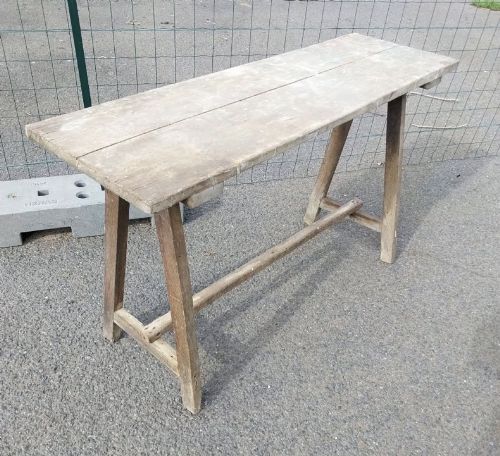
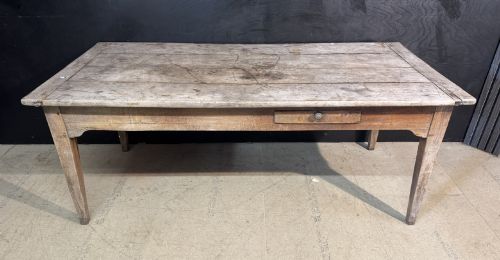
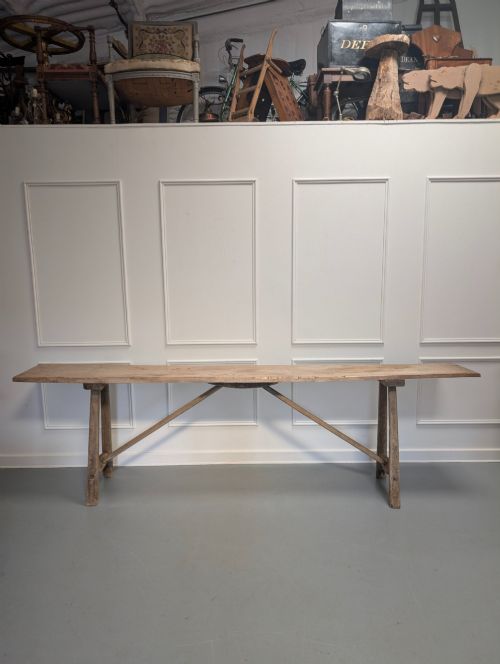
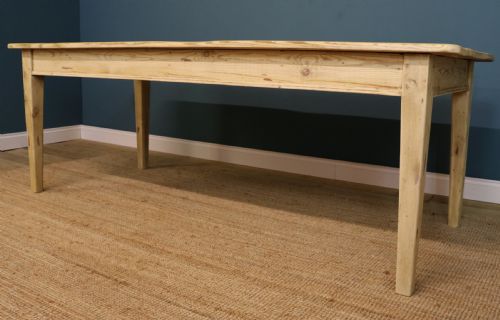
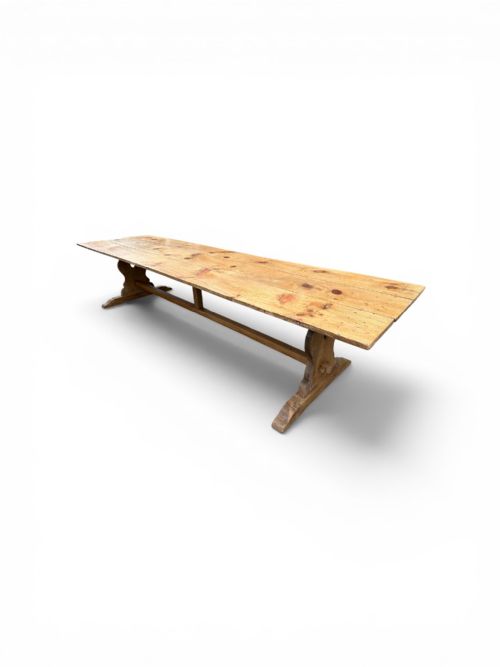
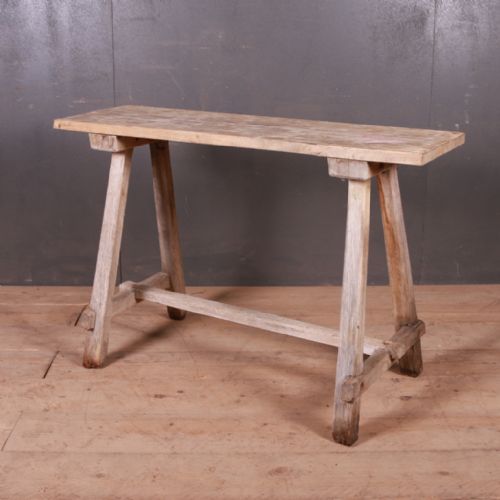
You are most likely to meet French country dining tables, sturdy trestle tables, and occasional coffee tables on this page. The forms range from large farmhouse surfaces intended for daily gatherings down to smaller occasional pieces and scrubbed breakfast tables.
The aesthetic leans towards rustic farmhouse, French provincial, and Scandinavian country styles. Many pieces show the distinct marks of past utility, whether through planked tops or traces of old paint underneath the bleached surface.
How they were made
Construction relies heavily on solid pine and timber, shaped into sturdy frames, turned legs, and wide planked tops. Carpenters utilised traditional joinery methods to ensure these daily work surfaces could withstand heavy domestic use.
The characteristic pale finish is achieved by stripping away dark original finishes or paint, then scrubbing or washing the bare pine. This process leaves the timber with a dry, matte texture that highlights the natural grain and knots of the wood.
Bleached Pine Table Retail Price Guide 2026
Typical asking prices for bleached pine table among the pieces listed under this phrase on Sellingantiques today, from the lower quarter to the upper quarter. They describe what is for sale here now, not the wider market.
Several tables show traces of old paint hiding deep within their grain, whispering secrets of forgotten country kitchens.
What varies in quality
The character of the timber itself sets the baseline, with older nineteenth-century pieces often displaying tighter grain patterns and deeper patination from decades of use. The proportion of the base to the top determines the visual balance of the piece.
Joinery execution separates standard utilitarian workshop production from finer cabinet work, particularly in the turning of legs and the stability of trestle frames. The success of the bleaching process also matters, as an even tone that retains the natural warmth of the pine is preferable to an over-stripped or chalky finish.
The Bleached Pine Table Glossary
- Bleached pine
- Timber treated to remove dark colouration, leaving the wood with a pale, matte finish. This treatment creates a clean surface while preserving the historical texture of the board.
- Scrubbed pine
- Wood that has been heavily washed and scoured with water and abrasive minerals over generations. This process rounds the edges of the grain and lightens the overall tone.
- Trestle table
- A table consisting of two or more supports connected by a horizontal beam holding a board top. This form provides sturdy legroom and dates back centuries in country kitchens.
- Planked top
- A table surface constructed from multiple parallel boards joined together. Older examples often feature wide boards that show natural shrinkage and movement over time.
- Cricket table
- A small, light occasional table supported by three legs. The design traditionally offered stability on uneven flagstone floors.
Bleached Pine Table: Frequently Asked Questions
How do I clean a bleached pine table?
Use a soft, damp cloth with mild soap for routine wiping, avoiding harsh chemical cleaners that can strip the pale finish. Dry the surface immediately after cleaning to protect the porous timber.
Apply natural beeswax occasionally if you wish to nourish the wood and guard against spills, though many owners prefer to leave the dry, scrubbed texture unsealed.
Are these tables suitable for daily dining?
These tables were originally built for heavy domestic work, making them remarkably sturdy for everyday meals. Their solid construction easily handles the demands of a busy kitchen or dining room.
Use placemats and coasters to protect the pale timber from heat rings and liquid stains, allowing the natural patina of the wood to age gracefully alongside your home.
How can I tell a nineteenth-century table apart?
Examine the construction methods underneath the top, looking for hand-cut joints, pegged tenons, and subtle imperfections in the timber that indicate manual woodworking. Hand-planed boards and older fastening methods distinguish these older pieces from twentieth-century reproductions.
The depth of the patination and the wear around the edges of the legs also offer clear clues to the age and history of the piece.
What styles do these tables come in?
The selection includes French provincial, rustic farmhouse, and Scandinavian country styles, each bringing distinct regional characteristics to the design. You will find variations from simple trestle supports to turned legs and painted skirts.
These diverse regional aesthetics share a common emphasis on utility and honest construction, making them versatile additions to both modern and traditional interiors.