


Black Wooden Blanket Box
A black wooden blanket box brings robust utility and dark, textural presence into a room, offering deep storage with historical character.
Black Wooden Blanket Box
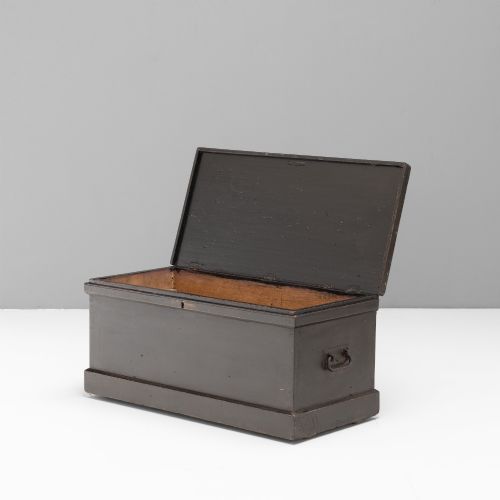
When you search for a black wooden blanket box, you enter a domain of heavy utilitarian chests and travel trunks adapted for domestic storage. The pieces meeting this description span pine, painted finishes, and dark lacquer, crossing maritime, campaign, and export traditions.
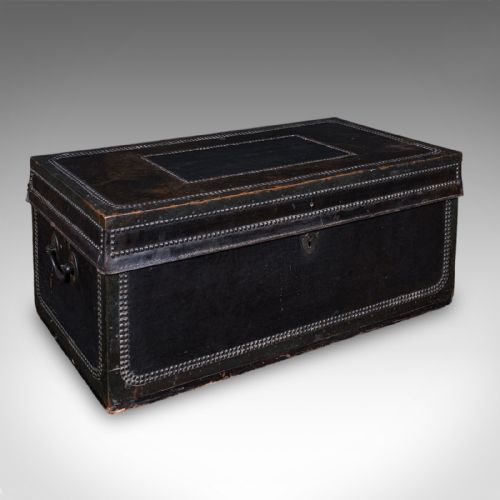
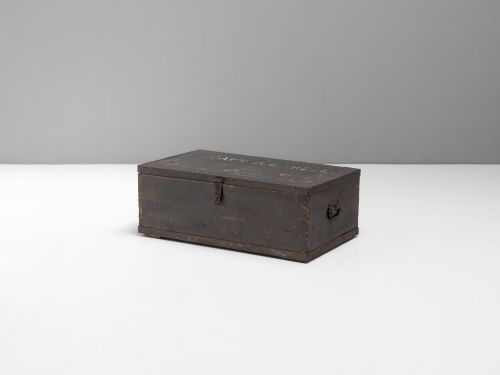
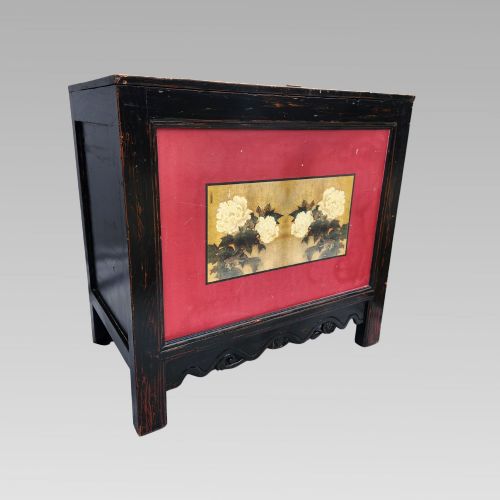
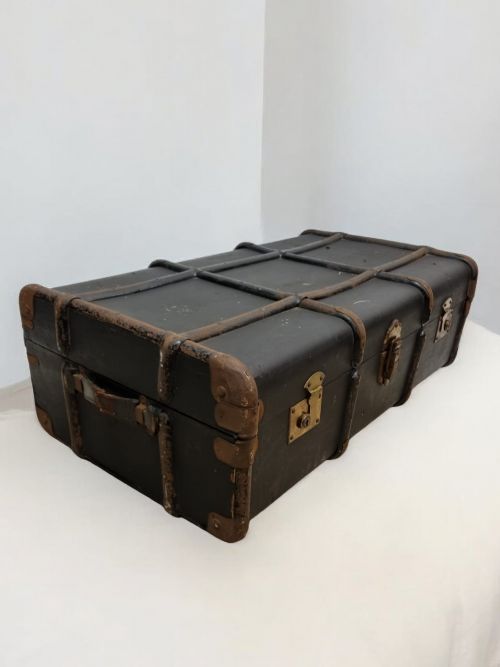
You are most likely to meet painted pine chests from the nineteenth century, alongside dark lacquered Chinese export coffers and robust travel trunks. These range from plain working boxes with iron straps to ornamented pieces bearing floral chinoiserie.
The forms vary from simple blanket boxes and kists to specialised tool chests, strongboxes, and camphorwood trunks. Each type carries the marks of its original purpose, whether storing seamen's belongings or holding delicate textiles.
Materials and construction
Carpenters built these boxes primarily using pine, camphorwood, and varied hardwoods, reinforced with iron and brass hardware for structural strength. Metal bindings, strapwork, and original locks protected contents during transport on ships and railways.
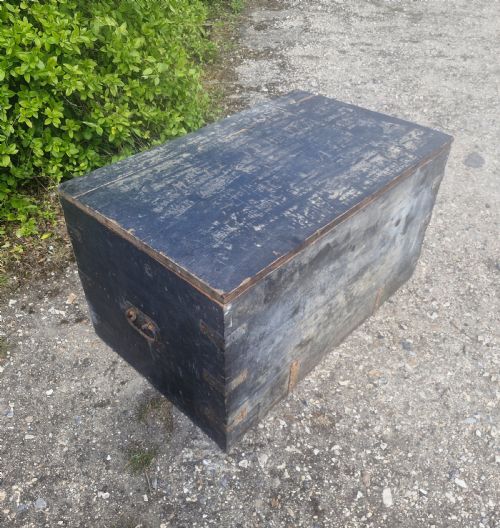
Surfaces were finished with dark paint, ebonising, or layers of black lacquer, sometimes embellished with leather or hand-painted floral motifs. These finishes protected the wood while giving the boxes their characteristic dark appearance.
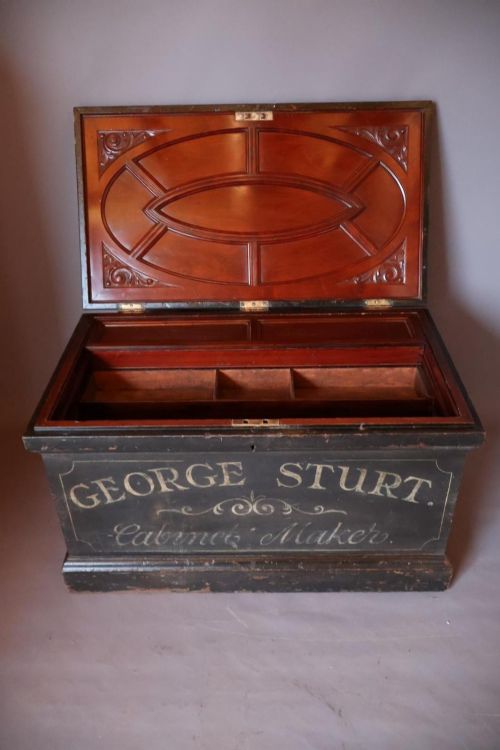
Joinery techniques ranged from dovetail joints on domestic blanket boxes to heavy iron bracing on strongboxes designed to withstand rough handling. Internal tills and fitted compartments often accommodated specialised tools or personal effects.
Listings feature items spanning the eighteenth, nineteenth, and early twentieth centuries, constructed from pine, camphorwood, and lacquered wood.
The markers of quality
Quality rests in the integrity of the original construction, the survival of the finish, and the completeness of the hardware. Boxes retaining their original hinges, brass drop handles, working locks, and iron corner mounts command greater interest.
The sophistication of the surface decoration sets examples apart, distinguishing simple painted pine from intricate Chinese export lacquer or finely carved camphorwood. Superior pieces show careful attention to internal fitting and structural bracing that resists warping over time.
The Black Wooden Blanket Box Glossary
- Campaign trunk
- A chest designed for military travel, typically featuring recessed brass handles, reinforced corners, and robust construction to withstand frequent transit.
- Kist
- A traditional northern European or Scottish wooden chest used for storing household linen, blankets, and personal valuables.
- Chinoiserie
- European interpretations or Asian adaptations of Chinese artistic motifs, frequently seen in gold or coloured lacquer decoration against a black ground.
- Strongbox
- A heavily reinforced iron and wood chest built for the secure storage of valuables, money, or important documents.
- Camphorwood
- An aromatic timber prized in Chinese and maritime furniture for its insect-repellent properties and distinct scent, often used for blanket and linen boxes.
Black Wooden Blanket Box: Frequently Asked Questions
What were black wooden blanket boxes used for?
These boxes served multiple functions ranging from storing woollen blankets and household linens to transporting personal belongings on ships and military campaigns.
Many specific variants, such as shipwrights' or cabinet makers' chests, held specialised tools and equipment for travelling tradesmen.
How do I style a black wooden blanket box at home?
A dark chest works effectively at the foot of a bed for extra bedding storage or serves as a coffee table in a living room with hidden capacity.
The dark wood and iron hardware anchor a room visually while keeping everyday clutter out of sight.
How can I tell a Victorian trunk from an eighteenth-century coffer?
Eighteenth-century pieces often display hand-carved details or early lacquered finishes associated with export trade, constructed with heavier, simpler joinery.
Victorian examples frequently incorporate standardised brass hardware, campaign handles, and industrial iron bindings typical of nineteenth-century manufacturing.
Are painted pine chests authentic antiques?
Many painted pine chests originate from nineteenth-century Scandinavian, French, or British maritime workshops where paint served as a practical protective finish.
Wear and weathering on the painted surface often confirm the age and working history of the box.