


Rustic Carved Storage Box
These rustic carved storage boxes span centuries of timber and ironwork, offering enduring utility alongside substantial regional character.
Rustic Carved Storage Box
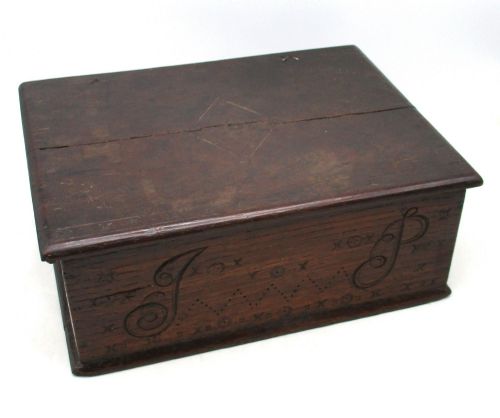
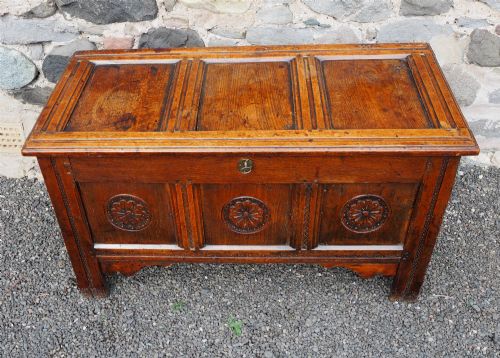
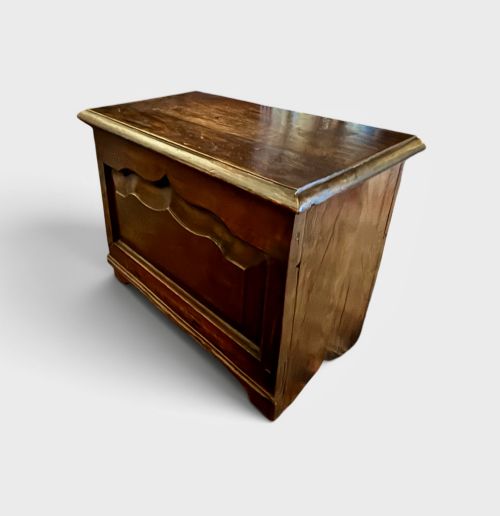
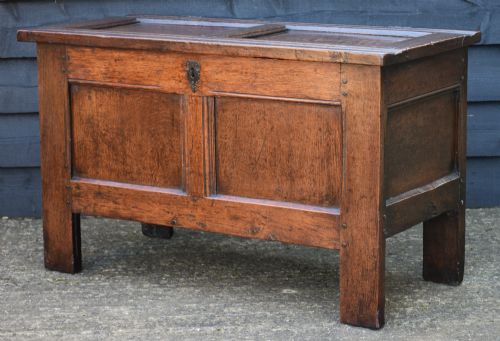
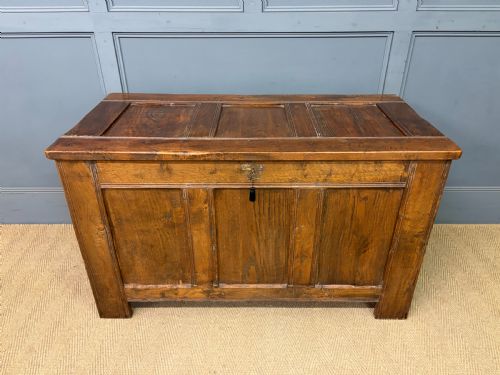
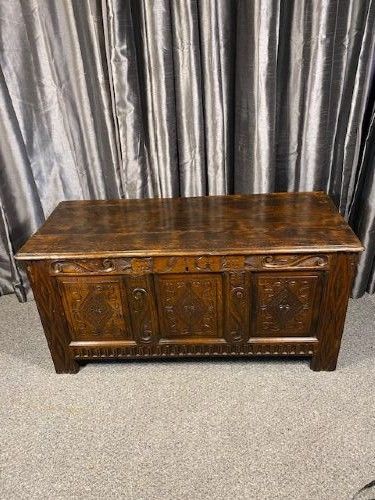
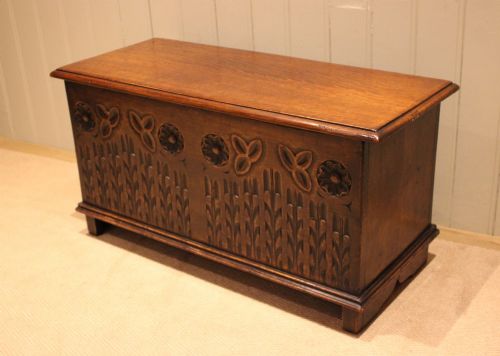
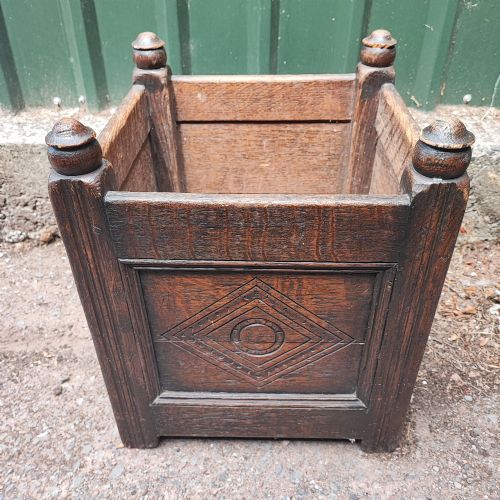
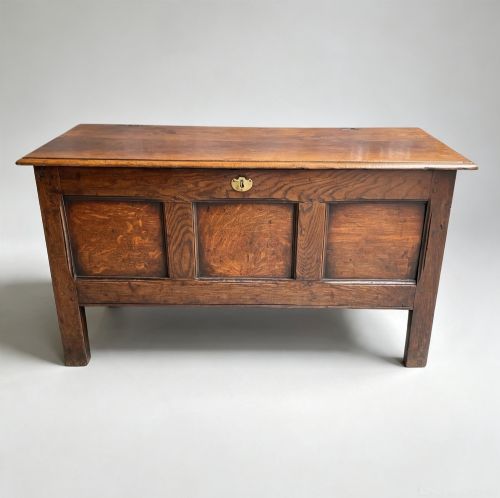
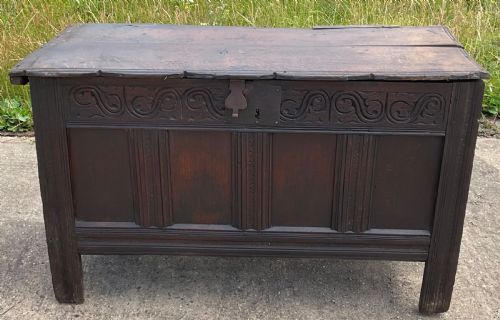
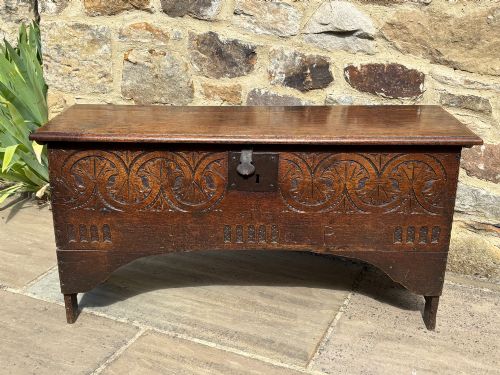
A rustic carved storage box primarily takes the form of a solid timber coffer, chest, or bible box designed for domestic containment. These pieces range from compact document boxes to monumental dowry chests intended for household linens and valuables.
The selections here are dominated by oak examples dating across the seventeenth, eighteenth, and nineteenth centuries. Alongside these British country pieces, European provincial work, teak dowry chests, and pine mule chests appear.
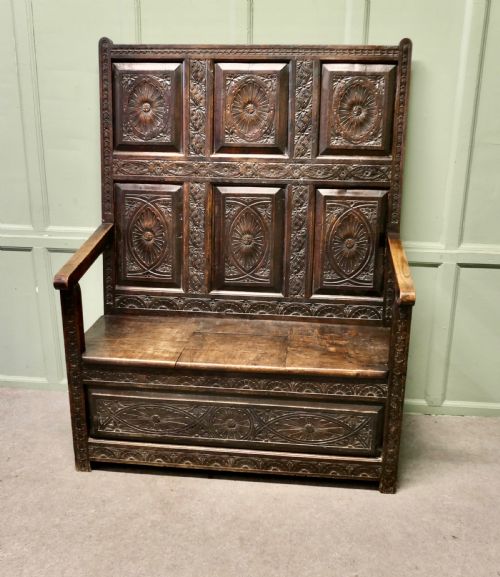
Forms extend from simple lidded trunks to box-seated settles and coffers raised on stands. Such items served everyday household functions while displaying the hand of local makers through carved panels and robust joinery.
How they were made
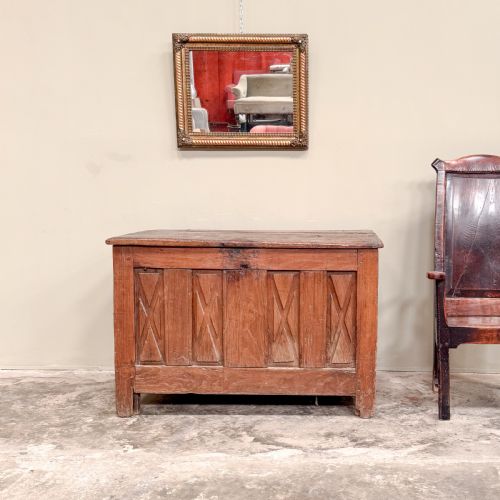
Construction relies heavily on solid oak, teak, and pine assembled with traditional joints such as mortise and tenon. Panels are frequently hand-carved with geometric motifs, foliage, or chip-carving directly into the timber.
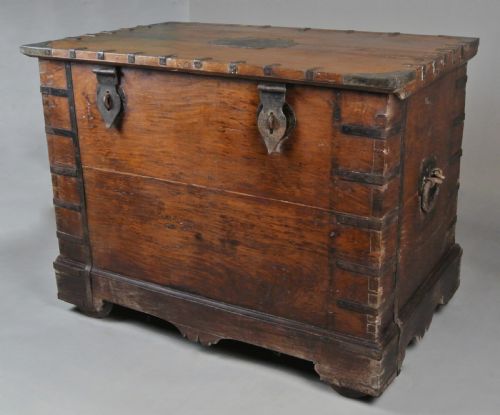
Iron and brass provide structural reinforcement and security. Heavy wrought iron bands, strap hinges, and complex locks secure large trunks and dowry chests against heavy daily use.
Several chests double as seating, proving that our ancestors loved a dual-purpose bench just as much as we do.
What varies in quality
Quality rests in the crispness of the hand-carving and the integrity of the timber panels. Surfaces that retain rich original patination and unreplaced boards command greater interest than heavily restored examples.
The sophistication of the hardware marks a clear distinction between utilitarian boxes and high-status commissions. Original locks, hinges, and iron banding elevate the standing of a piece significantly.
Jack Grimble
The Rustic Carved Storage Box Glossary
- Coffer
- A large wooden chest used historically for storing valuables, documents, or clothes. They often feature robust panel construction and heavy lids.
- Mule chest
- A traditional storage chest featuring one or more drawers beneath the main internal compartment. They bridge the gap between a simple coffer and a chest of drawers.
- Bible box
- A small, portable desk or storage box with a sloped or flat lid, designed to hold sacred texts and writing materials. These compact boxes frequently sit upon tables or stands.
- Dowry chest
- A large decorative trunk made to hold a bride's household goods and possessions upon marriage. They often utilise dense timbers like teak and feature extensive iron banding.
- Settle
- A wooden bench with a high back and enclosed storage space beneath the seat. The base functions as a chest while providing firm seating by a hearth.
Rustic Carved Storage Box: Frequently Asked Questions
What is a rustic carved storage box used for?
These chests originally served to store blankets, garments, documents, or valuable household goods securely in domestic settings. Today they function practically as blanket boxes, coffee tables, or deep hallway storage.
Their robust timber construction allows them to withstand daily use while adding historical weight to modern interiors.
How do I date an antique oak coffer?
Dating relies on observing construction methods, tool marks, and stylistic decorative motifs such as Jacobean geometric panels or chip-carved foliage. Hand- cleft timber and early iron hinges generally point towards earlier centuries.
Later nineteenth-century examples often display machine-sawn elements or softer secondary woods alongside traditional oak.
Where were these wooden chests made?
The pieces originate from diverse workshops across the British countryside, French provinces, and international regions such as Rajasthan. Local vernacular traditions heavily influenced the choice of timber and carving style.
Regional variations make it possible to trace certain coffers to specific areas like the Gower Peninsula or continental Europe.
How do I care for antique timber boxes?
Keep wooden chests away from direct heat sources and sudden humidity shifts to prevent the solid oak or teak from splitting. Feeding the dry timber occasionally with a traditional wax maintains the surface sheen.
Avoid harsh chemical cleaners that strip the historic patination accumulated over centuries of handling.