


Black Regency Chairs
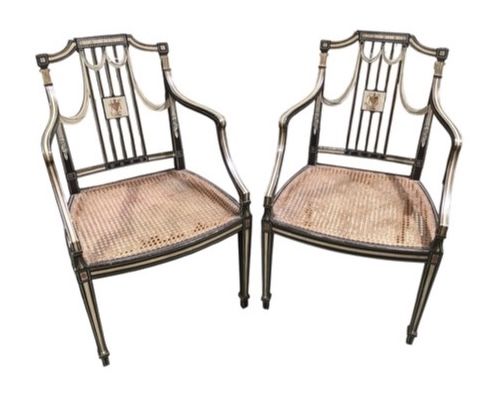
These black regency chairs bring dark elegance and saber legs to a room, offering the sharp lines of the early nineteenth century.
Black Regency Chairs
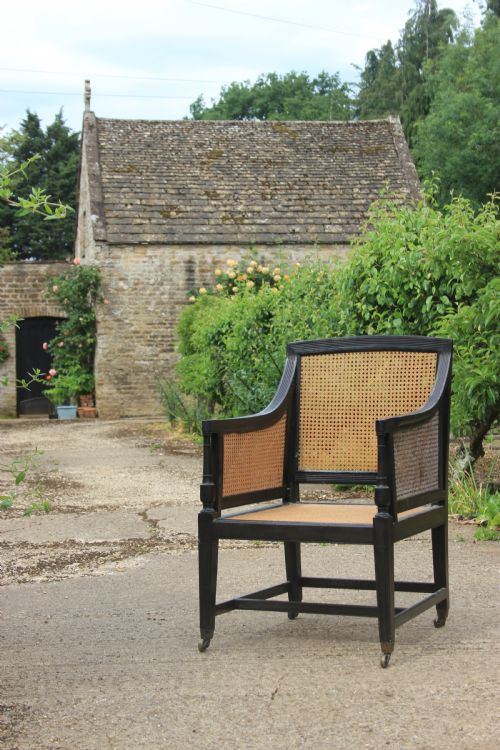
When searching for black regency chairs, collectors encounter dining chairs, armchairs, side chairs, and library armchairs spanning the Regency period, the nineteenth century, and later revivals. The selection includes ebonised timber, solid ebony, and painted finishes alongside lighter mahogany frames.
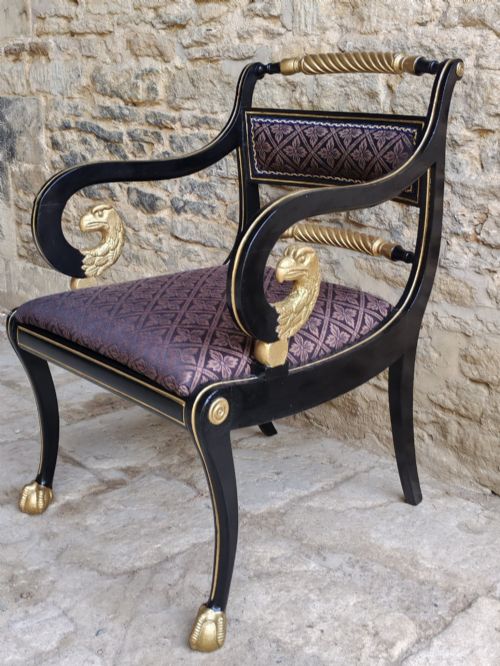
Most examples date from the core Regency era and the wider nineteenth century, though twentieth-century revival pieces also appear. Forms range from formal gilt hall chairs and rope-back dining sets to country rocking chairs and Anglo-Indian colonial seating.
Materials and construction
Cabinetmakers utilised dense timbers such as mahogany and ebony, alongside woods finished with black paint or ebonisation to achieve a dark surface. Brass mounts, gilt detailing, and faux bamboo turnings frequently accent the dark frames.
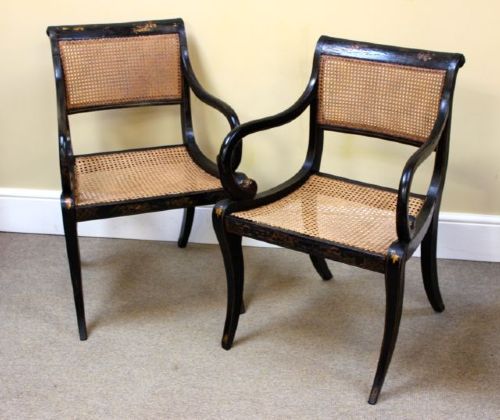
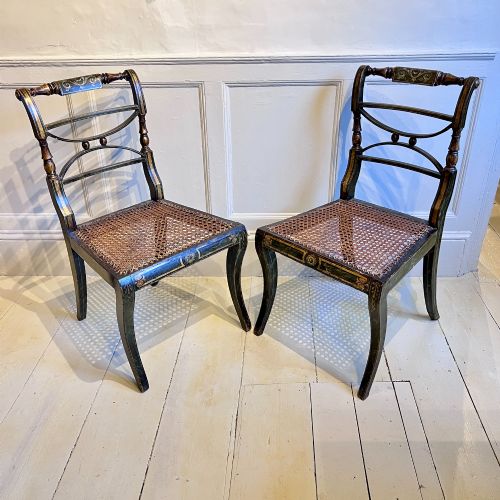
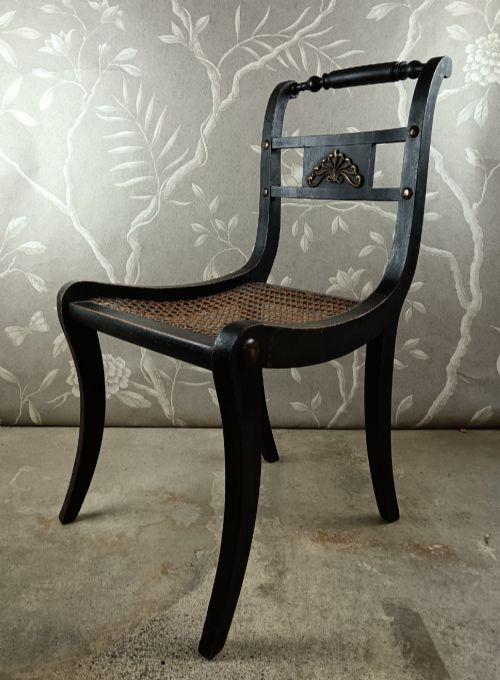
Seating surfaces often feature woven cane, original paint, studded black leather, or fabric upholstery. Carved splats, saber legs, and lambrequin motifs shape the structural silhouette of the frames.
Materials recorded across the inventory include cane, ebonised wood, brass, fabric, paint, mahogany, ebony, and leather.
Judging the range
The distinction between ordinary and exceptional pieces rests on the crispness of the carving, the integrity of the ebonised or painted finish, and the survival of original elements like cane seats and gilt highlights. Finer examples display balanced proportions in saber legs and refined detail in rope-back or faux bamboo turnings.
Matched sets and pairs command distinct interest compared to single items, particularly when retaining their original upholstery or decorative schemes. The depth of historical material, whether solid ebony or finely turned mahogany under dark pigment, determines the standing of each piece.
Gillows
The Black Regency Chairs Glossary
- Ebonised
- Wood finished with a black stain or paint to imitate expensive ebony. This treatment was widely utilised during the Regency period to create high-contrast seating.
- Saber leg
- A curved, concave leg that tapers toward the foot, echoing the shape of a cavalry saber. It is a defining structural feature of Regency chairs.
- Bergère
- An enclosed upholstered armchair with closed sides, often featuring cane panels. These provide comfortable seating with a formal silhouette.
- Caning
- A woven mesh made from rattan strips used for seat panels. Original historic caning adds authenticity to early nineteenth-century chairs.
- Lambrequin
- A decorative motif resembling draped fabric or leather, often carved onto the back splats of Regency armchairs.
Black Regency Chairs: Frequently Asked Questions
How do I identify a true Regency chair?
Authentic pieces typically display characteristics from the early nineteenth century, such as saber legs, rope-back splats, or classical proportions. Examine the timber beneath any dark finish to understand the underlying construction methods.
Makers of the period often employed specific turning techniques and joinery that differ from later twentieth-century revival furniture. Comparing the structural details against documented pieces helps confirm the period.
Are black regency chairs suitable for daily dining?
Many dining and side chairs from this era were built for daily use, though fragile cane seats or antique leather require mindful care. Robust mahogany and ebonised frames handle regular seating well when structurally sound.
Placing them around a dining table adds a strong historical contrast to modern or traditional interiors alike. Ensure that antique joints remain stable before committing them to heavy daily service.
How should I care for painted and gilt surfaces?
Preserve original paint and gilt highlights by dusting gently with a dry, soft cloth rather than using liquid polishes or harsh chemical cleaners. Moisture can lift fragile nineteenth-century finishes and damage underlying gesso.
Keep the chairs away from direct sunlight and steady heat sources to prevent the dark wood from drying or cracking. Stable indoor humidity protects both the painted decoration and the structural integrity of the timber.