
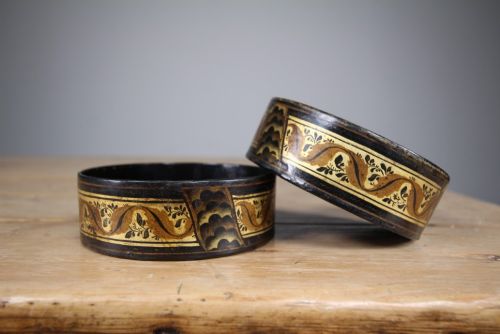


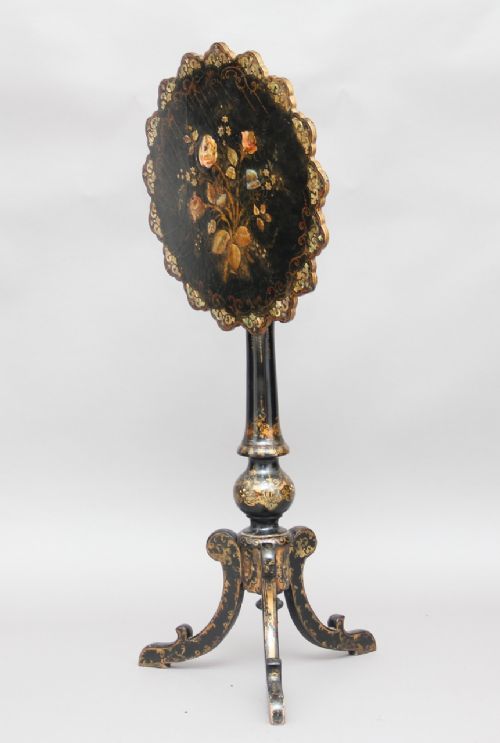


Black Papier Mache Stand
These black papier mache stand pieces bring tactile Regency and Victorian design into a room, offering practical surfaces adorned with rich painting and gilding.
Black Papier Mache Stand
When searching for a black papier mache stand, buyers encounter a diverse selection of items ranging from tray tables and occasional tables to wine coasters, desk accessories, and letter racks. The primary forms seen here include trays mounted on later or period stands, creating functional furniture from portable items.
The pieces span several distinct historical periods, featuring items from the 18th century, Regency era, and Victorian times, alongside specific dates such as 1860 and 1870. Buyers are most likely to meet Victorian Chinoiserie examples and 19th-century tray tables supported by wooden or iron bases.
Origins vary across the inventory, with English craftsmanship appearing alongside Kashmiri paper-mache desk tidies and pole-screens of Welsh interest depicting Haverfordwest and Pembrokeshire scenes. This variety allows collectors to choose between formal Regency pieces and decorative Victorian items.
Materials and Techniques
Makers built the core structure using layered paper pulp combined with binder, known as papier-mache or papier-mâché, which dried into a rigid, durable material suited for furniture and smaller accessories. This moulded base received a smooth black lacquer finish that provided a deep, dark ground for subsequent decoration.
Artisans applied hand-painted details, gold leaf, and gilt highlights directly onto the lacquered surface to create intricate patterns such as Chinoiserie landscapes and floral motifs. Wood and iron supplied the structural support for the stands, whilst some items incorporated later wooden frames to elevate the original trays.
Some pieces capture Welsh topography entirely in paper and paint, bringing Haverfordwest scenes straight to the drawing-room table.
Judging Quality
The finesse of the hand-painted decoration and the precision of the gold leaf application separate standard items from finer examples in the range. Superior pieces display crisp brushwork and detailed motifs that retain their sharpness across the surface.
The integration between the tray and its stand also influences overall quality, particularly where period trays meet later stands versus original configurations. The depth of the black lacquer and the condition of the underlying papier-mache core indicate how well an object has survived decades of use.
Henry Clay
The Black Papier Mache Stand Glossary
- Papier-mache
- A composite material made from paper pulp or layers of paper mixed with glue or resin, moulded into shape and dried until hard. It formed the lightweight yet robust foundation for trays, stands, and small decorative items.
- Chinoiserie
- A European artistic style reflecting Chinese aesthetic influences, commonly seen in hand-painted motifs of figures, landscapes, and pavilions. This style was widely utilised on Victorian and Regency black lacquer pieces.
- Wine coaster
- A small circular tray or stand designed to hold a bottle or decanter on the dining table, protecting the surface beneath. Examples in this category often feature gilded decoration and matching pairs.
- Pole-screen
- An adjustable vertical screen mounted on a stand, traditionally placed before a fireplace to protect the face from radiant heat. The surviving examples utilise painted panels set within the frame.
- Ebonised
- Wood or other material finished to resemble high-quality ebony through dark staining or painting. This finish frequently matches the deep black tone of the associated papier-mache components.
Black Papier Mache Stand: Frequently Asked Questions
What is a black papier mache stand?
It is a decorative furnishing or accessory created from layered paper pulp, finished with black lacquer, and mounted on a base or used as a tabletop. These items combine portable trays or desk pieces with structural supports.
They reflect the aesthetic tastes of the Regency and Victorian periods, often decorated with hand-painted details and gilding.
How were these stands used originally?
Regency and Victorian households utilised tray tables for serving drinks or meals, moving the portable surface onto a folding or fixed stand when needed. Desk accessories and letter racks organised correspondence in studies and parlours.
Coasters protected dining tables from moisture and heat beneath wine bottles and decanters during evening gatherings.
How do I care for papier mache furniture?
Keep these items away from direct sunlight and excessive moisture to protect the delicate lacquer and painted surfaces from cracking or fading. Dust gently with a dry, soft cloth without applying harsh cleaning products.
Place them in stable indoor environments where temperature fluctuations remain minimal to preserve the underlying paper pulp structure.
How do I tell Regency from Victorian pieces?
Regency examples tend to feature restrained neoclassical lines, simpler gilt borders, and early 19th-century construction methods. Victorian pieces frequently display heavier Chinoiserie ornamentation, floral painting, and later 19th-century dates.
Examining the style of the hand-painted motifs and the form of the associated stand helps determine the period of origin.