


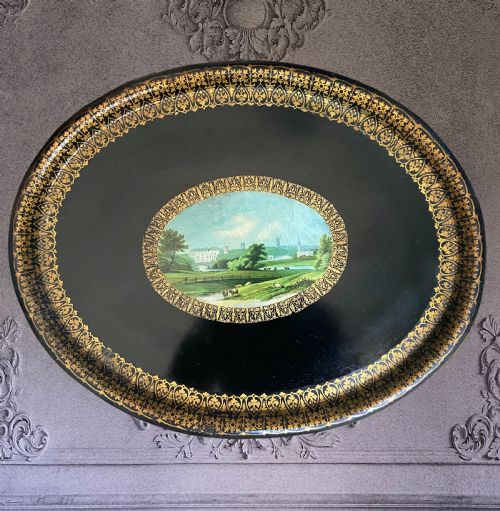
Black Painted Tray
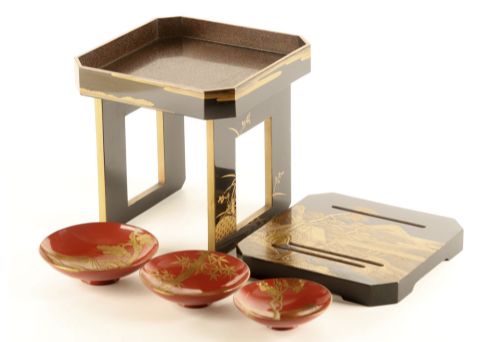
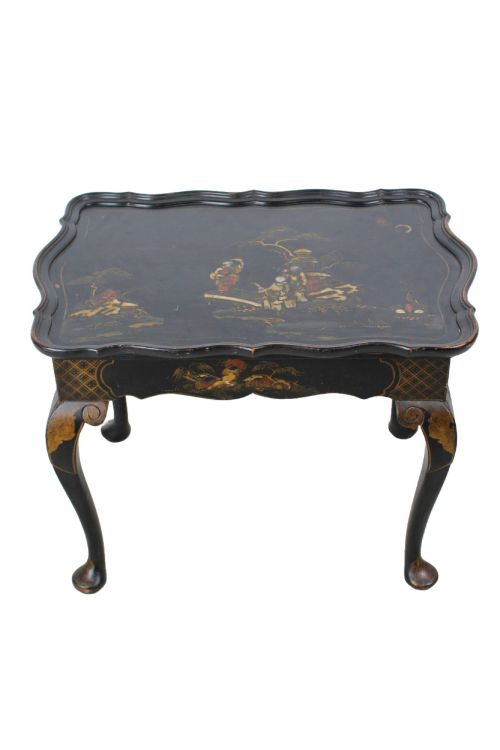
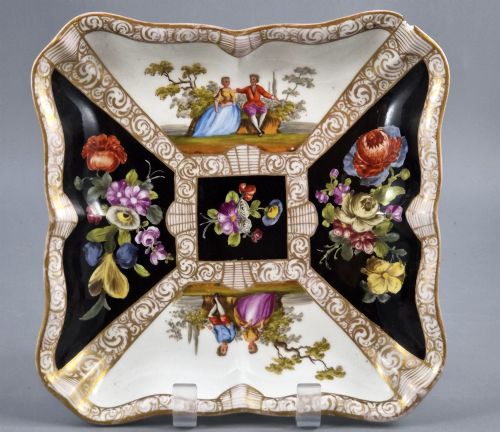
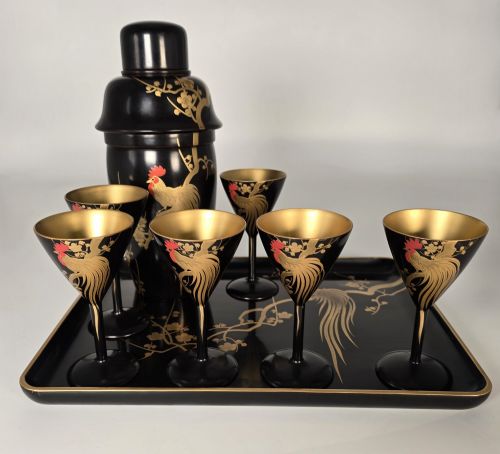
A black painted tray brings rich lacquer, gilding, and hand-painted detail to a room, functioning equally as a serving piece or mounted as a low table.
Black Painted Tray
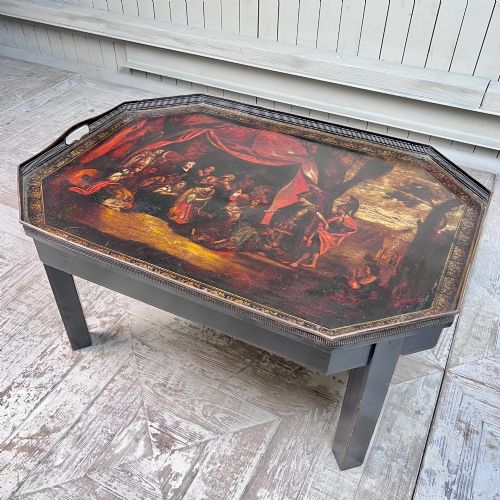
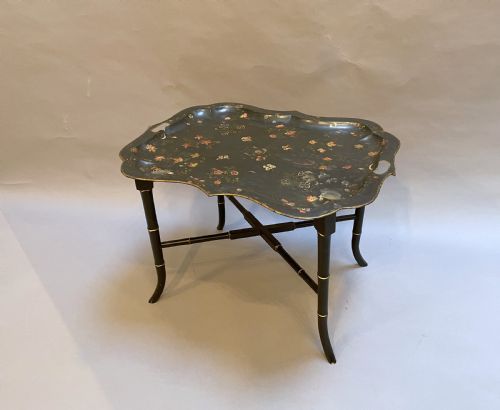
When you search for a black painted tray, you encounter items designed for serving, display, or later adapted into low occasional tables. The most frequent form on this page is the 19th-century papier-mâché or toleware tray, often mounted on a folding or fixed wooden stand to create a coffee table.
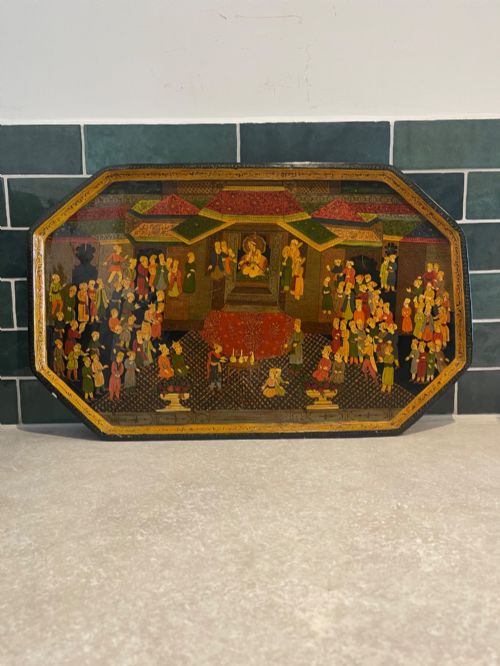
The selections span the Regency and Victorian eras into the early 20th century, originating from English workshops, Scandinavian makers, and Kashmiri centres. Alongside standard serving vessels, you find related desk accessories, card baskets, and stick stands sharing the same dark surface treatment.
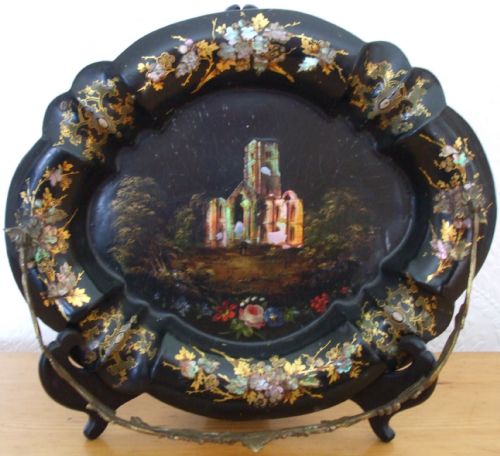
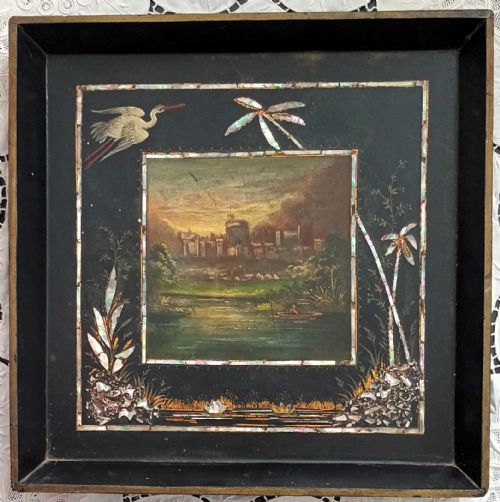
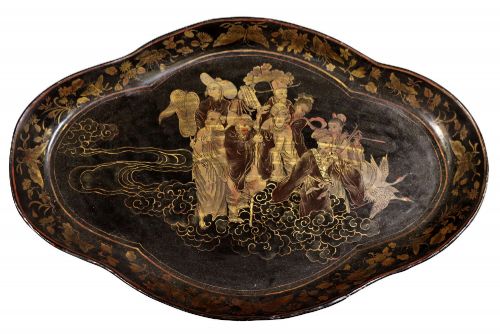
Chinoiserie motifs, gilt embellishment, and mother-of-pearl inlay frequently decorate these surfaces, reflecting both English taste and influences from Japanese lacquerwork. Pieces range from large oval trays meant for grand hospitality to compact occasional items suited for domestic interiors.
How they were made
The underlying structure of these items relies on shaped papier-mâché, sheet metal known as toleware, or turned and joined wood. Papier-mâché trays were built from layers of paper pulp or sheets pressed and dried into rigid forms, then coated with heavy dark varnish or lacquer.
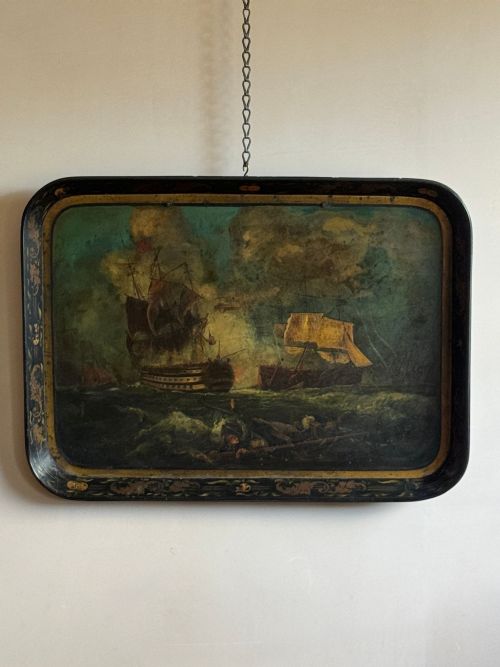
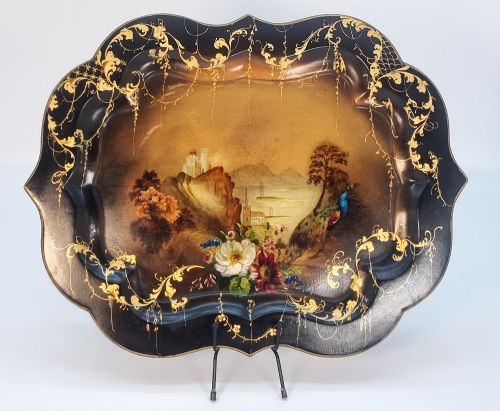
Makers applied hand-painted ornamentation, often combining gold leaf, pigments, and inlaid mother-of-pearl to create detailed landscapes, florals, or figurative scenes. Pontypool and similar toleware workshops utilised japanning techniques on metal, baking the dark ground to achieve a durable, glossy finish before final decoration.
Listings feature items spanning the 18th, 19th, and early 20th centuries, utilising materials like mother-of-pearl, cast iron, and lacquered paper.
What varies in quality
The distinction between standard domestic items and superior examples lies in the execution of the hand-painted decoration and the depth of the lacquer finish. Finer pieces exhibit crisp gilt embellishment, intricate mother-of-pearl inlay, and complex pictorial scenes rather than simple stencilled motifs.
The integrity of the original black ground and the crispness of the moulded edges in papier-mâché or pressed metal also define the upper tier of objects. Maker attribution, such as signed works by established firms, further separates exceptional items from everyday utilitarian wares.
Jennens and Bettridge
The Black Painted Tray Glossary
- Papier-mâché
- A composite material made from paper pulp or layers of paper glued, pressed, and dried into a solid form before being lacquered and painted.
- Toleware
- Painted or lacquered sheet metal items, particularly tinplate, produced in factories such as Pontypool during the Georgian and Victorian eras.
- Japanning
- A European imitation of East Asian lacquerwork, created by applying layers of dark varnish and curing them to produce a hard, glossy finish.
- Chinoiserie
- A Western stylistic interpretation of Chinese and East Asian artistic traditions, frequently featuring pagodas, figures, and exotic landscapes.
- Mother-of-pearl
- The iridescent inner layer of certain mollusc shells, used in thin sliced sections to inlay decorative highlights onto dark lacquer surfaces.
Black Painted Tray: Frequently Asked Questions
What is a black painted tray table?
A black painted tray table consists of an antique serving tray, often made of papier-mâché or toleware, mounted onto a separate wooden stand. This adaptation transforms a portable tabletop into a functional coffee table or occasional surface.
These stands are frequently custom-built to support the specific dimensions and weight of the antique tray while maintaining the overall aesthetic of the piece.
How do I care for a papier-mâché tray?
Papier-mâché trays require gentle handling and protection from moisture, direct sunlight, and extreme temperature fluctuations. Dust them softly with a dry cloth and avoid using liquid cleaners or polishes that could damage the historic lacquer.
Displaying them away from heat sources preserves the painted surface and prevents the underlying composite material from warping or cracking over time.
How can I tell Regency pieces apart?
Regency items often feature specific stylistic markers such as neoclassical motifs, refined gilt embellishments, and distinctively shaped rims. The materials typically include heavy pressed papier-mâché or fine metal toleware finished with deep black japanning.
Examining the hand-painting techniques and the wear patterns on the underside can also help distinguish early 19th-century production from later Victorian or Edwardian revivals.
Were these trays meant for daily use?
Historical serving trays served practical functions in large households, carrying tea services, glasses, or letters across formal rooms. Their durable lacquer finishes were formulated to withstand regular handling during domestic service.
Today, while many still function as serving pieces, their decorative qualities mean they are frequently used for display or as static surfaces in living spaces.