




Black Painted Chairs
Black painted chairs bring grounded monochrome presence to a room, spanning rustic vernacular seating and formal gilded Regency designs.
Black Painted Chairs
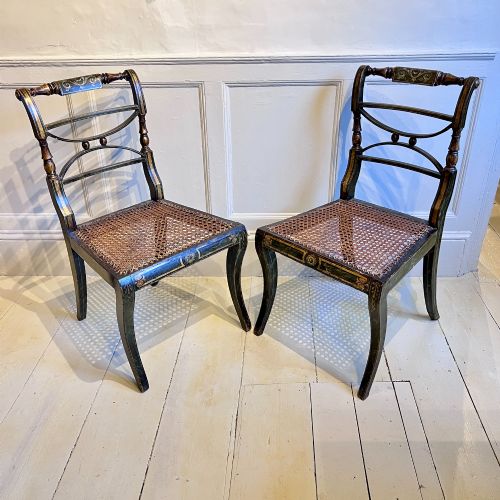
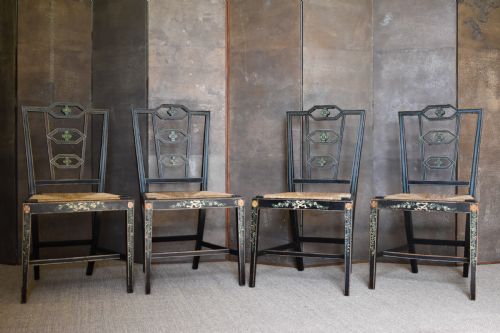
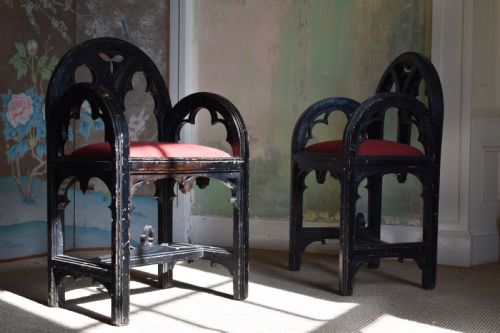
Black painted chairs encompass a wide variety of seating forms, ranging from rustic Windsor and primitive country models to formal Regency dining sets and Victorian bedroom chairs. When exploring black painted chairs, buyers most frequently encounter pieces originating from the eighteenth, nineteenth, and early twentieth centuries.
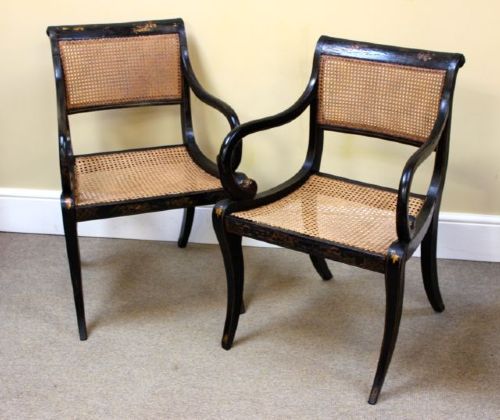
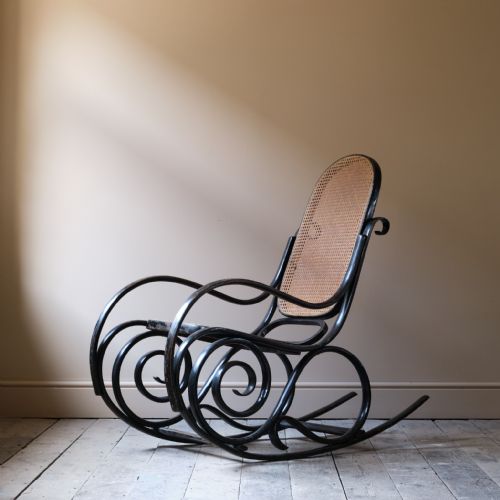
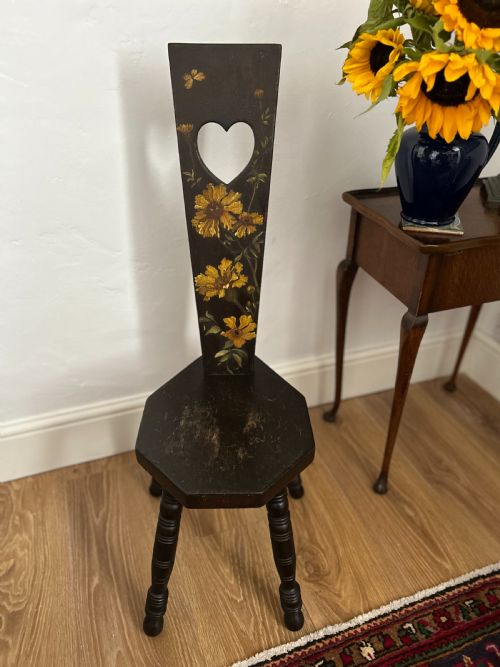
The selections span diverse regional styles, including Irish vernacular forms, Welsh turned chairs, Swedish rocking models, and English Chinoiserie armchairs. Common forms include side chairs, armchairs, rocking chairs, elbow chairs, and high chairs, alongside occasional specialised seating such as spinning chairs and bergères.
Origins vary from English and Welsh workshops to Italian, European, and Scandinavian makers, reflecting local traditions in woodworking and surface decoration. Surviving examples often retain original paint, lacquered finishes, or parcel gilt highlights applied over wood, ebonised surfaces, or papier-mâché.
Materials and construction
Makers utilised sturdy timbers such as beech and general wood as the structural foundation for these seats, often combining turned wooden spindles with solid plank or cane seats. Surface decoration relies heavily on traditional paint, ebonised wood, lacquering, and gold leaf highlights to achieve the characteristic dark finish.
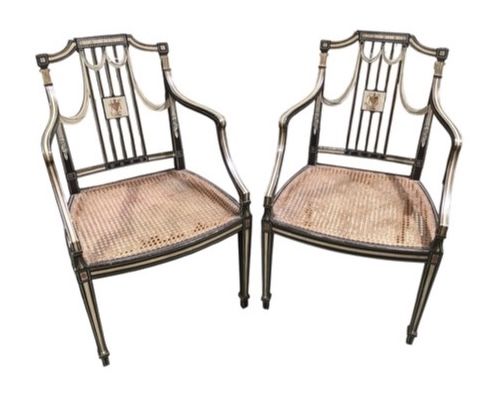
Detailed ornamentation ranges from hand-painted Chinoiserie motifs and Japanning to delicate parcel gilding and decorated shield backs, particularly on Regency and Victorian iterations. Certain specialised forms integrate woven cane, fabric upholstery, or papier-mâché substrates to provide alternative textures and support.
One tiny portrait on paper captures a three-month-old child named Robert Spearman Swinburne aged three years.
Distinctions in quality
The standard of a piece rests largely on the integrity of the original surface finish and the subtlety of any decorative detailing. Surviving original paintwork or period Japanning commands greater appreciation than later overpainting, while crisp parcel gilt accents elevate more formal dining and armchairs.
Structural joinery and the refinement of regional turning define the baseline craftsmanship, separating robust vernacular seating from finely proportioned urban cabinet work. Matching sets demonstrate higher initial investment than single items or assembled pairs, particularly when retaining unified decorative schemes.
Jennens and Bettridge·Roosje Hindeloopen·Hitchcock chairs
The Black Painted Chairs Glossary
- Ebonised wood
- Timber treated or stained to resemble expensive ebony. This dark finish gained immense popularity during the nineteenth century for formal dining and library chairs.
- Japanning
- European imitation of East Asian lacquerwork using dark resin grounds and raised metallic decoration. It appears frequently on fine Chinoiserie armchairs.
- Bergere
- An enclosed upholstered armchair with cane sides and back panels. These seats often feature lacquered frames.
- Parcel gilt
- Portions of an object highlighted with thin leaves of gold applied over a painted or ebonised ground. This technique adds subtle contrast to Regency and Victorian designs.
- Windsor chair
- A traditional wooden seat construction featuring sticks inserted into a solid carved wooden seat. These sturdy chairs often appear with simple painted finishes.
Black Painted Chairs: Frequently Asked Questions
Are these chairs suitable for daily dining?
Many sturdy dining and elbow chair models remain entirely practical for regular seating around a table.
More delicate decorative or antique framed examples require careful consideration to preserve their historic surfaces and cane elements.
How do I identify Regency style features?
Regency designs typically display classical restraint, clean proportions, and painted or ebonised finishes often enhanced with parcel gilt.
Look for refined turned legs, saber supports, and classical motifs inspired by ancient Greek and Roman furniture.
What is the difference between painted and ebonised wood?
Painted wood carries a pigmented coating directly applied to the surface, which can feature decorative motifs or craquelure over time.
Ebonised wood involves staining or treating the actual timber grain to create a deep, glossy black appearance imitating solid ebony.
How should I care for original painted surfaces?
Keep these pieces away from direct sunlight and fluctuating humidity to prevent the underlying wood from movement and paint flaking.
Dust gently with a dry, soft cloth and avoid chemical polishes that might degrade historic finishes.
Do these chairs come in matching sets?
While many selections consist of individual items, pairs, or small groups of four to six, larger matching dining sets do occasionally appear.
Matched sets from the Georgian and Regency periods represent coordinated workshop production rather than casual pairings.