



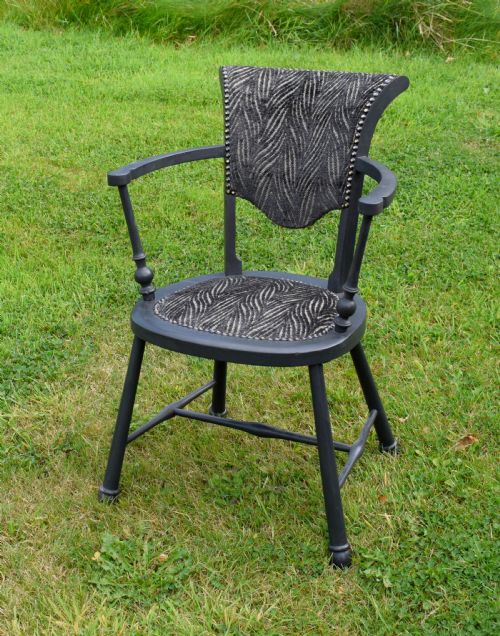


Dark Painted Accent Chairs
These dark painted accent chairs bring striking contrast and historic character to a room through centuries of varied regional designs.
Dark Painted Accent Chairs
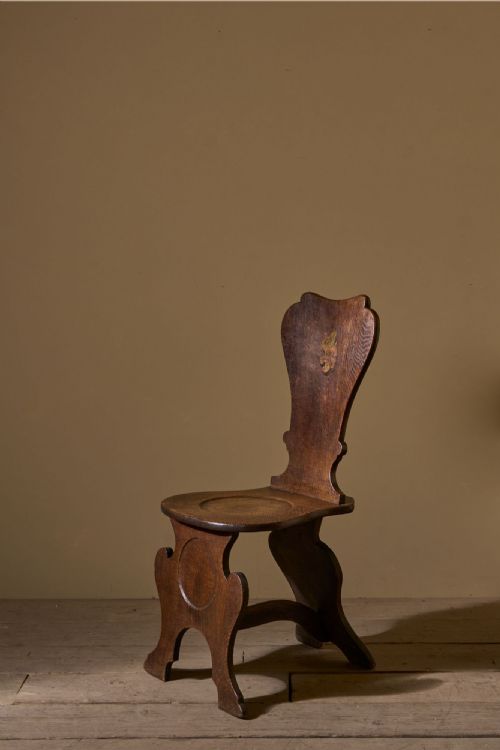
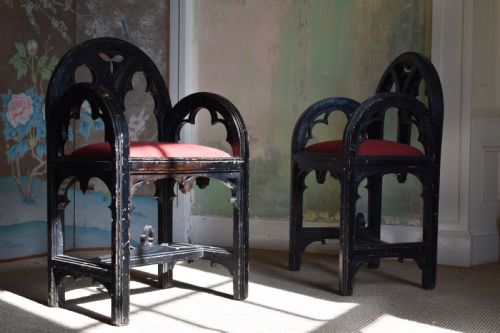
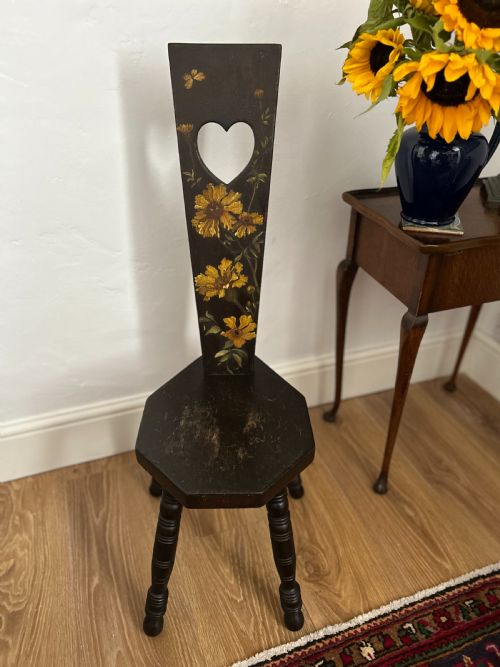
Dark painted accent chairs encompass a diverse group of seating furniture spanning the seventeenth century through to the early twentieth century, united by a dark surface treatment and a decorative purpose within a room. Buyers searching for dark painted accent chairs will encounter forms ranging from sturdy oak hall chairs and walnut open armchairs to spinning chairs, rocking chairs, and grand Regency designs.
The selection on this page draws heavily from Georgian, Regency, and Victorian periods alongside earlier seventeenth-century Carolean tastes and Welsh folk art traditions. Side chairs, armchairs, and elbow chairs dominate the offerings, each serving as an occasional seat that commands attention through its painted finish rather than blending quietly into the background.
How they were made
Makers constructed these chairs using robust timbers such as oak, walnut, and mahogany, frequently applying paint directly over the wood to seal the grain and provide a canvas for decoration. Polychrome painting, heraldic motifs, and floral decorations appear across the pieces, executed with hand-applied pigments that have survived through the centuries.
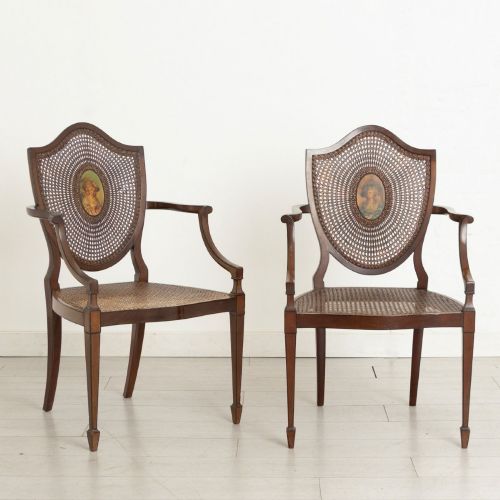
Structural elements rely on traditional joinery suited to each period, from the carved walnut of seventeenth-century caquetoires to the turned members of Regency country rocking chairs. Cane and fabric also integrate into the construction of specific seats, adding textural variety to the painted wooden frames.
Listings span multiple centuries of dark painted accent chairs, featuring oak, walnut, mahogany, and cane across diverse forms like rocking chairs and caquetoires.
What varies in quality
The distinction between ordinary and exceptional examples rests in the survival of original painted surfaces and the crispness of the carved details. Chairs retaining untouched decoration and authentic surface patination command greater regard from collectors than those subjected to later overpainting or heavy restoration.
Proportion and execution further separate the work of skilled provincial workshops and notable makers from standard commercial output. The balance of a shield back, the execution of heraldic details, and the integration of painted floral work determine the visual strength of the finished chair.
Gillows
The Dark Painted Accent Chairs Glossary
- Caquetoire
- A light, high-backed armchair originating in the sixteenth century, designed to allow conversation among seated people. These chairs feature narrow triangular seats and slender wooden frames.
- Hall chair
- A stiff-backed wooden seat historically placed in a grand entrance hall, often featuring a painted family crest or shield. They were designed for brief seating rather than comfort.
- Polychrome
- The practice of decorating architectural elements or furniture in a variety of colours. This technique enhances the visual depth of carved wooden surfaces.
- Shield back
- A chair back shaped in the outline of a heraldic shield, popularised during the Georgian and Regency periods. The top rail curves gracefully downwards towards a central splat.
- Elbow chair
- An alternative term for an armchair, particularly one with open arms used at a desk or alongside a dining table. These pieces provide support for the arms while maintaining a compact footprint.
Dark Painted Accent Chairs: Frequently Asked Questions
Where should I place a dark painted accent chair?
These chairs function well in hallways, living rooms, or bedrooms where their distinct painted finishes can stand out against neutral walls. Their decorative presence makes them ideal for corners or spaces that require a strong visual anchor.
Because many historical forms possess upright backs and firm wooden seats, they serve best as occasional accent pieces rather than primary lounge seating.
How do I identify the period of a painted chair?
Dating relies on observing the underlying construction methods, timber choices, and the style of the carved ornament. Comparing the silhouette to documented examples from Georgian, Regency, or Victorian eras clarifies the timeline.
Paint analysis can also reveal whether the surface decoration is contemporary with the wooden frame or applied during a later restoration campaign.
Are original painted finishes fragile?
Original painted surfaces on antique furniture require gentle care and stable environmental conditions to prevent flaking or further wear. Direct sunlight and fluctuating humidity levels can compromise historical pigments over time.
Dusting with a soft, dry cloth is sufficient for routine maintenance, avoiding modern chemical cleaners that might strip delicate decoration.
What is the difference between a hall chair and an armchair?
Hall chairs are typically rigid, upright wooden seats with solid seats and decorative backs designed for brief use in entrance spaces. They lack upholstery and emphasise heraldic or carved visual impact.
Armchairs provide broader proportions, enclosed armrests, and occasionally upholstered or caned elements intended for prolonged seating comfort.